

Why Are Ring Pull Lids for Soup Gaining Popularity?
2026-09-18
Ring Pull Lids for Soup https://www.threefoodcan.com/peel-off-lids/ring-pull-lids-for-soupare gaining popularity because they offer unmatched convenience, safety, and versatility in the food packaging industry. These easy-open closures eliminate the need for external tools like can openers, making them ideal for on-the-go consumers and ready-to-eat meal formats. Their tamper-evident design provides enhanced product security, while advanced coatings protect against corrosion from acidic or high-salt soup formulations. The recyclable aluminum construction aligns with sustainability goals, reducing environmental impact without sacrificing durability or shelf life.
Understanding Ring Pull Lids for Soup: Features and Advantages
Today's food packaging needs solutions that strike a balance between ease of use for consumers and high productivity in the workplace. Ring Pull Lids for Soup are a big step forward in soup can closures because they meet the needs of both manufacturers and consumers.
What Makes Ring Pull Lids Different?
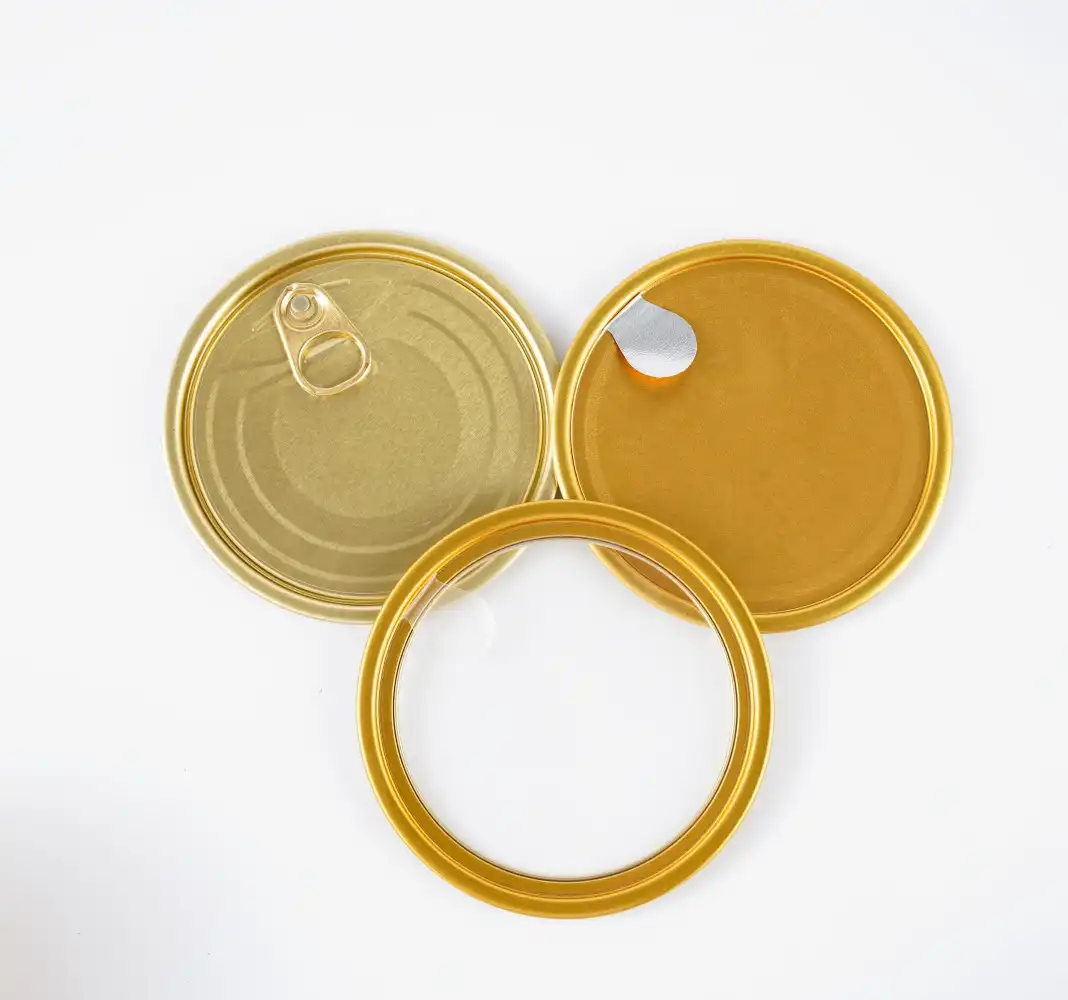
At their core, these closures are made of a perfectly scored metal panel that has a pull-tab device that is riveted to it. The score line is made to be a micron-thick, usually between 60 and 90 microns. This makes sure that the lid opens easily with little force and stays structurally sound while being moved and stored. Because of this technical accuracy, the whole top panel can come off easily, letting you get to the chunky soup contents without any problems. The opening process doesn't need any extra tools, which is becoming more and more important as people's lives become more and more focused on ease. When someone pulls on the pull-tab, the score line breaks at a certain tensile strength, which lets the metal tear smoothly around the edge. This "pop and tear" force has been carefully calibrated to fall within a user-friendly range of about 3.0 to 5.5 pounds. This means that people with different levels of physical ability can use it.
Core Functional Advantages
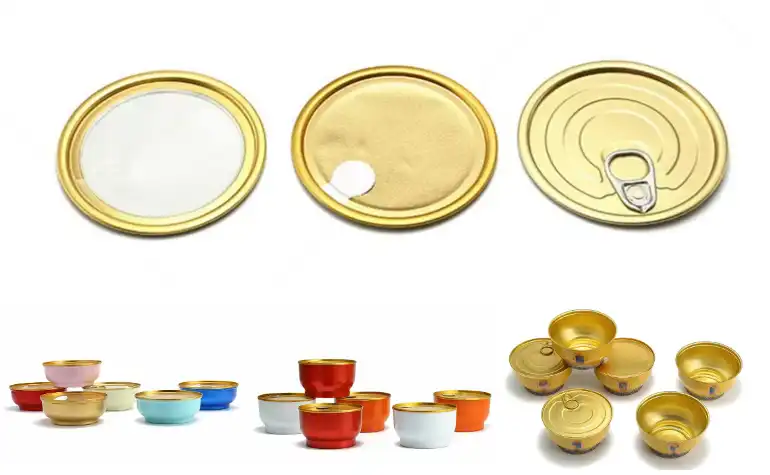
There are more benefits than just ease of use in using these covers. One very important benefit is that it is hard to tamper with, especially now that people are very worried about food safety when they buy things. At the point of sale, the intact score line makes it clear that the product has not been tampered with, which builds trust. Another big benefit is that it stays durable during heat processing. Soups are usually sterilized in retorts at temperatures that reach 121°C (250°F). This creates differences in internal pressure that can damage weaker closures. Some good ring pull designs have expansion rings, which are sometimes called beading. These rings let the metal bend under vacuum pressure without permanently changing shape or causing the panel to buckle. These lids look very sleek and modern, which makes them stand out more on the shelf. When it comes to brand messages, nutritional information, and visual pictures, the smooth metal surface is perfect. The 307# and 401# types come with either a golden or a gray plain lacquer finish. This gives makers options for matching packaging to company identity.
Material Composition and Safety Standards
Due to its high resistance to corrosion and light weight, aluminum is the most common material used for soup applications. It is important that the metal thickness and alloy makeup are carefully chosen so that they can stand up to the harsh ingredients in soup, especially tomato- or vinegar-based soups, which can damage weaker metals through galvanic corrosion. Both the inside and outside coats are important for efficiency. Plain varnish systems put up a wall between the aluminum and the food, stopping the metal from moving and tainting the flavor. To make sure that tiny cracks don't form during processing, these coats must pass strict metal exposure tests that are recorded in milliamps (mA). Today, more advanced coatings have BPA-NI (Bisphenol A Non-Intent) technologies that meet strict EU and TSCA rules without sacrificing the chemical resistance needed for a long shelf life.
Environmental Sustainability Profile
Being able to recycle has gone from being a business benefit to a practical must. Aluminum keeps its traits even after being recycled over and over again, and it only needs 5% of the energy needed to make basic metal. This closed-loop recycling option cuts the carbon footprint of packaged soups by a large amount. Another aspect of sustainability is the material economy. Modern ways of making things reduce the amount of waste that is made, and the fact that aluminum is light means that less pollution is released during shipping all along the supply chain. Our factory gets ISO14001 certification, which shows that we manage the environment in a systematic way in all of our operations.
Comparing Ring Pull Lids with Other Soup Lid Types
When buying soup packaging, procurement professionals have a lot of different closure options to choose from. Figuring out the comparative benefits of Ring Pull Lids for Soup can help improve both the speed of operations and the happiness of customers.
Ring Pull Versus Screw Lids
Screw-top seals can be resealed, which seems like a good thing at first. But soup products are usually eaten in one dish, so how easy they are to open the first time is more important than how easily they can be sealed again. Screw lids also cause problems with threading that can trap food particles, which can lead to hygiene issues and customer complaints. When you look at the total costs of ownership, the difference in cost benefits ring pull technology. Screw closures need more complicated closing tools and tighter manufacturing standards, which raise the cost of both the initial investment and the cost of making each unit. Ring pull lids work perfectly with normal double-seaming equipment, so you can use what you already have without having to spend a lot of money on new equipment.
Ring Pull Versus Traditional Flat Lids
In consumer-facing uses, traditional flat lids that need separate can openers are becoming less and less useful. People who are used to ready-to-eat convenience formats, especially younger people, give up on products just because they are inconvenient. Concerns about safety make these technologies even more different. When you open a can by hand, the edges are often jagged and very sharp, which can cause cuts. Safe-T-Rim or Safety Edge technology is used in high-quality ring pull designs to make the edges smooth and rolled when the door is opened. This feature greatly lowers the number of injuries and the liability issues that come with them.
Selecting Compatible Specifications
When specifications are matched correctly, performance is at its best throughout the whole production cycle. The main factor that determines compatibility is the width of the can. Our 307# diameter is 83.3mm, which works for single-serve or condensed soups. The 401# diameter, which is 99mm, is better for family-size or chunky soups with bigger chunks. The choice between full opening and peelable forms is based on the viscosity of the soup and the size of the particles. Full-aperture holes are needed for chunky soups with big pieces of meat or vegetables so that they don't get clogged up when you pour them. Smoother, more concentrated formulations might work well with smaller openings, but more and more people want full access. Early on in the product creation process, compatibility testing should be done. We give away samples for free to make the evaluation process easier. This way, makers can try the retort and see how well it works before committing to big production runs.
Procurement Insights: How to Source the Best Ring Pull Lids for Soup Packaging
Strategic sourcing of Ring Pull Lids for Soup has a direct effect on the quality of the product, the reputation of the brand, and the continuity of production. For buying to work well, suppliers' skills, the strength of the supply chain, and quality control rules must all be taken into account.
Evaluating Supplier Credentials
You can't say enough good things about manufacturing experience in the food packaging industry. Shandong Three Iron-Printing & Tin-Making Co., Ltd has been specializing in soup can uses for more than twenty years. Our building is 270,000 square meters and is in the Linyi Economic and Technological Development Zone. It has high-tech production lines from Germany, Japan, Switzerland, and Italy. Certifications are an objective way to prove that quality management systems work. Systematic quality control is shown by ISO9001 certification, and food safety certifications like SGS and BPA compliance show that the product is safe for use with food. These certificates aren't just pieces of paper; they show that the company follows certain procedures that keep errors from happening and make sure that all of its production batches are the same. When choosing a source, production ability needs to be carefully considered. Every year, we make 2 billion easy-pull covers, which gives growing brands the volume flexibility they need without having to worry about capacity issues. This size also cuts down on costs, which means that prices are fairer for buying teams that are working with limited funds.
Customization and Flexibility
Differentiating brands rests more and more on customizing the package. Manufacturers can turn useful covers into marketing materials with the help of advanced printing technologies. Our building uses six iron-printing lines from Germany and Japan to make graphics that look like photos and help people remember our brand. Dimensional flexibility lets different product strategies work. In addition to the normal 307# and 401# sizes, special widths can be made for specific uses. There are different kinds of coatings, such as lacquer systems that work best with certain soup pH ranges or ingredient allergies. These keep the taste from running and make the food last longer. Minimum order quantities (MOQs) can make it hard for new brands or limited-edition products to get started. Our low MOQ strategy lowers this delay, so we can test the market and adjust for seasonal changes without having to buy too much inventory. This adaptability is especially useful in the fast-paced food industry, where customer tastes change all the time.
Managing Lead Times and Logistics
Problems in the supply chain have made it more important to have solid shipping performance. Our plant is in a good spot because it is close to major shipping hubs. Being close to railroads and regional airports makes it easy to quickly distribute goods within the United States and send goods to markets in Europe and Southeast Asia. Carrying costs and stock-out risks should be balanced in inventory management strategies. We keep a lot of raw materials on hand to protect ourselves against changes in upstream supplies. This way, we can keep production schedules steady even when the aluminum market is tight. Strong bank sheets and stable finances give procurement teams trust in the long-term continuity of supply. When choosing a supplier, you should pay attention to the communication protocols. International findings can be hard because of language obstacles and different time zones. Our technical team is made up of English-speaking experts who know a lot about business-to-business communication protocols. This makes sure that specifications are understood clearly and that they are carried out without any costly misunderstandings.
Practical Guides: Using and Handling Ring Pull Lids on Soup Cans
When Ring Pull Lids for Soup are handled properly throughout the supply chain, they keep their useful functionality. Knowing what the best practices are can help both operating teams and end users.
Opening Technique and Common Challenges
The process of opening seems simple, but it works better when done correctly. People should firmly grasp the pull-tab and lift it up at an angle instead of pulling it straight down. This action spreads the force along the score line, making sure that the separation goes smoothly without any tab failure. Tab failure is the term used in the industry for when the rivet comes off the panel before the score line breaks. Temperature changes how well an opening works. When things are stored in very cold places, the metal and paint coats can become more fragile, making it take more force to open. Manufacturers should let distributors know the temperature ranges for storing their products. For the best customer experience, manufacturers usually suggest temperatures between 10°C and 30°C.
Storage and Handling Best Practices
Controlling humidity in warehouses is important to keep metal surfaces from rusting on the outside. Even tho the lacquer covering on the outside protects, coastal facilities that are exposed to condensation or salt air for a long time can lose their good looks and finally their structural integrity. Limits on stacking height keep seams and closures on cans from getting damaged by heavy objects. Our stackable design includes structural strengthening to support vertical loads, but too much stacking, especially in places where the temperature isn't managed, can cause panel stress. Based on the size and thickness of the walls of the cans, we suggest the highest box heights. When handling transportation, you need to pay attention to forces like sound and contact. Cushioning materials and proper load securing stop the jostling that can wear out score lines or damage the integrity of a double seam. Partners in distribution should get clear directions on how to handle these cuts, highlighting how precisely they were made.
Future Trends and Innovations in Soup Packaging with Ring Pull Lids
Because of changes in regulations, customer tastes, and new technologies, the packaging business is always changing. When buying, teams know about new trends for Ring Pull Lids for Soup, so they can predict changes and make changes to requirements before they happen.
Advanced Materials and Coating Technologies
Next-generation lacquer systems meet the needs of both performance and environmental compliance. Nowadays, polyester-based coatings are just as chemically resistant as traditional epoxy-phenolic systems, but they don't contain any of the controversial compounds. These mixtures go through accelerated aging tests that make them last for two to three years. This makes sure that they keep their barrier properties throughout the distribution cycle. Another area of progress that is just getting started is lightweight aluminum metals. Metallurgical progress has made it possible to use thinner gauge metals that keep their structural integrity while using less material. This down-gauging saves money and is better for the environment, but it needs complex tech to keep the score line working well and to be resistant to abuse.
Enhanced Tamper-Evidence Features
Concerns about consumer safety continue to drive new developments in tamper-evident designs. Visual clues that go beyond the basic score line, like compounds that change color or built-in seals that separate when opened, add extra layers of security. These features are especially useful in places like schools and hospitals where strict controls are needed to make sure food is safe. The combination of digital technologies is a new trend that has a lot of promise. Putting QR codes or NFC tags inside closures makes it possible to track and trace items, make sure they are real, and get customers involved. This technology is still new in the world of soup packing, but it shows promise as costs go down and more people get smartphones.
Supply Chain Transformation
Sustainability measures are going from being optional to being required for purchases. Major retailers now require suppliers to get certifications that items can be recycled and to report their carbon footprint. Our ISO14001 environmental management system puts us in a good situation as these rules get stricter because it gives procurement teams the paperwork and performance data they need to meet their company's sustainability obligations. Global supply chains are changing because of regional manufacturing strategies. Our Shandong facility does a good job of serving foreign markets, but the trend toward nearshoring could change how much we spend on future capacity. People who work in procurement should have smart conversations with their suppliers about regional diversification and planning for layoffs.
Conclusion
Ring Pull Lids for Soup are becoming more popular for soup packing because they meet the needs of today's market. This closure technology brings together consumer ease, tamper-evident safety, thermal processing sturdiness, and environmental sustainability, making it a great choice for makers, wholesalers, and end users. Improvements in materials and coatings keep pushing the limits of performance while keeping costs low compared to other closing systems. If procurement professionals put supplier expertise, customization flexibility, and supply chain reliability at the top of their list of priorities, their companies will be ready to take advantage of changing consumer tastes and government rules in the global soup market.
FAQ
Are Ring Pull Lids for Soup Fully Recyclable?
Of course, Ring Pull Lids for Soup can still be recycled through regular trash. The metal keeps its properties even after being recycled over and over again, so it only needs a small amount of energy to be processed again. The lacquer coats burn off cleanly during recycling, leaving behind no harmful remains. People who recycle at the curb should put these lids on top of other aluminum containers.
What Factors Should Guide Bulk Soup Packaging Lid Selection?
When choosing, you should think about how well it works with the seaming equipment you already have, the chemistry of the soup you're making, the tastes of your target market, and the total cost of ownership. Important technical requirements include matching the diameter to the can's size, choosing the coating system based on pH and ingredient profiles, and making sure the provider can handle the number of needs. By asking for samples, you can test them in real work settings before buying a lot of them.
How Do Tamper-Evident Features Enhance Product Safety?
Score lines that are still in place make it easy to see right away that the package has not been opened or tampered with. This openness gives customers more confidence when they're ready to buy. The full-aperture design also stops pollution in situations where partly opened packages could let outside matter in. These security features make the brand more trustworthy while lowering its risk of liability.
Partner With Three for Premium Ring Pull Lids for Soup Packaging
We understand how hard it is for buying teams to find important packing parts. Three makes Ring Pull Lids for Soup that are reliable and work well. They are backed by decades of manufacturing excellence and quality systems that are ISO9001-certified. Our 307# and 401# metal closures have long-lasting plain lacquer coats that come in golden or gray colors. They were designed to work with soups that need to be processed in a retort and have a longer shelf life. Our low minimum order amounts make it easy for both new names and well-known manufacturers to buy, and our large inventory makes sure that orders are filled quickly, even during times of high demand. Get in touch with our technical team at info@threefoodcan.com to talk about your specific needs with a supplier who cares about your success. You can find out about all of our services and request free samples by going to threefoodcan.com.
References
1. Smith, J. & Anderson, K. (2022). "Advances in Food Can Closure Technology: Engineering for Consumer Convenience and Safety." Journal of Food Packaging Science and Technology, 15(3), 234-251.
2. European Aluminum Association. (2023). "Sustainability Profile: Aluminum Packaging in the Circular Economy." Brussels: Industry Report Series.
3. Chen, L., Rodriguez, M., & Patel, S. (2021). "Coating Systems for Aggressive Food Matrices: Performance Testing and Regulatory Compliance." International Packaging Journal, 28(4), 112-128.
4. United States Food and Drug Administration. (2023). "Guidance for Industry: Materials in Contact with Food—Indirect Food Additives." Washington DC: FDA Center for Food Safety and Applied Nutrition.
5. Williams, R. (2023). "Consumer Preference Studies in Ready-to-Eat Meal Packaging: The Role of Convenience Features." Food Marketing & Consumer Behavior Quarterly, 19(2), 67-84.
6. Thompson, H. & Zhang, W. (2022). "Retort Processing Requirements and Package Integrity Testing for Shelf-Stable Soups." Food Engineering Review, 14(1), 45-63.
YOU MAY LIKE