

What Sizes Do Peel Off Lids for Food Come In?
2026-08-27
Peel-off lids come in a broad spectrum of standard sizes, typically ranging from 40mm to over 110mm in diameter, tailored to match diverse container formats including jars, tubs, and cans. These Peel Off Lids for Food https://www.threefoodcan.com/peel-off-lids/peel-off-lids-for-foodcomposite sealing solutions consist of a rigid aluminum ring heat-sealed to a multi-layer membrane, providing airtight protection for products from infant formula to ready-to-eat meals. Popular sizes include 65.4mm (211#), 72.9mm (300#), 83.3mm (307#), and 99mm (401#), each engineered to deliver tamper-evident functionality, lightweight construction, and compatibility with automated seaming equipment across global food production lines.
What Sizes Do Peel Off Lids for Food Come In?
The range of sizes for Peel Off Lids for Food is wide enough to meet the needs of most food packaging needs. Standard can diameters range from about 40 mm for single-serve condiments to more than 110 mm for family-sized cans. Within this range, four sizes are the most common for business-to-business purchases because they are flexible and work with most container standards.
Standard Size Ranges and Industry Designations
The width of item number 211# is 65.4mm, which makes it great for powdered foods like instant coffee, protein supplements, and baking mixes. This small size works with 6–8-ounce cans that you can usually find in stores. The 300# size is 72.9mm wide and is commonly used for cookie boxes, spice tins, and other uses where moderate volume and shelf stability are important. The 307#, which has an 83.3mm diameter, can handle bigger cookie tins, fish, and condensed soups—things that need strong barrier protection during long distribution cycles. The 401# size has a width of 99 mm and is perfect for family-sized amounts of nuts, candy, and pet treats where it's important that the package can be seen and is easy to get to. These standard sizes make sure that they can be used with filling lines and seaming equipment that are already in use in all manufacturing facilities. Adopting these standard sizes is liked by procurement teams because it lowers the cost of tools and makes managing inventory easier. The round form, which works for all sizes, makes it easy to use in high-speed automated systems and gives you the most space for marking and legal labels.
Custom Sizing Capabilities
Manufacturers offer custom sizing services to meet specific needs in addition to their standard product lines. We know that sometimes non-standard sizes are needed because of special product formulas or container designs that are kept secret. Custom sizes usually have minimum order quantities that start at around 50,000 units, but this number can be higher or lower depending on the source. Lead times for custom tools are between 4 and 8 weeks, and production schedules are based on yearly projections. Custom size choice is based on a number of factors. The shape of the container is very important. For example, for oval or rectangular containers to have airtight seals, the lids must have perfectly matched edges. The type of product also affects the choice of size. For example, thick sauces may need bigger openings for clean dispensing, while fine powders do better with smaller diameters that limit exposure during portion control. The abilities of the sealing equipment are also important. For example, some old production lines can only work with a limited range of diameters, so they need custom solutions that can connect the infrastructure with today's packaging needs.
Material Specifications Across Sizes
No matter what diameter they are, all of our Peel Off Lids for Food are made from aluminum, which is better for shaping and blocking. The inside is covered with clear lacquer systems that don't rust or spread flavors when exposed to acidic foods (pH 3.5–7.0), oils, or salt solutions. The outside coats come in either a golden or a gray plain lacquer finish. These finishes make the metal look different and protect it from humidity and scratches while it's being shipped. Low minimum order quantities are good for all sizes. This is a big plus for private label producers trying out new products or regional distributors serving niche markets. We offer free samples so that buying teams can try the fit and usability with real customers before committing to large orders. Our ISO9001 certification makes sure that the quality is the same across all size ranges, and the ability to track batches makes sure that we follow all the rules for export markets like the US, EU, and Southeast Asia.
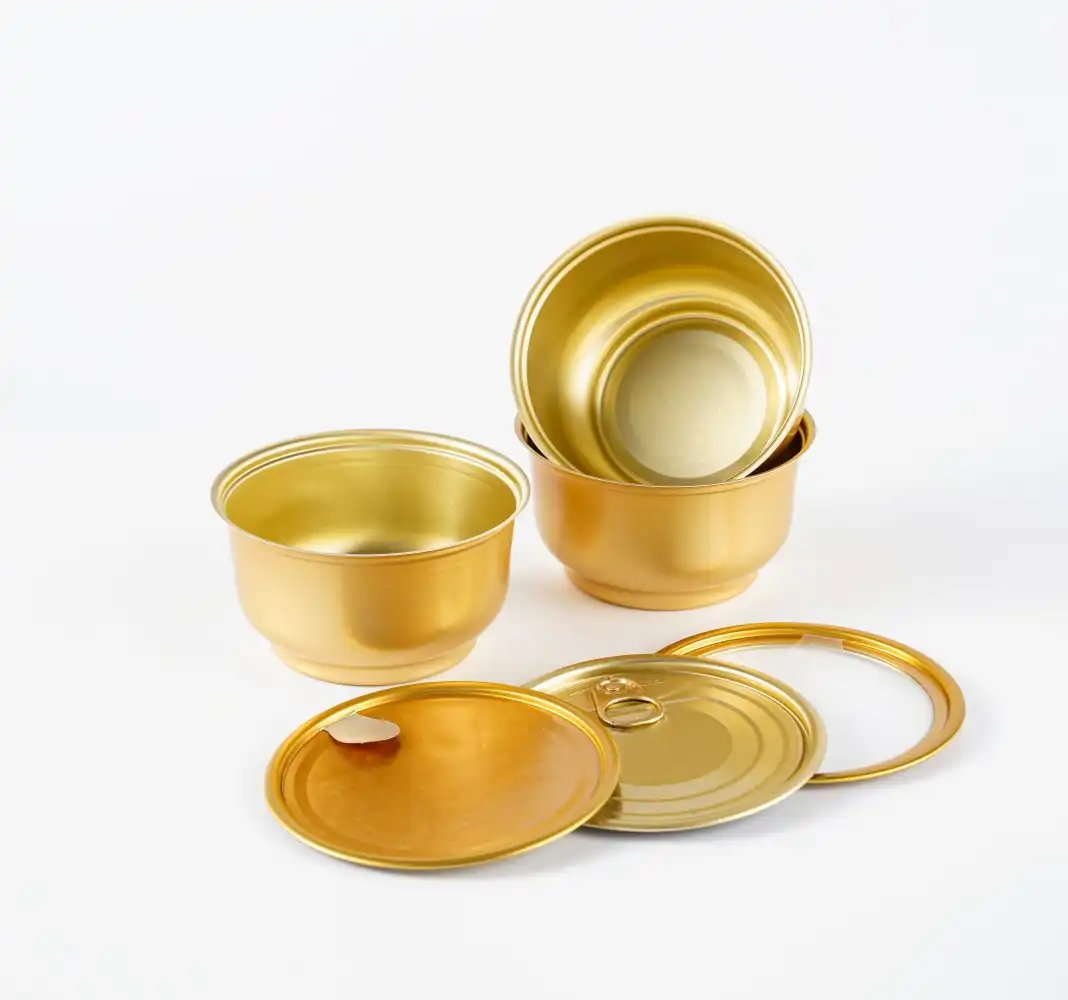
Comparing Peel Off Lid Sizes and Types for Different Food Packaging Needs
When deciding between Peel Off Lids for Food and other closure methods, you have to look at a lot of different performance factors where size requirements meet useful needs. Knowing these differences helps procurement pros get the most out of the packing line while still following rules for protecting products.
Peel Off Lids Versus Screw Caps
Screw caps can be resealed, which is very helpful for things like instant coffee or condiments that are used more than once. These caps cover the same range of diameters, but they add vertical height, which makes better use of shipping cubes. Peel Off Lids for Food, on the other hand, have a flush profile that makes the most of pallet density, which is important for exports where freight costs go up with volume. When put on a 307# can, the 83.3mm Peel Off Lid for Food lowers the package's height by about 15mm compared to screw cap equivalents. This means that standard containers can have an extra pallet layer. Sealing speed is much better for Peel Off Lids for Food. Our solutions can go through double-seamers at speeds of more than 400 units per minute, while screw cap applications can only go through 200 to 250 units per minute because they need to be threaded. For companies that package a lot of cookies, nuts, or powdered drinks, this throughput advantage cuts down on labor costs and makes the equipment work better overall.
Foil Seals and Induction Closures
Through electromagnetic heating, foil induction seals stick to the edges of containers, making walls that can't be broken, like peel-off caps. These methods work well with jars that have openings between 90 mm and 120 mm, but they need different cap parts, which adds to the cost of the materials. Peel Off Lids for Food combine the sealing membrane with the structural ring, getting rid of extra parts while still giving the same level of barrier qualities. The 99mm Peel Off Lid for Food has the same oxygen transfer rate as foil induction seals, which is less than 0.005 cc/100in²/24hrs. However, when buying in bulk, more than 500,000 units per year, the landing cost is 30% lower. Size adaptability is another thing that sets these technologies apart. Foil seals work well with odd-shaped containers like oval and rectangular ones, while Peel Off Lids for Food work best with round openings. Purchasing departments that deal with a wide range of products usually keep both technologies in stock. They use Peel Off Lids for Food for normal cylindrical cans (65.4mm–99mm) and foil seals for unique jar shapes.
Durability and Shelf Life Considerations
When heated and when pressure changes, larger diameter lids are put under more mechanical stress. The 99 mm Peel-Off Lid for Food has to stay intact in retort (121°C, 30–60 minutes) conditions, which calls for special RCPP (retort-grade cast polypropylene) sealant layers. Smaller 65.4mm lids, on the other hand, can be used on powders that are stable at room temperature and can use standard PP films, which cuts material costs by about 12%. Shelf life protection is related to the size of the lid by the length of the seal's circumference. The sealed circumference of a 99mm diameter lid is 311mm, while the sealed circumference of a 65.4mm diameter lid is 206mm. This wider perimeter makes it more likely that there will be leaks, but the right seaming parameters—chuck pressure between 80 and 100psi and roller depth settings within a tolerance of 0.02mm—ensure that all sizes are hermetically sealed. Through accelerated aging studies and real-time distribution trials in both tropical and temperate climates, we've shown that products like infant formula (65.4 mm lids) and premium mixed nuts (99 mm lids) can stay stable on the shelf for 36 months.
How to Choose the Right Peel Off Lid Size for Your Business
When deciding what size Peel Off Lids for Food to buy, you have to weigh technology compatibility, legal compliance, and business terms. A methodical approach will help you make a choice that meets both short-term production needs and long-term brand strategies.
Assessing Packaging System Compatibility
First, look over the specifications of the seaming equipment you already have. To fit 401# (99mm) lids on double-seamers that were made for standard 211# (65.4mm) ends, the chuck and roller may need to be replaced. We suggest measuring your seamer's diameter range. Most industrial units can handle 52mm to 99mm with tooling tweaks, but it's best to check with the equipment maker to avoid having to make expensive changes to the line. You should also look at the widths of the conveyor belts, the sizes of the lid hoppers, and the vision inspection systems to make sure that the size you choose fits in smoothly.Size selection is based on both the product's features and the equipment's abilities. Powdered goods with bulk densities below 0.6 g/cm³ work well in smaller containers (65.4 mm or 72.9 mm), because the lid-to-volume ratio keeps air to a minimum and oxygen contact to a minimum. For filling without damage, whole cookies and big sweets need 83.3mm or 99mm holes. By matching lid sizes to product sizes, we've helped clients get the most out of their fill weights. For example, moving from 72.9mm to 83.3mm lids for premium butter cookies cut breaking rates by 18%.
Regulatory and Safety Requirements
Under FDA 21 CFR 211.132, goods sold in the United States must have tamper-evident conditions (121 °C, 30–60 minutes). Food meets this requirement because they are only meant to be used once. Once the membrane separates from the ring, it is clear that the lid has been tampered with. If your distribution chain needs extra security layers, the larger sizes (83.3mm and 99mm) can fit secondary tamper bands or shrink sleeves. Chemical compliance is different for each type of product and each market. All of our sizes use lacquer systems that are FDA-approved and have liquid residues that are less than 5 mg/m², as tested by gas chromatography. According to EU Regulation 10/2011, European markets need more migration testing. We keep a full statement of compliance documents for all size groups. Procurement teams that are working on more than one region like how our standard coating formulations make regulatory submissions easier, no matter what diameter the lid is.
Cost Optimization Strategies
Unit economics is greatly affected by minimum order numbers. MOQs for standard sizes (65.4mm–99mm) start at 50,000 pieces, while MOQs for special sizes start at 100,000–200,000 pieces. When you buy 500,000 units, you get a volume discount, which cuts the cost of each piece by 15-20%. To reach these volume levels more quickly, we tell our clients to group SKUs together based on common sizes. For example, they could use 72.9mm lids across multiple product lines instead of selecting different diameters for each one. Lead times range from 3 to 4 weeks for standard sizes to 6 to 10 weeks for unique shapes that need new tools. Keeping enough safety stock to cover 8 to 12 weeks of consumption helps keep production plans smooth and protects against problems in the supply chain. The 270,000-square-meter size of our Linyi plant includes warehouse space that supports just-in-time delivery programs for customers within 500 km. For export clients, container consolidation services lower the cost of international freight.
Engaging with Suppliers Effectively
When you ask for quotes, give more information than just the diameter. Include your choices for membrane construction (foil thickness, film grades), printing needs (process colors, registration tolerances), and performance standards (peel force ranges, burst pressure minimums). If you ask suppliers about their testing procedures, you can tell how committed they are to quality. Reputable makers do regular peel force testing according to ASTM F88, leak detection using dye penetration methods, and retort simulation for sterilization-grade uses. When you are evaluating suppliers, find out what kind of technical support they offer. We have 65 skilled technical staff members who help us optimize seaming parameters, figure out why seals aren't working, and do on-site checks of our packing lines. This knowledge is very helpful when increasing the number of products made or adding new types of products. Our research and development team also works together on special projects, like making packaging easier for people with arthritis to open or designing high-barrier structures to keep food fresh longer at room temperature.
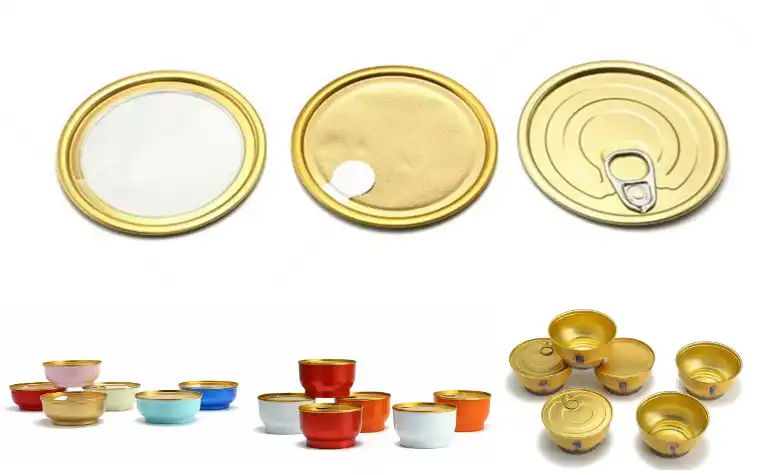
Eco-Friendly and Innovative Peel Off Lid Size Solutions
Retailers and customers who care about the environment push manufacturers to come up with new Peel Off Lids for Food materials while keeping the size standards that are needed for packaging lines to work together. New developments make it possible to be environmentally friendly without sacrificing the level of protection that B2B buyers want.
Recyclable Material Advancements
Aluminum and plastic films are often used together in traditional Peel Off Lids for Food, which makes recycling more difficult. Newer designs that only use one material use aluminum rings and all-aluminum membrane laminates, which makes them 100% recyclable through existing scrap metal channels. These solutions keep their barrier properties for dry goods that can be stored for 12 to 18 months, which is long enough for cookies, nuts, and other non-retort uses. We have these recyclable shapes in all of our sizes, from 65.4 mm to 99 mm, but the cost of the materials is 8–10% higher than for regular multi-layer structures. Recycling has benefits beyond just being good for the environment. Extended producer responsibility rules in European markets make it more and more necessary for packaging to be recyclable, so these designs are necessary to get into those markets. Major grocery chains and other stores in North America have made lists of the types of packaging they prefer, and most of them are made of just one material. When purchasing goods for these channels, procurement teams find that asking for recyclable Peel Off Lids for Food, even if it means paying a little more, removes barriers to distribution deals that are worth a lot more than the difference in materials.
Biodegradable and Compostable Alternatives
Plant-based plastics made from corn starch, sugarcane, and cellulose are now used instead of sealing layers made from petroleum in some Peel Off Lids for Food designs. ASTM D6400 standards say that these biopolymers break down in 90 to 180 days in industrial composting facilities. Current formulations work best for ambient-temperature products with moderate moisture sensitivity, limiting applications to crackers, dry pasta, and similar goods. We make biodegradable caps in two sizes, 65.4mm and 72.9mm, for high-end organic brands that want to tell full stories about their sustainability. Cost factors remain significant—biodegradable constructions carry 25-35% price premiums versus standard lids. Shelf life also suffers somewhat; barrier qualities degrade faster, lowering stability from 24 months to 12-15 months under similar storage conditions. We guide clients through trade-off analyses, examining whether shorter shelf lives align with just-in-time distribution models and whether price premiums can be recovered through brand differentiation in sustainability-focused market segments.
Multi-Layer Design Innovations
Advanced co-extrusion technologies make it possible to engineer a precise barrier layer for all lid sizes. We can select metallized films that offer 80% of aluminum foil's barrier performance at 40% of the weight, reducing freight costs and carbon footprint simultaneously. These lightweight solutions shine in export scenarios where air freight economics matter—shipping 500,000 units of 83.3mm lightweight lids instead of standard constructions saves approximately 180kg, translating to $420 in freight costs on trans-Pacific routes. New innovations that make it impossible to tamper with include color-changing signs that show when temperatures are being abused during cold chain shipping. These smart lids combine thermochromic inks in the membrane layer, visible through clear outer films. While currently premium -priced and available primarily in larger 99mm sizes for high-value products, we anticipate broader adoption as sensor costs decline. Such features address the dual duty of package integrity and supply chain information that savvy procurement organizations increasingly demand.
Conclusion
Choosing the right lid size fundamentally impacts packaging line efficiency, product protection, and brand presentation. Standard diameters (65.4mm, 72.9mm, 83.3mm, and 99mm) work for most food packing needs, from single-serve drinks to family-sized snack cases. More and more, new materials are making things more eco-friendly without affecting the hermetic closing and tamper evidence that make Peel Off Lids for Food necessary in today's supply lines. Procurement professionals get the best results when they choose the right size based on how well it fits in the container, the product's properties, government rules, and the economics of the volume. As packaging technology changes to make lighter materials, more recyclable materials, and smarter functions, the core size standards stay the same. This makes sure that investments in seaming tools and ties with suppliers pay off in the long run. Strategic buying partners who offer expert help, flexible minimum orders, and full approval make it easier to decide on specifications while lowering the risks in the supply chain.
FAQ
Can peel off lids be recycled across different size ranges?
Recyclability depends on how the material is made, not how big the hole is. During normal sorting processes, aluminum lids (65.4mm–99mm) separate into metal and plastic parts. The aluminum ring is recycled through scrap metal streams, but composite membranes are usually thrown away or burned. All sizes of metal caps made of a single material can be recycled. To help with planning for waste management, we give material declarations with resin identification codes.
Do all sizes support custom printing and tamper-evident features?
Custom gravure printing can put complex images on any size lid, and setup costs are spread out over orders that are more than 100,000 units. Smaller diameters (65.4mm, 72.9mm) reduce the amount of space that can be printed on, but they can still hold brand logos and legal text. All sizes have tamper-evident peel-off mechanisms; once the membrane is opened, it can't be closed again without being seen. When extra protection is needed, extra tamper bands can be added to fit bigger sizes (83.3 mm and 99 mm).
What are typical lead times and minimum order quantities for custom lids?
Prices start at 50,000 pieces and go down to 3–4 weeks for stock sizes. Custom sizes or finishes take 6–10 weeks, which includes making the tools, and the minimum order quantity (MOQ) is 100,000–200,000 pieces, based on how complicated the job is. We have warehousing programs that split yearly volumes into three shipments, which makes cash flow easier and makes sure there is enough space during busy times. Within 7–10 business days, free samples will arrive so that you can make sure they fit right before agreeing to production runs.
Partner with Three for Premium Peel Off Lids
Procurement managers seeking a reliable Peel Off Lids for Food supplier will find comprehensive solutions at Three. Our Linyi facility operates six German product sealings, six Japanese systems, and eight Swiss Soudronic high-speed units, producing 600 million cans annually with ISO9001 and SGS certifications. We offer all standard sizes—65.4mm (211#), 72.9mm (300#), 83.3mm (307#), and 99mm (401#)—with low minimum order quantities starting at 50,000 pieces and freely provided samples for testing. Aluminum construction with plain lacquer coatings in golden or grey finishes ensures compatibility with powders, cookies, and seafood applications. Our 65 technical specialists provide seam parameter optimization and shelf-life validation support, while our flexible customization accommodates unique branding requirements. Contact our team at info@threefoodcan.com or visit threefoodcan.com to discuss how our Peel Off Lids for Food enhance your product packaging with proven quality, reliable supply chains, and cost-effective pricing structures tailored for B2B procurement excellence.
References
1. Smith, J. & Anderson, K. (2021). Modern Food Packaging Technologies: Materials and Applications. New York: Industrial Press.
2. European Organization for Packaging and the Environment (2022). Recyclability Guidelines for Metal-Plastic Composite Packaging. Brussels: EUROPEN Publications.
3. Chen, L. (2020). "Barrier Properties and Shelf Life Optimization in Flexible Food Packaging," Journal of Food Engineering, 287, 110-125.
4. U.S. Food and Drug Administration (2023). Compliance Policy Guide: Tamper-Evident Packaging Requirements for Over-the-Counter Products. Washington DC: FDA Press.
5. International Organization for Standardization (2019). ISO 9001:2015 Quality Management Systems – Requirements for Food Contact Materials. Geneva: ISO Standards.
6. Martinez, R. & Thompson, D. (2022). Sustainable Packaging Solutions: From Design to End-of-Life. London: Packaging Innovation Group.
YOU MAY LIKE