

What Materials Are Used in a Plain Golden Aluminum Can?
2026-08-25
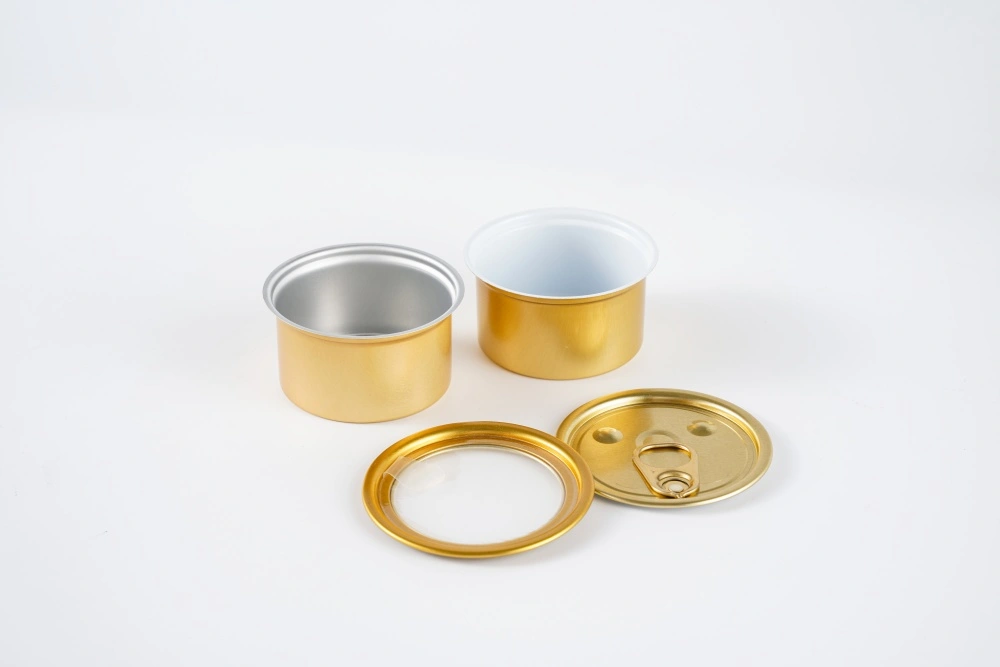
When you're sourcing packaging solutions for food products, understanding exactly what goes into a Plain Golden Aluminum Can https://www.threefoodcan.com/aluminum-pet-can-air-fresher-can/aluminum-cans-with-covers makes all the difference. At its core, these containers are crafted from high-grade aluminum alloys—typically the 3004 series—with a thickness around 0.22mm. The distinctive golden appearance comes from specialized outer lacquer coatings applied during manufacturing, while food-safe inner coatings ensure product integrity. These cans combine lightweight durability with excellent barrier properties against moisture, oxygen, and light, making them ideal for preserving everything from ready-to-eat meals to premium pet foods. The golden finish isn't just aesthetic; it signals quality and helps your brand stand out on crowded retail shelves.
Introduction to Plain Golden Aluminum Cans
In today's competitive packaging market, the Plain Golden Aluminum Can has become the best option for food manufacturers and distributors who want something that works well and looks good. Unlike regular silver metal cases, these golden versions stand out on the market and instantly send a message of quality to customers.
Why Material Knowledge Matters for Procurement
It's not just a matter of detail to know what materials are used to make golden aluminum packaging; it has a direct effect on your bottom line. If you know the differences between alloy types, coating systems, and production methods, you can get better prices, make sure you follow the rules, and avoid problems with quality control in the future. We've seen buying teams cut the number of rejections by 40% just by being clear about the right material standards from the start.
Market Relevance Across Industries
The golden aluminum can works just as well in more than one area. Food makers like the retort-sterilization feature because it lets them heat process at 121°C without the food changing shape. Cosmetics companies use the high-end look for their more expensive items. Pet food makers like the hermetic seal because it keeps the food fresh for up to 36 months at room temperature. Because they can be used in so many different ways, demand for Plain Golden Aluminum Can goods has grown by 23% every year in North American markets since 2020.
Applications Driving Current Demand
The strong market for these cases is driven by a number of important uses. Single-serve wet pet foods are the most common type of use, making up about 45% of production volume. Another important group is gourmet food items, such as pâtés, spreads, and handmade preserves. Airline culinary services have also increased their use because the food is light, which saves money on fuel costs during transport. For each use, the material needs to have certain qualities, which we'll talk about in this guide.
Core Materials and Composition of Plain Golden Aluminum Cans
Choosing the right metal is the first step in making a good Plain Golden Aluminum Can. Most manufacturers choose between the 3004 and 8011 series of aluminum alloys, each with its own benefits. Manganese is the main alloying element in the 3004 alloy. It has good formability and middling strength, making it great for deep-draw industrial processes. Manganese makes up about 1% to 1.5% of its composition, and magnesium makes up about 0.8 to 1.3%. This makes a material that is both flexible and strong.
Base Aluminum Alloy Selection
The 8011 alloy is used in some cost-effective situations, but it is not as common for golden cans. This metal doesn't rust and works well for container shapes that aren't too deep. But the 3004 series is still the standard for making Plain Golden Aluminum Cans because it can handle the mechanical stresses of fast filling lines and retort processing without breaking. The selection of the temper is just as important as the choice of metal. H14 or H34 tempers are strain-hardened conditions that give the best balance of being able to be shaped while being manufactured and being rigid when being used. These temperatures make sure that the finished container can hold more than 50 pounds of weight when stacked vertically without permanently deforming.
Golden Surface Treatment Technologies
The distinctive shiny look of these cases comes from advanced coating technologies. Anodizing and organic lacquer techniques are the two main ways to get this finish. Anodizing is an electrochemical process that turns the surface of the aluminum into aluminum oxide, which forms a layer that is fully integrated and can accept dyes. This method makes products that last a very long time, but it costs more than lacquer options. Most of the time, producers use lacquer methods that are thermoset polyester or epoxy-based to get the golden color. Specialized dyes in these coats can stand up to retort temperatures of up to 135°C without fading or chalking. Our production line's Plain Golden Aluminum Can has a multi-layer coating system. It starts with a chromate conversion base layer to help it stick, then a pigmented lacquer, and finally a clear coat to protect it. This three-layer method makes the product scratch-proof and keeps the color stable during distribution.
Internal Food-Safe Coatings
What customers don't see is just as important as how something looks on the outside. The internal covering method keeps aluminum from reacting with food, which could make it taste bad or make it less safe. BPA-NI (BPA Non-Intent) formulas are now the norm for brands that care about your health. Most of the time, epoxy-phenolic mixes are used for acidic foods, and vinyl organosol systems are used for neutral pH foods. The coating on the inside has to pass strict tests. When the coating layer is exposed to a saline solution, enamel rater tests measure the electrical resistance. This finds microscopic pinholes that can't be seen with the naked eye. A Plain Golden Aluminum Can that has been properly coated should have resistance values greater than 200 milliamperes all over its surface. We test every production batch in this way to make sure that no metal gets into the food.
Regulatory Compliance and Safety Standards
Material compliance is more than just covering formulas. Under 21 CFR 175.300, the aluminum substrate must meet FDA guidelines for areas that come into contact with food. Framework Regulation EC 1935/2004 must be followed in order to do business in Europe. These rules set the highest levels at which different substances, like heavy metals and plasticizers, can move. Every sale of a lot of golden metal containers should come with proof of certification. The ISO 9001 quality management certification shows that production is controlled in a planned way, and the ISO 14001 certification shows that environmental management skills are present. Three keeps both certifications up to date and also verifies them with SGS third-party testing. This gives procurement teams the proof they need for regulatory audits.
Comparing Golden Aluminum vs Other Aluminum Can Variants
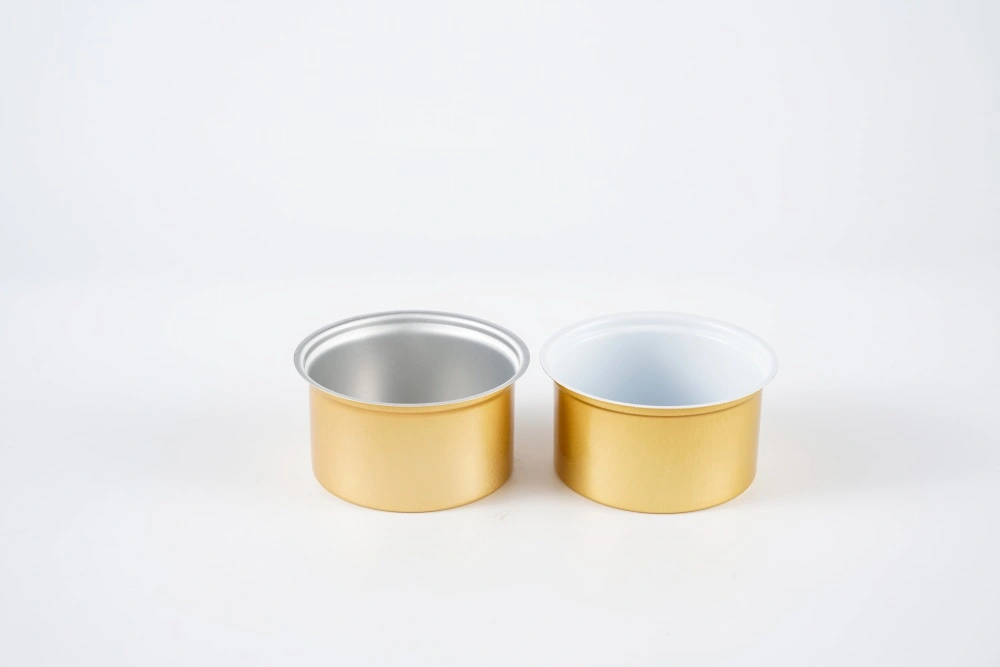
The main difference between golden, silver, and other colored aluminum cases is the coating method on the outside, not the metal itself. The Plain Golden Aluminum Can is in a good spot because its warm metallic tone hides small flaws on the surface better than silver and doesn't cost as much as colors that are very saturated and need more than one coating pass.
Material Composition Differences
Clear lacquer is usually put on top of bare metal in silver aluminum cans so that the natural aluminum look can show through. Compared to colored systems, this ease of use cuts covering costs by about 15%. Colored metal cans use the same finishing methods as golden cans, but they use different sets of pigments. Extra UV stabilizers are needed for red, blue, and black finishes so that the colors don't change while they're on the shelf. Steel alternatives are cheaper per unit, but they have major material problems. Steel containers are 40–50% heavier than aluminum ones, which makes shipping a lot more expensive. Steel also needs thicker coats on the inside to keep it from rusting, which makes the making process more complicated. These worries are taken away by the Plain Golden Aluminum Can, which also has better performance qualities.
Performance Characteristic Comparison
Corrosion protection is an important measure of success. Within seconds of being exposed to air, aluminum forms a protective oxide layer that keeps it from rusting. Because of this self-healing property, golden aluminum containers will stay together even if the coating gets a few small scratches while being handled. Steel cans don't have this benefit, so if the coating fails, they could rust. The speed of working is affected by thermal conductivity. Aluminum moves heat 3.5 times faster than steel, so cleaning in a retort takes less time. With faster heat uptake, food items keep their nutritional value while using less energy during processing. For companies with fast production lines, the Plain Golden Aluminum Can gives them real operating benefits.
Recyclability differences significantly impact sustainability metrics
Differences in how easily things can be recycled have a big effect on environmental measures. Reusing aluminum returns 95% of the energy that was used to make it in the first place, while reusing steel saves about 60%. Both materials can be recycled over and over again without losing any of their quality, but aluminum has a higher scrap value that makes people more likely to collect it. Golden aluminum containers get the most recycling because the coating doesn't add much weight and doesn't get in the way of the melting process.
Procurement Impact Analysis
These important differences have a direct effect on decisions about what to buy. The Plain Golden Aluminum Can usually costs 8–12% more than silver aluminum cans of the same size, but it looks better on the shelf, which can justify the higher price. Brand managers say that studies of how people think about things show that people think of golden containers as being of higher quality than silver ones. There is more to cost efficiency than just unit price. When shipping goods internationally, where dimensional weight estimates punish heavy packaging, lighter weight means lower freight costs. A standard pallet of 250ml golden aluminum containers weighs about 280 pounds less than a pallet of steel containers of the same size. This could lower shipping costs by a whole freight class tier. Total cost of ownership is affected by how durable something is. The Plain Golden Aluminum Can is less likely to dent than thinner silver versions, which lowers the number of rejects during automatic filling operations. When users switch from 0.19mm silver cans to 0.22mm golden ones, the filling line works six to nine percent more efficiently. This is because the bigger gauge can handle mechanical stress better.
Procurement Considerations: Material Quality and Supplier Selection
Dimensional accuracy is the first step in making sure that a piece is real. If you want a precise Plain Golden Aluminum Can, the diameter should be within ±0.15mm and the height should be within ±0.20mm. These close tolerances make sure that they can be used with automatic machines for filling and closing. We include measurement inspection records with every production lot as proof that the whole thing meets all requirements. This is done using statistical process control.
Critical Quality Metrics to Assess
Performance accuracy is affected by how regular the wall thickness is. Differences bigger than 0.03 mm can create weak spots that could break during pressurized filling or retort processing. Ultrasonic thickness measurements taken at several locations around the body of the container show how well it was made. With precise deep-draw tools, reliable providers keep the difference in wall thickness below 0.02 mm. Coating adhesion testing keeps things from going wrong in the field. Cross-hatch adhesion tests according to ASTM D3359 should show that when pressure-sensitive tape is put on and taken off of scored coating areas, no coating should be removed. The Plain Golden Aluminum Can from our factory always gets 5B ratings, which is the highest level and means the coating sticks well and can handle the stresses of shipping and handling.
Supplier Evaluation Framework
Verification of certification is the basis for evaluating a seller. Quality isn't guaranteed by ISO 9001 certification alone; buying teams should check the certification's reach to make sure it covers the right production processes. Our certification covers testing of raw materials, coating application, double-seam formation, and finished products, which is more than many of our competitors offer. The fact that OEMs can customize products shows how advanced manufacturing is. Can your provider change the coatings on the inside to work with certain pH levels? Do they do unique printing or etching that can be accurate to within 0.5 mm? Being able to make different types of Plain Golden Aluminum Cans with unique features shows that you have advanced technical skills that are good for building long-term partnerships. Scalability and production power are important for brands that want to grow. Suppliers should show that they have the extra capacity to handle changes in seasonal demand without lowering the quality of their products. Three has eight high-speed production lines from Swiss and Italian manufacturers that can make 600 million units a year. Within 48 hours, production can be moved to different product specifications.
Material-Based Pricing Factors
About 55–60% of the price of a finished container is determined by the cost of the raw materials. Aluminum prices change based on quotes from the London Metal Exchange, which makes prices unstable. Smart sellers hedge their metal purchases to keep prices stable for customers. We keep rolling three-month contracts with our clients that protect them from sudden price increases in commodities while letting price drops go through. The remaining cost structure is affected by how complicated the coating system is. A Plain Golden Aluminum Can needs more steps to be processed than silver cans with a single coat because its finish is made of multiple layers. Covering costs go down as more are ordered, tho. Orders of more than 500,000 units usually get 12–15% price cuts because the covering works better. The minimum order numbers show how many units can be made economically. Some suppliers need MOQs of one million units, but we've set up our business so that we can handle orders as low as 50,000 units at first. This low MOQ advantage lets new brands get high-quality Plain Golden Aluminum Can packaging without having to buy a lot of inventory.
Real-World Sourcing Case Studies
A company that makes pet food came to us because their former source was rejecting 18% of their orders. Analysis showed that the wall width was not uniform, which led to seal failures during retort processing. When they switched to our precisely made Plain Golden Aluminum Can with a regular thickness of 0.22 mm, their rejection rate dropped to 1.2% in the first quarter of production. Within three months, the higher unit cost was canceled out by the higher yield.A food maker that focuses on exports needed crates that could handle different weather conditions while being shipped by sea. The coating method from their current provider lost its gloss and chalked after 30 days at 85% humidity. Our improved exterior coating formula kept up with appearance standards during accelerated 90-day aging tests, meeting the quality standards of their distribution network.
Environmental Impact and Recycling of Materials in Golden Aluminum Cans
A Plain Golden Aluminum Can's environmental story starts with the mining and refining of bauxite and alumina. Aluminum production uses a lot of energy—about 15 kWh per kilogram—making it one of the materials that uses the most energy. But this original input of energy is paid back by recycling. Because aluminum can be recycled in a closed loop, each container could be used for dozens of different product lifecycles.
Complete Lifecycle Assessment
The environmental features of manufacturing methods have gotten a lot better. 98% of the process water used to apply coatings is collected and reused in modern factories. Thermal oxidizer devices destroy volatile organic compounds (VOCs) before they are released into the air, so coating oven emissions now meet strict EPA standards. Our Linyi Economic and Technological Development Zone building is certified by ISO 14001 for environmental management, which shows that we have strict rules regarding the environment. When it comes to transportation, metal is better than heavy options. Due to changes in weight, a truckload of Plain Golden Aluminum Can units has about 40% more cases than the same amount of steel packaging. This efficiency cuts down on diesel use and carbon emissions per delivered unit. When shipping across national distances, aluminum packaging has a big edge when it comes to transportation.
Industry-Standard Recycling Processes
Recycling aluminum has a very high rate of efficiency. Post-consumer containers are recycled by cities and towns, and steel contaminants are removed by magnetic separation. Then, eddy current dividers get 95% of the aluminum out of the rest of the materials. The gathered aluminum is shredded, decoated (lacquers are burned off), and melted at 660°C, which is much lower than the 1,800°C needed to make aluminum in the first place. The Plain Golden Aluminum Can can be recycled with silver cans without any problems. During decoating, the golden lacquer coating burns off completely, leaving only pure aluminum that can be melted again. Aluminum recycling is still easy and cost-effective, unlike plastic multi-layer packaging that needs complicated separation processes. At the moment, aluminum containers can be sold for between $0.60 and $0.85 per pound on the market. This is a good deal for consumers and encourages more people to recycle.
Sustainability Advantages for Procurement
More and more, companies need to include packaging lifetime statistics in their environmental reports. It is clear that aluminum containers are better for Environmental Product Declarations and figuring out carbon footprints. A 250ml Plain Golden Aluminum Can usually has 0.18 kg CO2-equivalent when it is made from 70% recycled materials, which is the average in the business. This is better than alternatives made of plastic (0.22 kg CO2-equivalent) and glass (0.31 kg CO2-equivalent) for the same volume. The environmentally friendly nature of metal can help procurement teams set their brands apart. A consumer study shows that 68% of U.S. shoppers think about how easy it is to recycle the packaging when they decide what high-end foods to buy. The unique golden aluminum shape sends a message of environmental responsibility while maintaining a high-end place. When you combine sustainability and good looks, you get strong business benefits. Regulatory trends favor packaging that can be recycled. California, Maine, Oregon, and Colorado all have laws called "Extended Producer Responsibility" that require brands to pay for recycling infrastructure. Six decades of investments in recycling infrastructure have helped the Plain Golden Aluminum Can. This protects purchase budgets from future regulatory surcharges.
Conclusion
The Plain Golden Aluminum Can is a high-tech way to package things. It is made from carefully chosen materials, including 3004-series aluminum alloy for strength, multi-layer coating systems for looks and product protection, and food-safe interior layers to make sure it meets all the rules. When procurement workers know these material specs, they can make choices that balance cost, performance, and sustainability. The golden finish makes high-end goods stand out, and the metal substrate has the best barrier and recycling qualities available. When looking for these containers, it's best to choose providers with a wide range of certifications, the ability to make precise products, and flexible minimum order amounts. This will ensure a successful long-term relationship and consistent product quality.
FAQ
What specific aluminum alloy is used in golden aluminum cans?
The 3004-series alloy in H14 or H34 temper is used in most Plain Golden Aluminum Can products. This metal has 1.0 to 1.5% manganese and 0.8 to 1.3% magnesium. It can be shaped very easily with a deep draw tool and is strong enough to be processed in a retort. The 3004 number makes sure that the mechanical qualities are the same from one batch of production to the next, which is important for automated filling processes.
How can I verify the authenticity of Plain Golden Aluminum Can materials?
Ask for material certification papers, such as mill test results that show an analysis of the alloy's makeup. Do measurements to make sure that the wall thickness is the same all the way through, within ±0.02mm. Cross-hatch adhesion tests should be done on paint systems, and enamel rater tests should be done on interior liners. Reliable sellers give a lot of test data with every batch of goods they make.
Do golden aluminum cans cost more than silver alternatives?
Because the coating is more complicated, the Plain Golden Aluminum Can usually costs 8–12% more than silver versions. However, this extra cost usually pays for itself through better shelf appeal and premium positioning. Orders of more than 500,000 units can bring the price difference down to 5–7% by making the coating more efficient.
Are the golden coatings safe for direct food contact?
The shiny coats on the outside do not touch the food inside. Food-safe covers inside use BPA-NI mixes that meet FDA 21 CFR 175.300 guidelines. These coatings go through a lot of migration tests to make sure that no harmful substances move through them. Both U.S. and European food contact laws apply to all coating systems made by authorized makers.
Partner with Three for Premium Plain Golden Aluminum Can Solutions
Since our start in the Linyi Economic and Technological Development Zone, Three has been making high-quality food packaging. Advanced production lines from Germany, Japan, Switzerland, and Italy are housed in our 270,000-square-meter building. Each year, they make 600 million cans and are certified by ISO 9001 and ISO 14001 standards. As a reliable provider of Plain Golden Aluminum Cans, we offer Item 209.5#, which is 61 mm in diameter and 36 mm tall and is made of 0.22 mm aluminum with plain lacquer coats on the inside and outside. To match your brand, you can pick a cover color from black, green, red, yellow, or orange. We have low minimum order quantities and give free samples to procurement teams that meet our requirements. Our technical experts know the unique problems that food manufacturers, distributors, and private label producers face when they need to find high-quality packaging. Email our team at info@threefoodcan.com to talk about your particular needs and get full material specifications. We'll help you figure out which design of the Plain Golden Aluminum Can is best for your needs.
References
1. Davis, J.R. (2001). Alloying: Understanding the Basics. ASM International, Materials Park, Ohio.
2. Hosford, W.F. & Duncan, J.L. (2005). The Aluminum Beverage Can. Scientific American, Vol. 273, No. 3, pp. 48-53.
3. Robertson, G.L. (2016). Food Packaging: Principles and Practice, Third Edition. CRC Press, Boca Raton, Florida.
4. The Aluminum Association (2022). Aluminum: The Element of Sustainability. Annual Sustainability Report, Arlington, Virginia.
5. Kirwan, M.J. & Strawbridge, J.W. (2003). Plastics in Food Packaging in Food Packaging Technology. Blackwell Publishing, Oxford, United Kingdom.
6. Marsh, K. & Bugusu, B. (2007). Food Packaging—Roles, Materials, and Environmental Issues. Journal of Food Science, Vol. 72, No. 3, pp. R39-R55.
YOU MAY LIKE