

What Materials Are Used in Aluminum Cans with Covers?
2026-08-25
Direct Answer: Aluminum cans with covers https://www.threefoodcan.com/aluminum-pet-can-air-fresher-can/gold-aluminum-canare manufactured using high-purity aluminum alloys (typically AA3003 or AA1050) with wall thicknesses ranging from 0.22mm to 0.30mm, coated with food-grade lacquers for protection. The covers incorporate materials like aluminum, plastic, EPE liners, and silicone seals to ensure resealability, tamper-evidence, and hermetic sealing. Understanding these materials empowers B2B buyers to select packaging solutions that meet regulatory standards while optimizing product preservation and brand differentiation.
Introduction
When selecting packaging for food products, cosmetics, or industrial goods, understanding the material composition becomes non-negotiable. We've seen countless procurement managers struggle with quality inconsistencies simply because they didn't grasp what actually goes into aluminum container construction. The materials used in aluminum cans with covers directly influence product shelf life, regulatory compliance, shipping costs, and consumer perception. Beyond simple containment, these vessels solve critical challenges like photodegradation of light-sensitive formulations, oxidation through hermetic sealing, and supply chain inefficiency. Aluminum packaging has evolved significantly from basic storage solutions to sophisticated barrier systems. The global aluminum packaging market reached approximately $40 billion in 2022, with rigid containers representing a substantial segment driven by sustainability demands and functional superiority. Choosing the right material combinations affects everything from your MOQ negotiations to your corporate sustainability reporting. This guide breaks down the precise materials involved, helping you make informed decisions that strengthen your supply chain while meeting market expectations.
Types and Customization Options of Aluminum Cans with Covers
Dimensional Variations and Structural Considerations
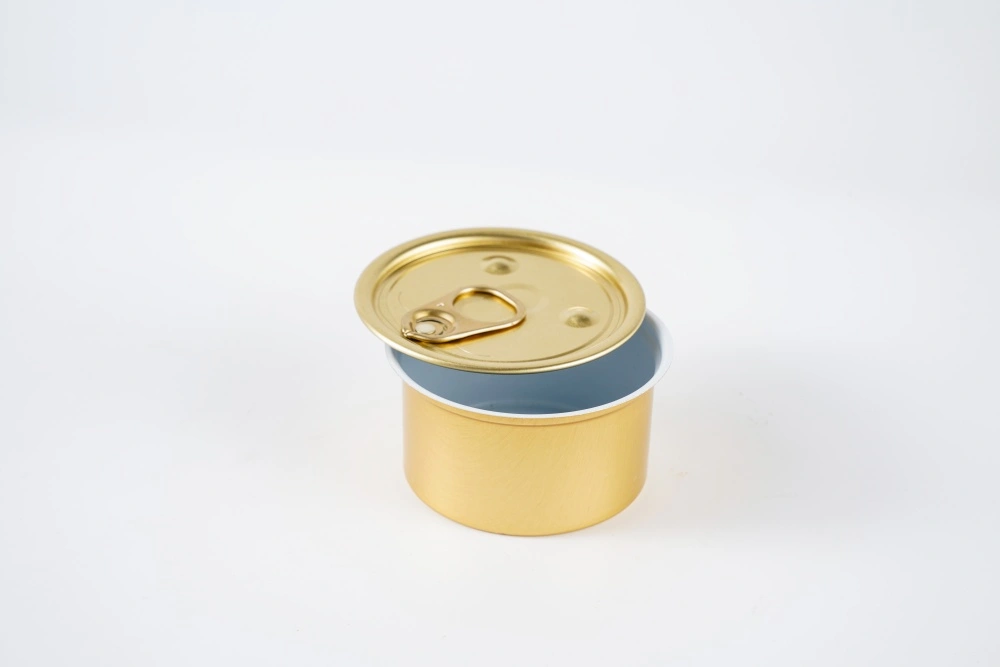
Our production skills cover a wide range of sizes. For personal care goods, specialty foods, and portable packing forms, the 209.5# diameter (61mm) is the best size. With a height of 36 mm, the shapes are small enough to be perfect for travel-sized items or sample handouts. These measures keep the structure stable when it is handled normally and make the best use of shelf space in stores. Ratios of diameter to height have a big effect on how well and how efficiently materials work. Shorter, bigger cans are more stable and less likely to fall over, which is good for storing cosmetics on bathroom shelves. Profiles that are taller and narrower work well for spice packaging where vertical space use is more important than footprint. Engineers change the thickness of the walls based on the dimensions. For example, walls that are relatively thicker around bigger diameters keep the oval from deforming in a vacuum or under pressure from the outside. For good engineering reasons, Aluminum Cans with Covers are mostly made in a round shape. With circular cross-sections, stress is spread out evenly, so there are no weak spots like there are in square or rectangular containers. This shape increases the ratio of strength to weight, which lets walls be thinner without lowering their longevity. Impact extrusion and deep drawing can make circular shapes with tighter tolerances than rounded ones, which also makes round shapes more efficient to make.
Color Customization for Market Differentiation
Cover color choice is about more than just personal taste; it's also about positioning the brand strategically. The standard colors we offer are black, green, red, yellow, and orange. Pantone specification systems let you match colors exactly to your needs. Covers for high-end cosmetics are mostly black, which sends a message of sophistication and luxury. Green is a color that appeals to people who like natural products because it is linked to organic foods and caring about the earth. In busy stores, bright colors like red, yellow, and orange stand out on the shelves and get people's attention in product areas that are already very competitive. We've made special color runs for seasonal sales, limited editions, and the needs of local markets. To keep the color the same from one production run to the next, you need to use exact powder coating or liquid paint recipes. Spectrophotometric quality control makes sure that each batch is the same, which protects the brand's reputation. The coating process changes how long the color lasts and how it feels to the touch. Powder coating makes finishes that are thicker, last longer, and are less likely to scratch or fade from UV light. This makes it perfect for products that will be kept for a long time or for use outside. Liquid paints can make smaller color changes and shiny effects, but they might need extra clear coats to protect them. We find a balance between attractive and useful needs by suggesting coating types based on how the product will be used and how long it will last.
Branding and Printing Capabilities
Direct printing on aluminum surfaces makes branding last longer than adhesive labels, even after shipping, handling, and use by customers. Offset lithography is still the best way to make a lot of things because it gives you photographic quality at low costs per unit once the setup costs are paid back. Digital printing technologies have made short-run customization easier and more affordable, letting private label clients make 500-unit minimum orders with full-color images. To print directly on polished aluminum, you need paints that are specially made to stick to metal surfaces. Solvent-based inks have mostly been replaced by UV-curable ones, which get rid of volatile organic compound fumes and speed up production by fixing instantly. The quality of the printing surface depends on how smooth and even the outside coating is. This is why we stress precise coating application during production. The methods of embossing and debossing add physical elements that make something seem more valuable. Raised letters or logos make connections that people will remember. This works especially well for high-end makeup or handcrafted foods. Aluminum hardens over time, so these mechanical deformations need to take that into account. If the stamping depth is too deep, stress clusters can form that weaken the structure. We engineer embossing depths that are between 0.1 and 0.3 mm, balancing how the material looks with how well it works.
Comparing Aluminum Can Covers with Alternative Packaging Materials
Environmental Performance and Recyclability
When it comes to packaging materials, aluminum has the highest recycling rate. About 75% of all the aluminum that has ever been made is still being used in recycling loops. Recycling aluminum uses only 5% of the energy needed to make aluminum from bauxite rock, which makes it a strong environmental case. Aluminum Cans with Covers keep their value through endless recycling cycles without losing quality. This is different from plastics, which lose value and can only be used for lower-grade tasks after each recycling cycle. Plastic packaging is under more and more pressure from regulators and customers, even tho it costs less at first. Single-use plastic containers pollute the oceans and fill up landfills quickly because they don't break down for more than 400 years. Bioplastics could be better in theory, but because of problems with infrastructure, most of them end up in regular trash. The established recycling infrastructure and economic value of aluminum encourage recovery, with collection rates above 67% in mature markets compared to less than 30% for plastic containers.The barrier properties of glass are great, and it looks great, but it is heavy and can break easily. Because glass is so dense, the cost of shipping it can be higher than the cost of the container itself. Breaking during shipping and handling leads to lost goods, safety risks, and unhappy customers. Aluminum works just as well as other barriers, but is only one-sixth the weight. This saves money on freight costs and eliminates concerns about breakage in distribution networks.
Performance Characteristics in Real-World Applications
How well a barrier works against light, oxygen, and moisture affects the shelf life of many types of products. Aluminum is totally opaque, blocking both UV and visible light that breaks down photosensitive substances. Cosmetic essential oils, nutraceutical vitamins, and specialty tea aromatic compounds all stay potent for a much longer time in metal cases than in clear plastic ones. We've seen light-sensitive goods' shelf lives increase by 40 to 60 percent just by switching out the packing material. Aluminum is different from glass because it doesn't break easily when it's shipped, but it performs the same as hard plastic. Drop tests from normal pallet heights (48 inches) show that metal cans don't break when hit with force, but glass cases do. Aluminum doesn't break at low temperatures as plastic does. It works well from -40°C to 150°C, so it can be used for both cold chain shipping and hot-fill processes without any problems. Beyond pure functional needs, consumer convenience factors are becoming more and more important in choosing packaging. Aluminum covers that can be resealed allow goods to be used more than once, which is especially useful for makeup and food that are eaten more than once. The satisfying feel of threaded closures and the audio feedback of closing create good user experiences that make people loyal to the brand. Aluminum packaging is lighter, which makes it easier for people to move, which is good for older people and people who are always on the go.
Procurement Considerations: Materials, Suppliers, and Lead Times
Quality Certification and Compliance Standards
Material approval is an important part of managing risk in global supply lines. ISO9001 certification shows that quality management processes are organized, but procurement professionals should make sure that the certification scope includes manufacturing Aluminum Cans with Covers. Our building has both ISO9001:2008 and ISO14001:2004 Environmental Management System certificates, which make sure that we always meet high standards and are good to the environment. Compliance with specific regulatory frameworks is more than just getting general quality certifications for food contact materials. In the US, FDA rules say that aluminum cans and coatings must meet CFR Title 21 standards for surfaces that come into contact with food. For products to be sold in European markets, they must comply with EU Regulation 1935/2004 and pass migration tests to show that no harmful substances move from packaging to food. Third-party testing, like SGS and BPA-NI verification, makes sure that materials meet international safety standards. This is important proof for importers and brand owners who are being closely watched by regulators. Having a certificate on hand speeds up customs processing and meets store needs, but verification is still necessary. We suggest that you ask for up-to-date certificates with clear stamps from the accrediting body, check that building addresses match output places, and make sure you know how long the certificates are good for. Fake certifications are real risks in the supply chain, especially when buying from suppliers you don't know. Sample cans being tested by a separate lab give you more peace of mind, especially when working with a new source or launching a high-value product.
Minimum Order Quantities and Inventory Strategy
MOQ requirements have a big effect on cash flow and the cost of keeping inventory, especially for new and small brands that are testing how well the market will accept them. Traditionally, making metal cans requires big investments in tools for specific sizes and printing plates, which has led to minimum order quantities of 50,000 to 100,000 pieces. This problem is solved by our low MOQ, which lets private label makers and new brands get aluminum packaging at a low cost without having to make big inventory promises. Lower MOQs make it easier to test the market, make seasonal goods, and make limited versions without putting too much money at risk. Instead of making 10,000 units of a single formula that hasn't been tested, a cosmetics company can test three different scents with 2,000 units each. The adaptability helps with quick product development, which shortens the time it takes to bring new products to market. But unit costs go down as volume goes up, so purchasing managers should weigh the savings from a lower MOQ against the fact that prices per unit go down a lot as volume goes up. To manage lead times, you need to know how to plan production and find materials when you need them. Standard-sized cans with plain finishes usually get sent out 15 to 20 days after the order is confirmed. For custom printing, setting up the plates and matching the colors can take an extra 7–10 days. Times are extended to 30–35 days for more complicated stamping or custom coating formulas. We keep 61mm diameter cans and other popular sizes in stock so that we can quickly fill repeat orders and meet pressing production needs.
Supplier Selection and Relationship Management
Geographic proximity affects more than just unit prices when it comes to total landed costs. Domestic suppliers may charge more than international sellers, but they don't have to deal with international freight, customs taxes, or processing delays. Because they make a lot of things and are vertically integrated, Asian manufacturers can offer competitive prices. However, ocean freight adds 25 to 40 days to lead times. We've set up distribution partnerships in key markets and keep strategic inventory that blends the low costs of Asian production with the fast fulfillment times in those markets. Beyond price and delivery, technical support skills are what set suppliers apart. Our engineering team helps with testing the compatibility of products and packaging, finding problems before they are committed to production. When making cosmetics with a lot of essential oils, the inside may need special treatments that aren't covered by standard specs. Foods that have a low pH level need coatings that don't react with certain chemicals. When problems are found during production scaling, this consultative approach stops expensive re-mixing or redesigning of the packaging. Having samples available speeds up the decision-making process and lowers the risk of buying. We offer free samples so that you can see how they work, see if they're compatible, and get feedback from other stakeholders before you decide to buy. To make sure the evaluation is useful, the samples should be the exact same size, shape, height, wall thickness, covering type, and cover style as the final product. We've seen procurement decisions be changed after testing samples showed small problems that weren't shown in the specification sheets.
Safety, Recycling, and Sustainability of Materials in Aluminum Cans with Covers
Regulatory Compliance and Food Safety
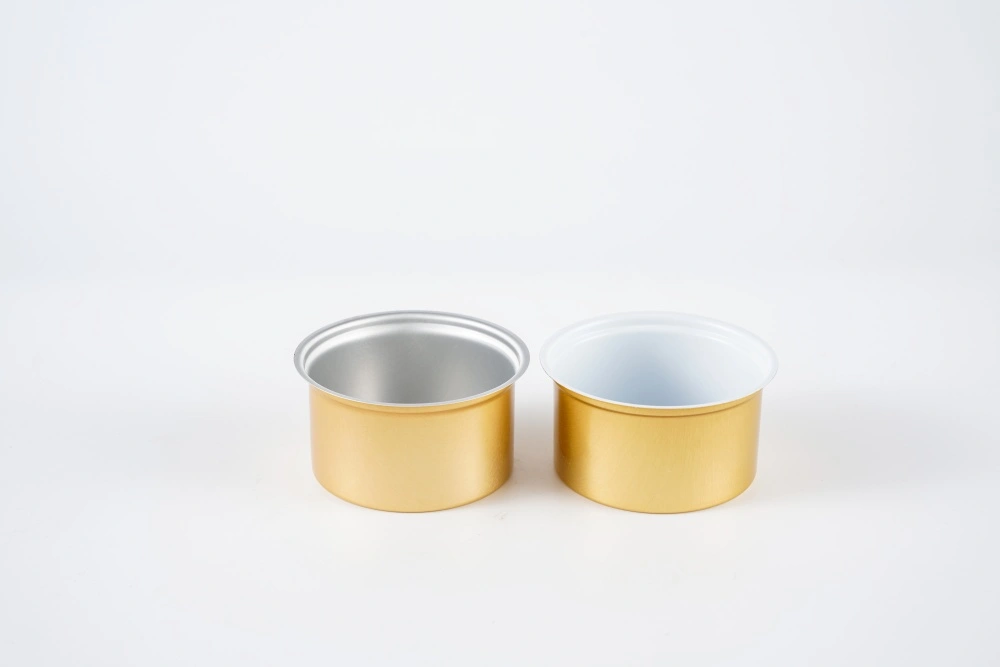
Materials that come into contact with food must meet strict movement limits. This stops chemicals from moving and contaminating goods or hurting consumers. Interior coatings go thru a lot of tests that measure both the overall movement (total substance transfer) and the specific movement of parts like plasticizers, stabilizers, or residual monomers. For general migration, acceptable limits are usually less than 10 mg per kg of food simulant. For certain substances of worry, the limits are even lower. When properly coated, Aluminum Cans with covers don't pose much of a health risk because it stays chemically steady and don't react with other things when they're not in direct contact with them. Peer-reviewed research, including large studies by the Alzheimer's Association, has shown that there is no direct link between aluminum and Alzheimer's. This dispels historical worries about the link. Modern coatings completely separate aluminum from food or cosmetic contents, so there are no longer any concerns, even theoretical ones. Tamper-evidence features meet safety standards in the food and drug industries, where the purity of the product has a direct effect on the health of consumers. The foil layer tears away from the can rim during the first opening, which shows that someone tried to open the IHS seal. Breakable bridges that connect screw caps to retention rings make opening signs that can't be reversed. These features keep people from messing with products without permission and reassure customers that the products they buy have not been opened. This is especially helpful for baby food, dietary supplements, and high-end makeup.
Circular Economy Integration
Within 60 days, closed-loop recycling systems take back used aluminum cans, turn them into sheet stock, and use that to make new containers. This fast switching cuts down on the amount of material that needs to be stored throughout the supply chain while also helping the environment the most. Four tons of bauxite mining are avoided for every ton of recovered aluminum. This saves habitats and cuts carbon emissions by about 95% compared to original production. Design for recyclability principles affect the choice of materials used in the whole process of making a product. How easy it is to separate aluminum bodies, covers, and non-metallic seal parts affects how well they can be recycled. Metal can be recycled over and over again, but composite products that mix metal with plastics or papers that don't work well together make sorting harder. We make covers with liners that can be taken out and constructed out of a single material whenever utility allows it. This helps restore as much as possible and supports the goals of the circular economy. Companies that report on their sustainability are being asked to quantify the environmental effects of all of their packaging products more and more. Comparing Aluminum Cans with Covers to other materials in a lifecycle review gives ESG reporting measures that can be defended. We offer carbon footprint calculations, documentation of recycled content, and end-of-life commitments and projections that meet the needs of GRI Standards and CDP questionnaires for reporting. Because of this, corporate buyers can correctly compare choices about packaging to environmental goals and stakeholder promises.
Innovation in Sustainable Materials
Bio-based lacquers made from plant oils and renewable resources are slowly taking the place of coating systems that are based on petroleum. These mixtures keep their protective properties and chemical protection while lowering their reliance on fossil fuels. Bio-based coatings today have 30–40% renewable content, and a study is still going on to find ways to get higher numbers without affecting their usefulness. Adoption rates are still limited by cost increases of 15–25% and the need to prove success for new formulas. The amount of recycled aluminum used to make new cans varies by manufacturer and market conditions. Using recycled feedstock has less of an effect on the environment while keeping the same properties as using primary aluminum. Our production uses as much recovered aluminum as possible, up to the limits of supply and quality standards. Finished cans usually contain 40 to 60 percent recycled aluminum. This percentage changes based on the world market for scrap metal, government rewards, and customer needs. Lightweighting projects keep cutting down on the amount of materials used without affecting functionality. Advanced alloy formulas and precise production make it possible to cut wall thickness by 0.02- 0.03 mm compared to what was required ten years ago. When made in large quantities, these seemingly small changes save a lot of material. For example, cutting the thickness of 100 million cans by 0.02 mm saves about 140 tons of aluminum. We weigh the benefits of making cans lighter against the needs for strength, making sure that cans can handle the stresses of shipping and being handled by customers throughout their entire lives.
Conclusion
Choosing the right material for Aluminum Cans with Covers affects more than just how well they hold things. It also affects how well the product is protected, how well they meet regulations, how sustainable they are, and how people see the business. When you combine the 0.22mm metal construction with food-grade inner coatings and different cover choices, you get flexible package solutions that can be used in the food, cosmetics, and industrial sectors. Procurement workers can make the best use of their money by learning about metal standards, coating technologies, and sealing systems. This helps them balance cost, performance, and environmental responsibility. The 61 mm circle format with cover colors that can be changed shows how standard production can allow for brand differentiation without having to pay for expensive custom tools. As government regulations get stricter and customer standards shift toward sustainability, aluminum packaging is the smart choice for brands that want to follow the principles of the circular economy because it can be recycled over and over again and has a well-established recovery infrastructure.
FAQ
What specific aluminum alloys are used in food-grade cans with covers?
The bodies of most food-grade aluminum cans with Covers are made from AA3003 alloy (aluminum-manganese) or AA1050 (99.5% pure aluminum). AA3003 is stronger because manganese is added to it, but it still has great rust resistance and the shapeability needed for deep drawing processes. Covers usually use metals that fit to make sure that they won't warp when the temperature changes during transport and storage.
How do interior coatings prevent interaction between aluminum and food products?
Interior coats make full barrier layers that keep metal from coming into direct contact with the product. Epoxy-phenolic and polyester lacquers make surfaces that are chemically inert. This means that acidic or alkaline materials can't react with them or cause galvanic rust or metallic taste transfer. These coatings go through a lot of tests to make sure that none of their parts get into food in amounts that are higher than what is allowed by law.
Can aluminum cans with plastic seal components be fully recycled?
Standard metal recycling methods can return the whole body of an aluminum can. EPE liners and plastic seal parts should be taken off before recycling, but these days, more and more modern sorting facilities separate mixed materials. The aluminum part keeps its full value thru an endless number of recycling cycles. The separated plastics, on the other hand, go into the right polymer recycling streams or energy recovery systems, based on what the local infrastructure can do.
Partner with Three for Superior Aluminum Packaging Solutions
If you work with the right factory partner, getting Aluminum Cans with Covers shouldn't be too hard. Three can help you with your packing problems because we've been doing it for over 20 years and have a 270,000-square-meter plant in the Linyi Economic and Technological Development Zone. You can get high-quality Aluminum Cans with Covers without having to keep a lot of inventory on hand, which can hurt your cash flow and warehouse space, thanks to our low MOQ advantage. We manufacture the 61 mm diameter, 36 mm height aluminum cans that are described in this guide. The cover colors can be changed to black, green, red, yellow, or orange. Free samples come quickly, so your teMetaln check the fit, finish, and compatibility before deciding to buy. Our ISO9001 and SGS licenses give you the proof you need for legal compliance and getting retailers to approve your products. As a well-known company that sells Aluminum Cans with Covers, we've sent containers to food companies, makeup brands, and private label makers all over the United States. This means that we know how to meet the needs of a wide range of product types. Email our technical team at info@threefoodcan.com to talk about the specifics of your application. We'll give you suggestions on materials, information on how to coat them, and pricing plans that are based on your expected number and timeline. Three provides the knowledge, quality, and dependable service that turn packaging from a necessary evil into a competitive advantage, whether you're introducing a new line of products or making the most of the packaging you already have. Visit threefoodcan.com to explore our complete product range and request your complimentary sample kit today.
References
1. Aluminum Association. (2021). Aluminum: The Element of Sustainability - A North American Aluminum Industry Sustainability Report. Washington, DC: The Aluminum Association.
2. European Aluminium. (2022). Aluminium Packaging Recycling in Europe: Annual Report 2021. Brussels: European Aluminium Packaging Group.
3. Robertson, G.L. (2016). Food Packaging: Principles and Practice (3rd ed.). Boca Raton: CRC Press.
4. Marsh, K. & Bugusu, B. (2007). Food Packaging—Roles, Materials, and Environmental Issues. Journal of Food Science, 72(3), R39-R55.
5. Muncke, J. (2021). Food Packaging Materials and Migration of Chemicals into Food. In Chemical Contaminants and Residues in Food (2nd ed., pp. 651-678). Cambridge: Woodhead Publishing.
6. Bernstad, A. & Cánovas, A. (2015). Current Practice, Challenges and Potential Methodological Improvements in Environmental Evaluations of Food Packaging. Packaging Technology and Science, 28(3), 189-214.
YOU MAY LIKE