

What Certifications Should a Gold aluminum can Meet?
2026-09-29
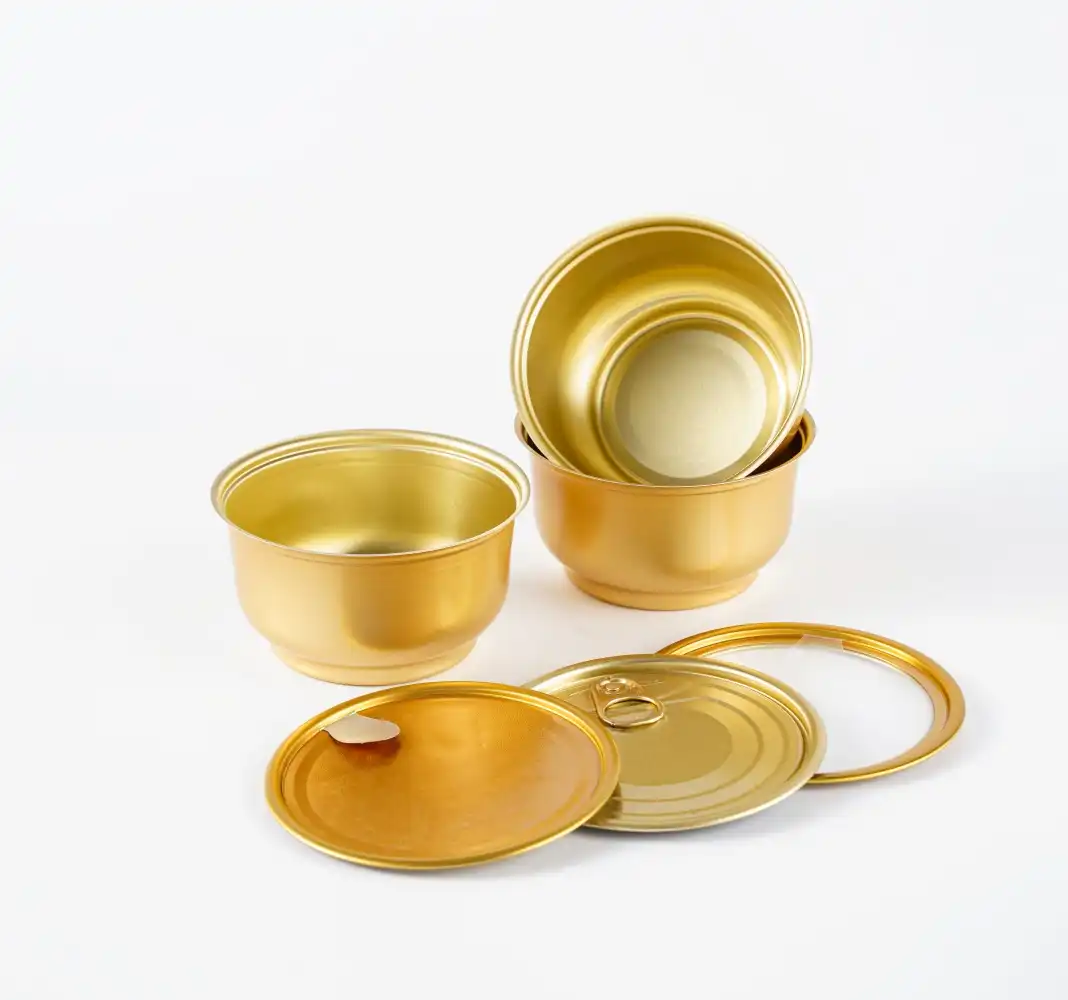
When sourcing a gold aluminum can https://www.threefoodcan.com/bowl-can/-250ml-golden-aluminum-cans-rose-golden-food-bowlfor commercial use, certifications are not optional — they are the baseline for entry into regulated markets. A properly certified gold aluminum can must meet ISO 9001:2015 for quality management, FDA 21 CFR 175.300 for food contact safety, ISO 14001:2015 for environmental compliance, and BRCGS for packaging material standards. These credentials validate that every unit leaving the production line is structurally sound, chemically safe, and consistently manufactured — qualities that procurement managers, distributors, and brand owners across the U.S. food and beverage industry cannot afford to overlook.
Why Certifications Matter More Than You Think?
Premium metal packing has become much more than just a useful tool. These days, a Gold aluminum can has brand value, regulation weight, and market standing all at once. More and more, businesses, from craft brewers in Colorado to cosmetics makers in New York, depend on verified packaging credentials to keep their customers safe and protect their image.
If you buy aluminum cans without making sure they have the right certifications, your supply chain could be open to recalls, customs rejections, and legal trouble. The FDA's rules on food contact materials say that packing for food and drinks needs to follow 21 CFR 175.300. This is a rule for resinous and polymeric coatings that come into direct touch with food. Non-compliant packaging can lead to market withdrawal costs that are much higher than the savings from buying in bulk. Certification is not extra work for the government; it protects your money.
Using certified suppliers also brings measured practical benefits. Verified compliance cuts down on problems during inspections at ports of entry, speeds up the contract negotiation process, and builds trust that lasts for years. That dependability is a must for distributors who handle multiple SKUs across state lines or international borders.
Key Certifications a Gold Aluminum Can Should Meet
Purchasing managers can narrow down their choices of suppliers more accurately if they know which licenses are important and why. Quality systems, food safety protocols, chemical compliance, and environmental stewardship are just some of the things that can be certified.
ISO 9001:2015 — Quality Management System
ISO 9001:2015 is the globally recognized standard for quality management systems. It controls the whole process of making metal cans, from checking the raw materials and making sure they fit within certain tolerances to applying an internal coating and packing them up at the end. A provider with this certification has shown that it documents its production methods well, can repeat them, and can always improve them. This is the quality standard that all reputable gold aluminium can makers should meet.
FDA 21 CFR 175.300 — Food Contact Compliance
The U.S. Food and Drug Administration says that all layers on the inside of food and drink containers must meet certain levels of chemical safety. For a gold aluminium can that is going to be sold in the United States, FDA rules must be followed. The plain lacquer or epoxy-phenolic lining on the inside must not let any dangerous chemicals into the product it holds. If a supplier wants to sell to people in the United States, they need to show proof that their internal coatings meet these federal standards.
BRCGS Packaging Materials Standard
A lot of big U.S. stores and food companies use the BRCGS (Brand Reputation through Compliance Global Standards) certification as proof of strict management of packaging safety. A Gold aluminum can supplier with BRCGS status has been audited by a third party who looked at their risk management protocols, hygiene controls, and traceability systems. This standard is especially important when it comes to private-label and store purchases.
ISO 14001:2015 — Environmental Management System
Sustainability used to be a marketing buzzword, but now it's a requirement for buying things. ISO 14001:2015 confirms that a company follows a structured environmental management system for keeping track of emissions, reducing waste, and making the best use of resources. Because aluminum can be recycled over and over again without losing any of its quality, a seller that is in line with ISO 14001 actively supports the goals of the circular economy. This approval is in line with companies' ESG obligations, which is good for buyers who care about the environment.
REACH and RoHS Compliance
REACH (Registration, Evaluation, Authorization and Restriction of Chemicals) and RoHS compliance make sure that the can's materials and coatings don't contain any banned dangerous chemicals. This is important for people who want to send finished goods to the European Union or get parts for products that will be sold in more than one market. These rules limit heavy metals, pesticides, and other chemicals that are bad for people or the earth.
These types of certificates work together to make a compliance framework that includes all the things a purchasing professional needs to look at: chemical integrity, food safety, industrial quality, and environmental responsibility. When buyers base their supplier choices on these standards, they regularly report fewer problems and better long-term relationships.
How to Verify Certification Authenticity?
Claims of certification are only as reliable as the process used to check them. In global buying, fake or expired credentials are a real risk, and taking them can have very bad results.
Practical Steps for Supplier Verification
Start by asking for the real certificates, not copies, and make sure you have the name and accreditation number of the organization that issued them. Check these credentials against official databases. For example, the ISO certification database can be used to confirm ISO certifications, and FDA compliance documents should match the language used in CFR regulations. Please remember to check the expiration dates; for many certifications, yearly surveillance audits and full renewal every three years are required.
In addition to reviewing papers, you should also do regular checks on-site or have a third party look over large contracts. If a seller is open to audits and lets you see inside their plant, that shows they are accountable, which is linked to consistent product quality. Certification status shouldn't be a one-time tick, but something that you have to do every day.
Case Studies: Certified Sourcing in Action
The results of real procurements show that licensing factors should be at the centre of evaluating suppliers, not at the end.
A medium-sized U.S. beverage company that needed aluminum cans for an energy drink line ran into problems with their first supplier when routine testing showed problems with the internal coating. They switched to a manufacturer that was ISO 9001 and FDA-compliant. Within two production cycles, the results of the product safety tests got a lot better, and their retail distributor renewed their contract for shelf placement without having to negotiate it again.
After their retail clients started using sustainable scorecards, a specialty food seller that supplies natural grocery chains changed how they bought packaging so that they only bought from ISO 14001-certified suppliers. By making this change, the distributor was able to become a favorite vendor with two area chains, which immediately increased their income. Certificates were no longer just a way to show compliance; they became a way to stand out in the business world.
Conclusion
Certifications set the line between trustworthy packing that is ready for the market and confusion that comes with a lot of risk. If a company needs to buy a lot of gold aluminium cans for things like drinks, cosmetics, speciality foods, or advertising packages, the qualifications of the seller affect everything, from getting permission from regulators to making sure the supply stays steady over time. The credentials for ISO 9001, FDA compliance, BRCGS, and ISO 14001 are not interchangeable; each one focuses on a different aspect of product integrity. Choosing certified suppliers over others is a smart business move that protects your brand, your customers, and your bottom line.
FAQ
Does ISO 9001 cover food safety for aluminum cans?
ISO 9001 sets rules for quality management systems, but it doesn't say anything about safety when handling food. The standards that matter for food and drinks are FDA 21 CFR 175.300 and BRCGS. ISO 9001 ensures consistent product manufacturing, but it does not replace food safety regulations.
How often do certifications require renewal?
For ISO 9001 and ISO 14001 standards, full renewal is required every three years and surveillance checks are done once a year. FDA compliance is an ongoing rule that doesn't have a set refresh period. However, coating formulas inside must be re-evaluated whenever materials change.
Is a gold aluminum can automatically compliant with U.S. food safety laws?
No, the shiny gold finish or internal protection does not mean that the rules are automatically followed. Each coating chemical needs to meet the standards set out in 21 CFR 175.300 by the FDA. Purchasing managers should always ask sellers for clear proof that they follow FDA rules.
What is the difference between ISO 9001 and ISO 14001?
Quality management—ensuring consistent products and controlled processes—is at the heart of ISO 9001. ISO 14001 is about environmental management, which means keeping track of how a company uses resources and affects the world. Both are important for a full review of a seller.
Partner with Three for Certified Gold Aluminum Can Solutions
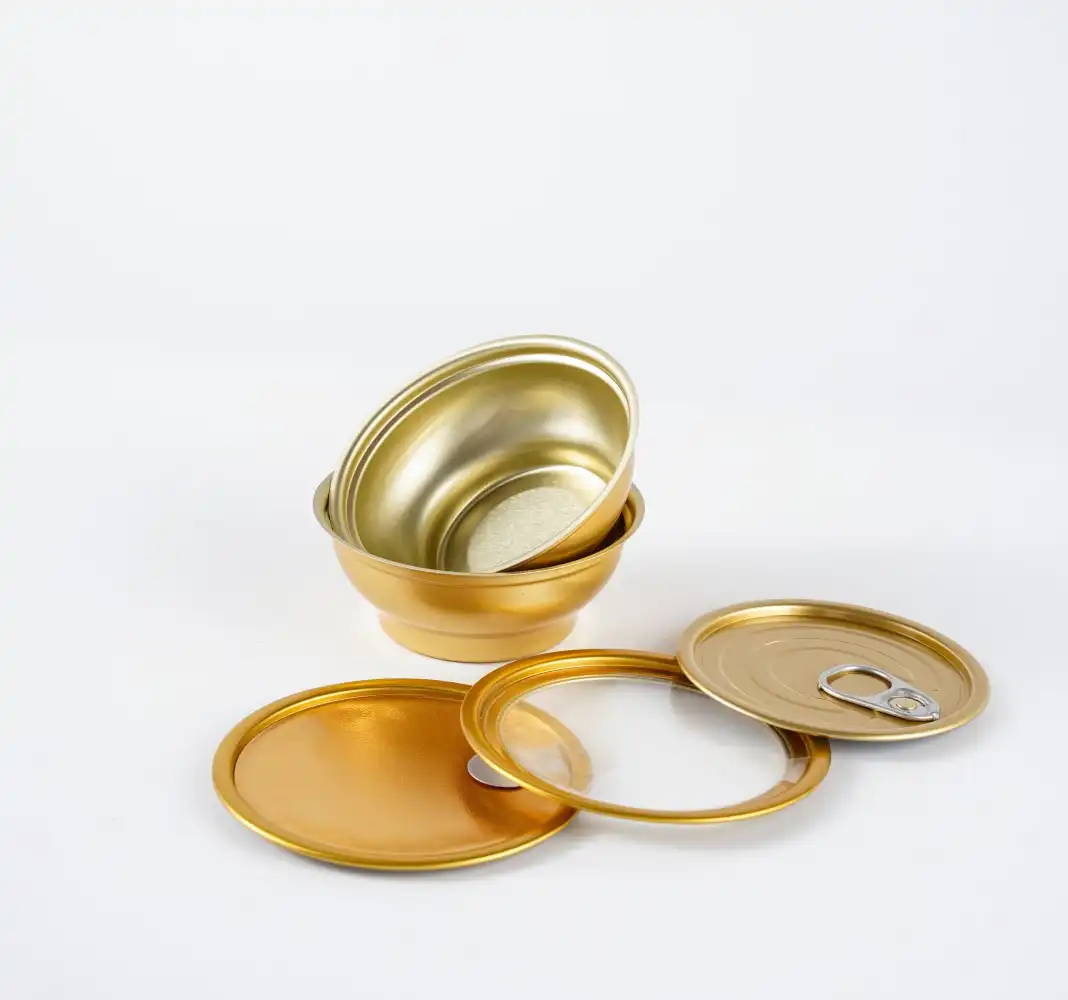
With ISO 9001:2015, ISO 14001:2015, FDA, and BRCGS certifications, Shandong Three Iron-Printing & Tin-Making Co., Ltd. is a reliable company that makes and sells gold aluminium cans. The diameter of our Item 209.5# can is 61mm, and its height is 36mm. It is made of 0.22mm aluminum and comes with a low MOQ, free samples, and full OEM support. To get details and mass prices right away, email our team at info@threefoodcan.com or visit threefoodcan.com today.
References
1. U.S. Food and Drug Administration. Code of Federal Regulations Title 21, Part 175.300: Resinous and Polymeric Coatings. FDA, 2023.
2. International Organization for Standardisation. ISO 9001:2015 Quality Management Systems — Requirements. ISO, 2015.
3. International Organization for Standardisation. ISO 14001:2015 Environmental Management Systems — Requirements with Guidance for Use. ISO, 2015.
4. BRCGS. BRC Global Standard for Packaging and Packaging Materials, Issue 6. Brand Reputation through Compliance Global Standards, 2019.
5. European Chemicals Agency. REACH Regulation (EC) No 1907/2006: Registration, Evaluation, Authorisation and Restriction of Chemicals. ECHA, 2022.
6. Aluminium Stewardship Initiative. ASI Performance Standard Version 3. ASI, 2022.
YOU MAY LIKE