

Sardines Metal Can Guide: Materials, Coatings, and Sizes
2026-09-29
Choosing the right sardines metal can https://www.threefoodcan.com/square-can/125-ml-sardines-empty-metal-canis one of the most consequential decisions a seafood procurement team will make. The container directly affects product safety, shelf life, logistics cost, and brand perception. This guide covers the materials, protective coatings, and size options that matter most to B2B buyers — from food manufacturers and private label producers to exporters shipping to markets across the United States and beyond. Whether you are sourcing a sardines metal can for the first time or re-evaluating your current supplier, the information below gives you a practical foundation for smarter purchasing.
Understanding Sardines Metal Can Materials and Coatings
Any Sardine Metal Can's strength starts with the material it's made of. Electrolytic tinplate (ETP) and tin-free steel (TFS, also called ECCS) are the two main choices for industrial production. Each is used for a different thing when packaging seafood.
Tinplate vs. Tin-Free Steel
Tinplate has been the standard for fish cans for a long time because the thin layer of tin bonded to the steel base prevents corrosion without doing anything. TFS, which has a chromium oxide layer instead of tin, protects just as well but costs less in raw materials. It is commonly used for flat, drawn sardine cans. Our #311 Sardines Metal Can is made with TFS and has a conical shape (104.8 × 75.8 × 22 mm). This shape makes the pallet as dense as possible while keeping the structure rigid in retort conditions.
The Critical Role of Interior Coatings
Choosing the right materials is not enough to determine how well a can works. Coatings on the inside of food containers carry the chemicals that keep food safe for years. This is what people who work in buying need to know about the three main covering systems:
- Acid-resistant polyester lacquer handles packing materials made from tomato sauce and citrus fruits that have a pH below 4.5. This coating stops metal ions from moving, which would harm both food safety and taste purity.
- Sulphur-resistant enamel (containing zinc oxide or aluminized paste) stops the reaction between the steel base and the sulfur compounds released when fish proteins are cooked. This stops the dark stains that shows the coating has failed.
- BPA-NI (Bisphenol A Non-Intent) acrylic or polyester systems meet both FDA and EFSA food contact regulations, which is an important certification for companies that export Sardine Metal Cans to stores in the US and Europe.
Both the coating weight and the finish temperature are significant. Pinholes are tiny holes that let food acids get to the metal when the hardening process isn't done properly. Manufacturers of reliable Sardine Metal Cans use a Enamel Rater Value (ERV) test to check the coating's integrity. This is an electrochemical measurement that finds holes in the coating that you can't see with the naked eye.
Sustainability is also changing the way coatings are chosen. Solvent-free, water-based lacquer systems now meet the same chemical protection standards as traditional coatings while lowering VOC emissions during production. This is a big plus for buyers whose ESG promises require proof of lower emissions in the supply chain.
Size Variations and Packaging Types: What B2B Buyers Need to Know?
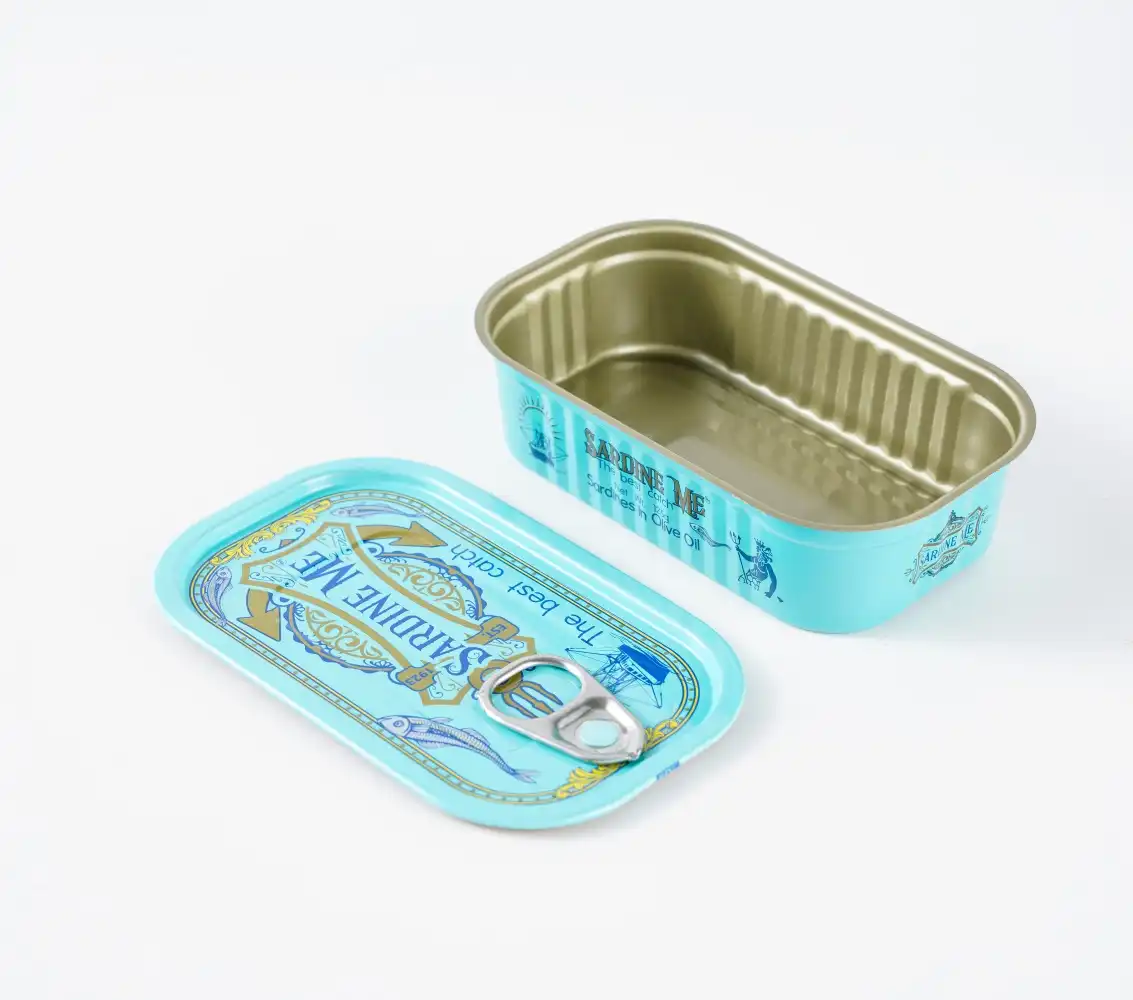
The standard sizes for Sardines Metal Cans are based on forms that are used around the world. The 90g, 125g, and 155g net weight groups are for the flat-two (F2), club, and oval shapes that buyers see most often in US restaurant and retail markets.
Matching Can Size to Channel Requirements
For most retail uses, the 125 ml and 125g sizes are the best compromise between being small enough for single-serving displays and being heavy enough to justify a higher price. Buyers in food service and club stores use larger 155g versions because they care about saving money on volume. Smaller 90g cans are aimed at convenience stores and online subscription services where controlling portions is important.
Metal cans are better than plastic tubs and glass jars in three ways that directly affect the cost of procurement: hermetic sealing allows logistics to happen at room temperature, which cuts down on cold chain costs; axial load strength lets multiple pallets be stacked in a container without the lid deforming; and direct lithographic printing on the outside of the can eliminates the risk of paper label damage in high-humidity transit environments.
Easy-Open Ends and Custom Printing as Procurement Levers
In the US, Easy Open End (EOE) lids are now standard in store sales. The #311 EOE lid on our Sardines Metal Can is made to exact score-line residue thickness limits. This makes sure that the ring-pull opens cleanly after retort sterilisation without accidentally popping. Full-brand artwork can be printed directly on the can body with CMYK offset printing. This gives private label buyers a finished look on the shelf without having to pay extra for secondary labeling.
Procurement Considerations for Bulk Sardine Metal Cans
It takes more than comparing unit prices to find a Sardines Metal Can on a large scale. Total landed cost and downstream risk are all affected by how reliable the supplier is, how many certifications they have, and how much they can customize.
The following points provide a useful due diligence plan when looking into a Sardines Metal Can manufacturer:
- ISO 9001 certification proves that outside experts check quality management systems, not just what the companies say they are.
- Double seam analysis records indicate that the ratios of body hook, cover hook, and overlap always meet the standards for a hermetic seal across all production runs.
- Burst pressure and vacuum test data show that the Sardines Metal Can can handle the cooling part of cleaning without having its seal broken.
- BPA-NI coating documentation gives the regulatory paper trail needed to meet US FDA and EU food contact requirements.
Shandong Three Iron-Printing & Tin-Making Co., Ltd. has a 270,000-square-meter building in the Linyi Economic and Technological Development Zone where they run production lines from Germany, Japan, Switzerland (Soudronic), and Italy (BMV). Each year, they can make 600 million cans. Along with SGS and CE compliance, ISO 9001:2008 and ISO 14001:2004 standards help the company sell to the US, Germany, Poland, Russia, Vietnam, and other places.
The price of a Sardines Metal Can changes based on the cost of the TFS coil, the finishing standard, the print complexity, and the number of orders. When buyers agree to minimum container loads, they usually get the best unit economics. There is support for both OEM and private label tooling, which means that procurement teams can lock in their own can shape and artwork without having to buy their own casting assets.

Storage, Shelf Life, and Handling Best Practices
If you obey the rules for keeping and handling, a properly made Sardines Metal Can will keep its quality for two to five years in normal circumstances.
To keep the can body from rusting on the outside, the temperature in the warehouse should stay below 25°C (77°F), and the relative humidity should stay below 75%. If you stack cans higher than the recommended crate height, too much axial stress can distort the seams. This can break the hermetic seal without showing any damage. During shipping by sea, desiccant packs inside container loads balance out sudden drops in humidity that speed up the rusting of the surface.
Inventory rotation using a strict first-in, first-out (FIFO) rule is the best way to cut down on write-offs. Putting a lot code and a date on each case makes it easier to follow FIFO rules and find things during quality audits. To open EOE lids, you have to pull the ring at a steady angle to the score line. An angled pull lowers the force needed and lowers the risk of jagged edges that could hurt people or contaminate the product.
Conclusion
Choosing the right Sardines Metal Can involves thinking about brand strategy, material science, following the rules, and logistics engineering. The TFS construction, BPA-NI interior coatings, calibrated EOE lids, and range of sizes make up a packaging system that can keep the quality of sardines safe during sterilisation, long-distance shipping, and long-term storage at room temperature. When buyers look at suppliers based on objective factors like certified quality systems, test data that is written down, and proof of large-scale capacity, they set up their supply lines for consistent performance and lower risk.
FAQ
Are sardines in metal cans safe for long-term consumption?
Yes, food-grade sardine metal cans that meet FDA and EFSA food contact safety rules, are made to ISO 9001 standards, and are protected with BPA-NI lacquers are safe for long-term consumption. The hermetic seal keeps microbes out, and products that are properly sterilised and stored below 25°C are safe for the full shelf life.
How does a metal sardines compare to plastic packaging environmentally?
According to the Steel Recycling Institute, more than 70% of steel packaging in the US is recycled. This makes steel the most recovered packing material in the world. When compared to multi-layer plastic bags or polypropylene tubs that usually end up in landfills, a Sardines Metal Can can be recycled over and over again without breaking down.
What causes dark spots inside inferior seafood cans?
When sulfur compounds released during cooking fish protein react with the steel substrate, a sulfide stain is formed. This process is avoided in Sardines Metal Cans made with sulphur-resistant enamel that contains zinc oxide. This keeps the interior looking good when the can is opened by the customer.
Can the can size be customised for private label orders?
Yes. OEM customization is possible at our facility, and we can change things like can sizes, CMYK offset printing, and logo placement to meet the needs of each brand.
Partner With Three for Your Sardines Metal Can Supply
As a reliable Sardines Metal Can supplier, Three works with business buyers around the world. They have ISO-certified quality systems, verified manufacturing capacity, and full OEM support. You can order a lot of our #311 food-grade sardine can and get free samples if you ask. To get a quote, ask for a sample, or talk to our team directly about private label packaging solutions, email info@threefoodcan.com or visit threefoodcan.com to get started with your procurement.
References
1. Packaging Technology and Science — Wiley, 2021
2. Journal of Food Engineering — Elsevier, 2020
3. Steel Recycling Institute Annual Report — Steel Recycling Institute, 2022
4. Food Contact Materials Regulations: EU and US Comparative Review — EFSA Journal, 2021
5. Canned Foods: Principles of Thermal Process Control, Acidification and Container Closure Evaluation — Food Processors Institute, 2019
6. Metal Packaging Manufacturers Association: Sustainability Report — MPMA, 2023
YOU MAY LIKE