

What Are TFS Easy Open Ends and How Do They Work?
2026-09-09
TFS Easy Open Ends https://www.threefoodcan.com/tfs-lids-tfs/tfs-easy-open-endsare hermetic metal lids manufactured using Tin-Free Steel (also known as Electrolytic Chromium Coated Steel or ECCS), featuring a scored aperture and pull-tab mechanism designed for effortless consumer access. Unlike traditional tinplate, these innovative can closures utilize a chromium and chromium oxide coating that delivers superior lacquer adhesion and eliminates the 'sulfide staining' problem common in protein-rich canned products. The working mechanism involves precise score lines engineered to a predetermined residual thickness, allowing consumers to pop and tear the panel with minimal force (typically 3-5 N) while maintaining hermetic sealing during processing and storage.
Understanding TFS Easy Open Ends
What Makes Tin-Free Steel Different from Traditional Materials
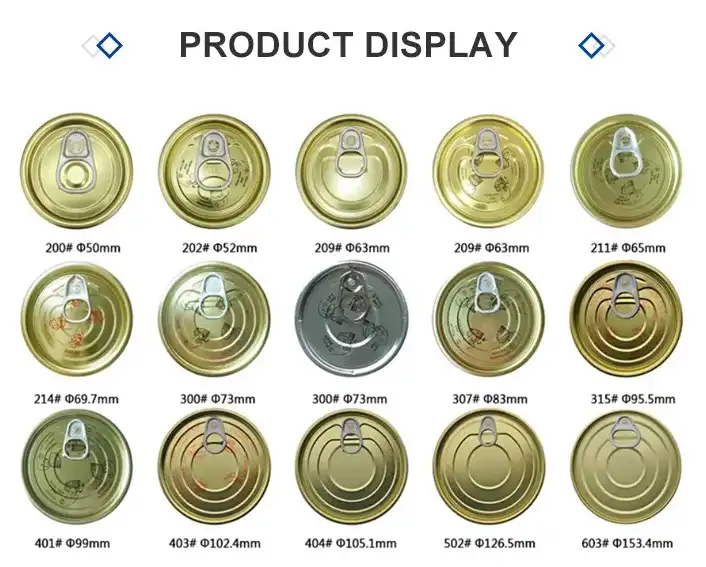
The material that these improved seals are made of is what makes TFS Easy Open Ends work. Tin-Free Steel is a big step forward in packing technology because it solves important performance problems and fixes the cost problems that come with using tin as a raw material. The chromium layer weight is usually between 50 and 150 mg/m². It makes the surface rough in a way that greatly improves the strength of the lacquer bond. This is very important for business buyers because, unlike tinplate, the chromium layer depends on the coating system—whether it's Epoxy-Phenolic, Organosol, or Polyester—to keep the product's integrity during tough retort sterilization processes. The technical design of these closures meets ASTM A657 or JIS G3315 standards, which makes sure that they are the same in all global supply lines. The grades of tempering (usually T3, T4, or DR8) are chosen based on the rigidity needs of various can diameters. These round closures come in standard sizes like 200# (50mm), 202# (52mm), 211# (65.4mm), 300# (72mm), 307# (83.3mm), and 401# (99mm). They can be used for a wide range of packaging needs, such as for fish, meat, sauce, fruit, and vegetables.
The Engineering Behind the Opening Mechanism
Pop Force and Pull Force are the two most important force factors for the practical design. Pull Force measures how hard it is to tear the panel all the way through, while Pop Force measures how much energy is needed to break the score line in the first place. The accuracy of these measurements is checked against ergonomic standards to make sure that the seal stays intact during high-pressure retort processing at 121°C (250°F). The building of the score line itself is a very precise process. Manufacturers have to check that the leftover metal thickness at the score line is correct to the micron level. If it's too deep, the seal could fail early during heat processing, and if it's too shallow, customers will have trouble opening it. Advanced dynamometer testing makes sure that the opening forces are within acceptable ranges. For standard diameters, the Pop Force should be less than 30 N, and the Tear Force should be less than 45N. This careful engineering stops the "feathering" effect, which happens when lacquer separates at the opening edge and metal pieces or covering strips could get into food.
Material Properties and Surface Treatments
High-performance closures are different from normal ones because they use surface-cleaning technology. You can choose from golden, white, or aluminum finishes for the inside coating, and each is chosen based on the product's chemistry. Epoxy-phenolic resins are often used in golden lacquer systems because they block the sulfur compounds that are released when protein products are sterilized. Polyester or vinyl systems that work best with acidic foods like tomato paste or fruit drinks are often used for white coats. The outside is covered with plain lacquer that comes in golden or gray finishes. This gives it a nice look and makes it more resistant to corrosion while it is being stored and shipped. A lot of procurement managers don't think about how the coating can stop filiform corrosion, which is when thread-like rust patterns show up under damaged lacquer layers. The great regularity of properly coated closures isn't just for looks; it means that the chromium layer is fully protected from humidity and oxidation in the air during global shipping operations. Not only do these coats have to be able to handle the fill-and-seal process, but they also have to stay flexible during the opening process so that cracks don't form that could let the steel base show.
Advantages and Industrial Applications of TFS Easy Open Ends
Consumer Convenience and Safety Benefits
It's impossible to say enough about how much TFS Easy Open Ends change the user experience. Traditional can openers need extra tools, have sharp edges, and there is a chance that metal pieces will get into food. These risks are gone with modern easy-open technology, which also lowers the force needed to open the door, which is very important as the world's population ages and the number of people with arthritis rises. The shape of the stay-on tab keeps people from getting hurt when they accidentally eat or drink something with a broken pull-tab. When making things, the fact that these closures are tamper-evident means that the integrity of the package can be seen right away. The scored form makes it clear right away if the lid has been opened without permission, which meets food safety rules in all markets. The burst pressure levels are designed to keep the lids from opening by mistake during processing while still being weak enough for easy customer access. This delicate balance is achieved through precise stamping and forming operations.
Sustainability and Environmental Considerations
Environmental duty is becoming more and more important in B2B purchasing decisions. These closures are very environmentally friendly because they can be recycled over and over again. The chromium coating doesn't add much weight to the steel base, so regular magnetic separation can be used in recycle streams. Sorted steel packaging can be recycled with existing systems, unlike composite materials that need special processing. This lowers the environmental impact of the product throughout its lifecycle. Getting rid of tin also helps with concerns about resource shortages. Tin mining is mostly done in a few areas, which makes the supply chain vulnerable. Diversifying the sources of raw materials through chromium covering technology makes industries less reliant on volatile product markets. When it comes to meeting business environmental goals, these closures are in line with the circular economy, which means that the goods are made so that they can be recycled instead of thrown away.
Applications Across Food and Beverage Sectors
These covers work really well for important uses like packaging high-sulfur proteins. During retort sterilization, seafood like tuna and sardines and luncheon meats give off sulfur compounds. When these chemicals come in contact with traditional tinplate, they turn it black, which people think of as a sign of spoilage. The chromium coating method stops this process completely, so the product looks good for as long as it's supposed to (usually up to three years). Different problems come up when you use acidic fruit and vegetable concentrates. Low pH levels are maintained by foods like tomato paste and fruit drinks, which attack poorly coated surfaces very quickly. Acid-resistant lacquers made just for these uses stop metal ions from getting into food, so the safety and taste are kept as they should be. The chromium-coated substrate's excellent lacquer adhesive means that the coating stays in place even after being exposed to acid for a long time. Different benefits are used in dry food and industrial powder applications. When you fill and seal things like coffee, milk powder, and other similar items, they need to be mechanically durable. The strong lacquer systems used are better at resisting wear and tear than traditional tinplate coats. This keeps the metal safe from humidity while it's being stored and shipped internationally. This improved longevity is especially helpful for bulk packaging for business-to-business buyers.
Manufacturing Process of TFS Easy Open Ends
Raw Material Procurement and Initial Processing
Before production starts, the raw materials for TFS Easy Open Ends are checked to make sure they meet the required width (0.18mm–0.30mm), surface finish, and chromium coating weight standards. Material traceability systems keep track of each coil as it is made, making sure that food-contact regulations are followed. When the steel comes in coil form, the edges are trimmed, and the tension is leveled to get rid of any internal forces that could make the forming process less successful. In cutting processes, precise dies are used to cut out round pieces from the continuous coil. The maintenance protocols make sure that the dimensions stay the same from one production run to the next. This is very important because even small changes in diameter can make seams not work with can bodies. During the blanking process, less than 15% of the material is wasted, and the trimmings are collected to be recycled. Automated material handling is used in modern facilities to keep surfaces clean between the cutting and finishing steps.
Stamping, Forming, and Tab Attachment Operations
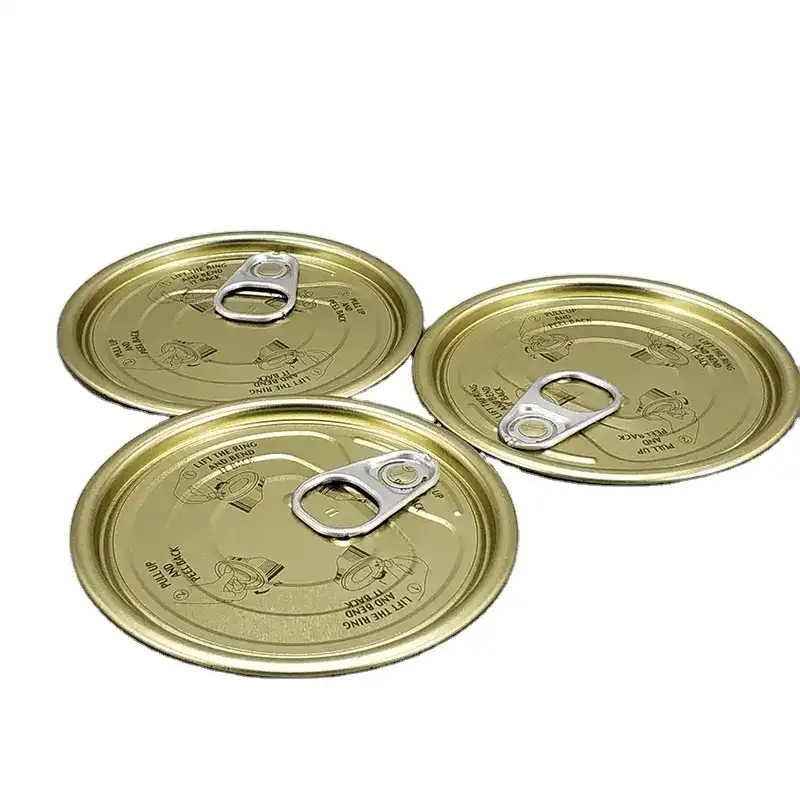
The panel shape, rivets, and score line are all made at the same time during the pressing process. As the shell moves through the press, progressive die systems perform more than one forming operation on it. The shape of the score line needs to be very accurate—differences in width of only a few microns can affect both the stability of the seal and how well it opens. Monitoring systems for tool wear keep track of production counts and perform preventative repair before measurement drift happens. A very important part of assembly is attaching the tabs. The finger grip and reinforcement features are added to the pull-tab separately through different forming steps. When rivets are clinched, they must have enough retention force to keep the tabs from coming off during handling while still opening in the way that was planned. In quality control stations, vision systems check the orientation of the tabs and the formation of the rivets. Units that don't meet the standards are thrown away before the finish is applied.
Coating Application and Curing Procedures
Depending on the lacquer system, spray or roll-coating technology is used for finishing. Different formulations are used for the inner and outer surfaces based on their exposure conditions. Monitoring film thickness uses non-destructive methods to make sure coverage meets requirements, which are usually between 3 and 10 mg/dm² based on the purpose. It's important to have even coverage—thin spots can cause corrosion to start, and too much coating makes things less flexible.The liquid lacquer hardens into a strong film during the curing process. Conveyorized ovens keep exact temperature profiles, usually between 200°C and 230°C, for long enough to crosslink the steel base completely without weakening its mechanical properties. Chemicals can damage the covering if it isn't cured enough, and too much heat can weaken the film, which can cause it to crack when it opens. As part of quality control, Enamel Rater Tests are used to measure the flow of current through the hardened film and find tiny holes or spots where the film isn't completely covered.
Quality Control Measures and Testing Protocols
Protocols for thorough testing make sure that finished goods meet all requirements. Calibrated dynamometers are used in Pop and Tear Force testing to measure opening forces and make sure that the values are within acceptable ergonomic limits. In a retort scenario, sample lots are put through rounds of steam sterilization, which is the same kind of thermal stress that goods go through during commercial processing. Inspecting after the retort checks for feathering, lacquer delamination, or seal compromise. The Metal Exposure Test, which is sometimes called the Enamel Rater Test, is a very important quality check. This electrochemical test checks how much current flows through the lacquer film when it is submerged in a saltwater solution. Higher current readings mean that the coating has flaws like pinholes, cracks, or not enough coverage, especially near the high-stress rivet and score line areas. Acceptable limits are set based on the chemistry of the product and how long it needs to stay fresh. In harsher settings, lower current readings are needed.
Customization Capabilities for OEM Requirements
Premium providers are different because they can adapt to meet the needs of their customers. Branding can be raised or lowered, score line patterns can be changed to create different opening experiences, and special lacquer mixtures can be used for each product. Direct-food-contact inks can be used on printable surfaces, so brand messages can be seen by customers. For some uses, special inner coatings are needed, like aluminum-pigmented systems for products that are sensitive to light or modified epoxy systems for products that need to last longer in tropical climates. As part of an OEM relationship, suppliers' technical teams often work together with customers' product development and packaging engineering teams on projects called "co-development." With prototype casting, you can try out unique designs before you buy die sets for mass production. By working together, the final closure design is made to fit the needs of the filling line, the seaming equipment, and the regulations in the target market. Low minimum order numbers let you test the product and make sure it's popular with customers before going to full production levels.
Comparing TFS Easy Open Ends with Other Can End Solutions
Structural and Functional Distinctions from Traditional Can Ends
When it comes to convenience, TFS Easy Open Ends are immediately more useful because they do not require extra tools to open. The structural difference is more than meets the eye. Traditional ends are only made for hermetic sealing, with the thickness of the material and the way it is shaped being optimized for resistance to burst pressure. The score line in easy-open designs adds a controlled weakness that needs to be carefully designed to keep the seal's integrity during processing while still making it easy for customers to open. Safety considerations heavily favor scored designs. Traditional can openers have sharp tips that go all the way around the outside, which is very dangerous for cutting. Easy-open styles direct the tear action in a controlled direction, and the panel edge that is still connected to the can body through the preserved tab does so. This design gets rid of the common way that people get hurt when lids come off and their sharp edges fall on food or kitchen surfaces.
Performance Comparison with Aluminum and Alternative Materials
Easy-open ends made of aluminum are popular in beverage uses because they are cheap to make and easy to shape. But because aluminum isn't as strong as steel, it needs thicker materials to have the same burst pressure ratings. This partly cancels out the cost benefit. Aluminum can't be used in highly acidic or alkaline goods without special covering systems because it reacts with chemicals. Steel-based seals are better at resisting punctures, which is important for goods that will be handled roughly during distribution. Stay-on tab versions try to fix the problem of detachable pull-tabs being easy to eat. These designs keep the tab attached to the panel even after it's been opened, which lowers the risk of injury. Making sure the connection stays intact during the opening process is hard for engineers. If it's too strong, customers will have trouble finishing the tear, and if it's too weak, the safety benefit will go away. To do it right, the score line shape needs to be carefully thot out so that tear forces are directed away from the tab connection point.
Trade-offs in Durability, Cost, and Branding Compatibility
Peelable lid technology is an option that uses laminated films instead of metal that is stiff. These systems are great at blocking things out, and they can come with clear screens so you can see what's inside. The downsides are that it is easier to puncture, it can get damaged during shipping, and it costs more to make. The sealing process needs special tools that don't work with regular can seaming lines. This makes it hard for manufacturers who already have infrastructure in place to use it. Claim rates and brand image are directly affected by how long materials last. Steel seals are better at handling box loads, fork truck handling, and vibrations during transport than lighter ones. The better resistance to dents keeps the seal from being broken, which could cause the food to go bad. When purchasing managers figure out the total cost of ownership, they have to weigh the initial cost of the part against the chance of losing the product and getting complaints from customers. When this is done correctly, premium closures often end up being more cost-effective.
Procurement Considerations for TFS Easy Open Ends
Evaluating Supplier Credentials and Certifications
Verification of approval is the first step in qualifying a supplier for TFS Easy Open Ends. ISO 9001 approval means that quality management systems have been in place for a while and have clear methods and ways to keep improving. For packaging that comes into contact with food, you need extra qualifications. For example, the BRC Global Standard for Packaging Materials, FDA compliance, and regional food safety certifications show that the provider is dedicated to meeting strict hygiene and safety standards. Ask for copies of current certificates and check their validity in the databases of the organizations that issued them. A production capacity estimate makes sure that providers can meet both the current demand and the growth that is expected. When you can, visit production sites and look at how they keep their tools in good shape, how they handle cleanliness, and how they handle quality control. When a supplier has more than one production line, there are backups in case one line breaks down or is undergoing maintenance. Lead times and freight costs are affected by where you are in the world. For example, domestic suppliers may charge more, but they can communicate better and respond faster to urgent needs.
Understanding MOQ Requirements and Bulk Pricing Structures
Minimal order quantities are based on cost-effective production runs and the wear and tear of tools. Standard goods usually have lower MOQs—maybe 50,000 to 100,000 units—than unique designs, which need higher numbers to cover the costs of making special tools. Talk to your wholesalers about lowering the MOQ for your first trial orders, and keep in mind that they may be able to handle smaller amounts at a higher cost in order to build relationships. Suppliers who offer low MOQs in product literature are likely to be willing to work with new names or product line additions. When you buy in bulk, you usually get savings that go up as your yearly consumption goes up. Suppliers can better plan when to buy raw materials and when to start production when they have volume commitments. This saves them money, which they can share with customers by lowering unit costs. Set up blanket purchase orders with scheduled releases, and weigh the benefits of volume discounts against the costs of keeping inventory on hand. Talk to your providers about the smallest order sizes that will still get the job done for the least amount of money.
Logistics, Lead Times, and International Shipping Factors
Terms of payment have a big effect on managing cash flow. Standard terms in this field are net 30 to net 60 days, and you can sometimes get a deal for paying early. For new customers, you might need to put down a deposit or a letter of credit until you can prove you can pay. Credit reports or industry references can help you figure out how financially stable a seller is. If a supplier is having financial problems, it can affect the whole supply chain, no matter how much they are charged. Production lead times depend on how complicated the product is and how much capacity the supplier is using. Standard items in stock may be shipped within a few weeks, but it can take up to eight to twelve weeks for the first production runs for special tools and coating recipe development. Make sure you have enough safety stock in case demand changes or there are delays in production. Suppliers with a lot of stock can get orders to you faster, but they might not be as able to adapt to your unique needs.
Conclusion
TFS Easy Open Ends are high-tech engineering solutions that strike a balance between making things easier for customers, making factories more efficient, and caring for the environment. Their chromium-coated substrate gives better lacquer adhesion, gets rid of sulfide staining, and can still be recycled completely. Professionals in business-to-business purchasing should know about the technical details, like score line geometry, coating systems, and force parameters, that affect performance in a wide range of situations, from seafood to acidic fruits. To be successful at sourcing, you need to look at more than just unit cost when judging providers. You should look at their certifications, expert help, and logistics infrastructure as well. More and more, the global packaging scene needs solutions that raise brand value and meet green standards. This makes these improved closures important parts of competitive food and beverage supply chains.
FAQ
What are the key differences between TFS and tinplate for easy-open applications?
Chemical resistance and coating adhesion are the main differences between TFS Easy Open Ends and tinplate for easy open applications. Chromium-coated steel surfaces bond lacquer better than tin surfaces, which is important for keeping the coating's integrity around the stressed score line area. Tin-free choices keep protein-rich foods like tuna and meats from getting stained by sulfur chemicals that react with tin during sterilization. The lower material cost comes from not having to deal with the unstable price of tin while still providing the same or better performance in most situations.
Can these closures withstand high-temperature retort sterilization?
Yes, goods that are properly designed can usually survive 121°C steam sterilization processes that last at least an hour. The choice of coating method and completion of drying are the most important factors. The epoxy-phenolic and organosol lacquers are very good at withstanding heat; they keep their stickiness and flexibility even after being heated. As part of quality control, production samples are put through retort simulation tests to make sure they work properly before they are shipped. This makes sure the closures can handle the tough conditions of commercial food processing operations.
What customization options are available for brand differentiation?
Customization can be done in both practical and aesthetic ways. Features that are embossed or debossed make brand elements that you can feel, and surfaces that can be printed on in full color for marketing messages. Different types of inner coatings can be made to fit different types of goods. For example, there are special systems for high-acid products, aluminum-pigmented coatings for light-sensitive contents, and modified epoxy for longer tropical shelf life. Score line designs can be changed to make each starting experience unique. Specifications match normal can body sizes while also allowing for unique uses. They come in item numbers from 200# to 401# and have widths from 50mm to 99mm.
Partner with Three for Premium TFS Easy Open Ends Solutions
Picking the best TFS Easy Open Ends provider can affect the quality of your products, the image of your brand, and how well your business runs. Shandong Three Iron-Printing & Tin-Making Co., Ltd has advanced research and development skills, is ISO 9001 certified, and follows all rules and regulations. It has SGS and BPA certifications. Our Linyi factory is more than 270,000 square meters big and has German, Japanese, and Italian production lines that make 2 billion closures every year. We give away samples for free, have low minimum order quantities, and can make changes to our products to fit OEM needs for packaging fish, meat, sauce, fruit, and vegetables. Our expert team helps you with everything, from choosing the right finish to making sure that the seaming parameters are just right, so that they work perfectly with your production lines. Get in touch with info@threefoodcan.com right away to talk about your needs with experienced packaging engineers who know what food production companies around the world need.
References
1. Standard Specification for Electrolytic Chromium/Chromium-Oxide-Coated Cold-Rolled Steel, ASTM International, 2019.
2. Brody, A.L. and Marsh, K.S., The Wiley Encyclopedia of Packaging Technology, Third Edition, John Wiley & Sons, 2009.
3. Robertson, G.L., Food Packaging: Principles and Practice, Third Edition, CRC Press, 2012.
4. Soroka, W., Fundamentals of Packaging Technology, Fifth Edition, Institute of Packaging Professionals, 2014.
5. Coles, R., McDowell, D., and Kirwan, M.J., Food Packaging Technology, Blackwell Publishing, 2003.
6. Lamberti, M. and Escher, F., Aluminum and Tin-Free Steel in Food Packaging Applications: Material Properties and Performance Characteristics, Packaging Technology and Science Journal, 2007.
YOU MAY LIKE