

How to Source a Plain Golden Aluminum Can from China?
2026-09-09
Sourcing a Plain Golden Aluminum Canhttps://www.threefoodcan.com/bowl-can/-250ml-golden-aluminum-cans-rose-golden-food-bowl from China involves identifying manufacturers with verified certifications, evaluating production capabilities, and ensuring compliance with food safety standards. The process requires understanding product specifications like dimensions and coatings, vetting suppliers through samples and factory audits, and negotiating terms that balance cost with quality assurance. Partnering with established manufacturers who offer customization, transparent pricing, and reliable logistics will streamline procurement and ensure your packaging meets both regulatory requirements and brand expectations for premium products.
Understanding Plain Golden Aluminum Cans and Their Market Demand
What Makes Golden Aluminum Cans Unique?
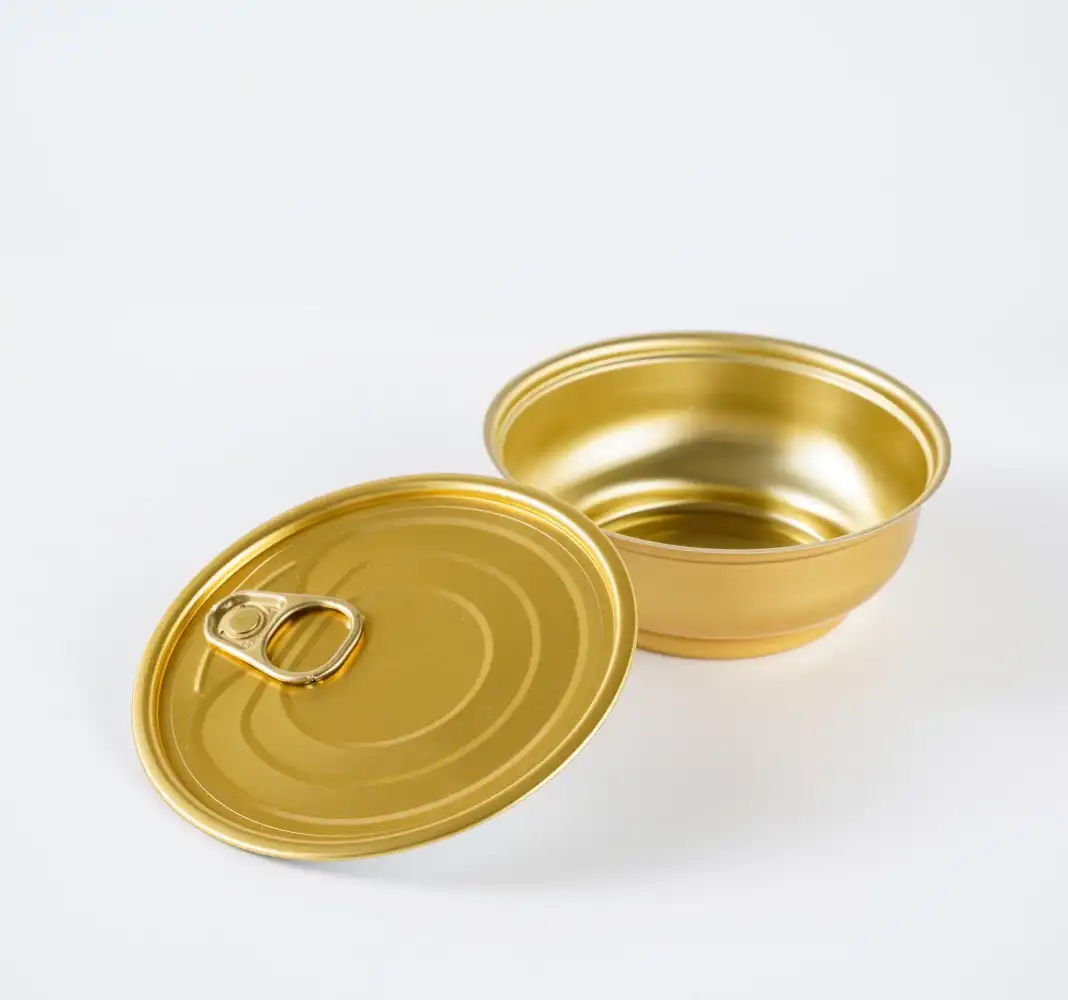
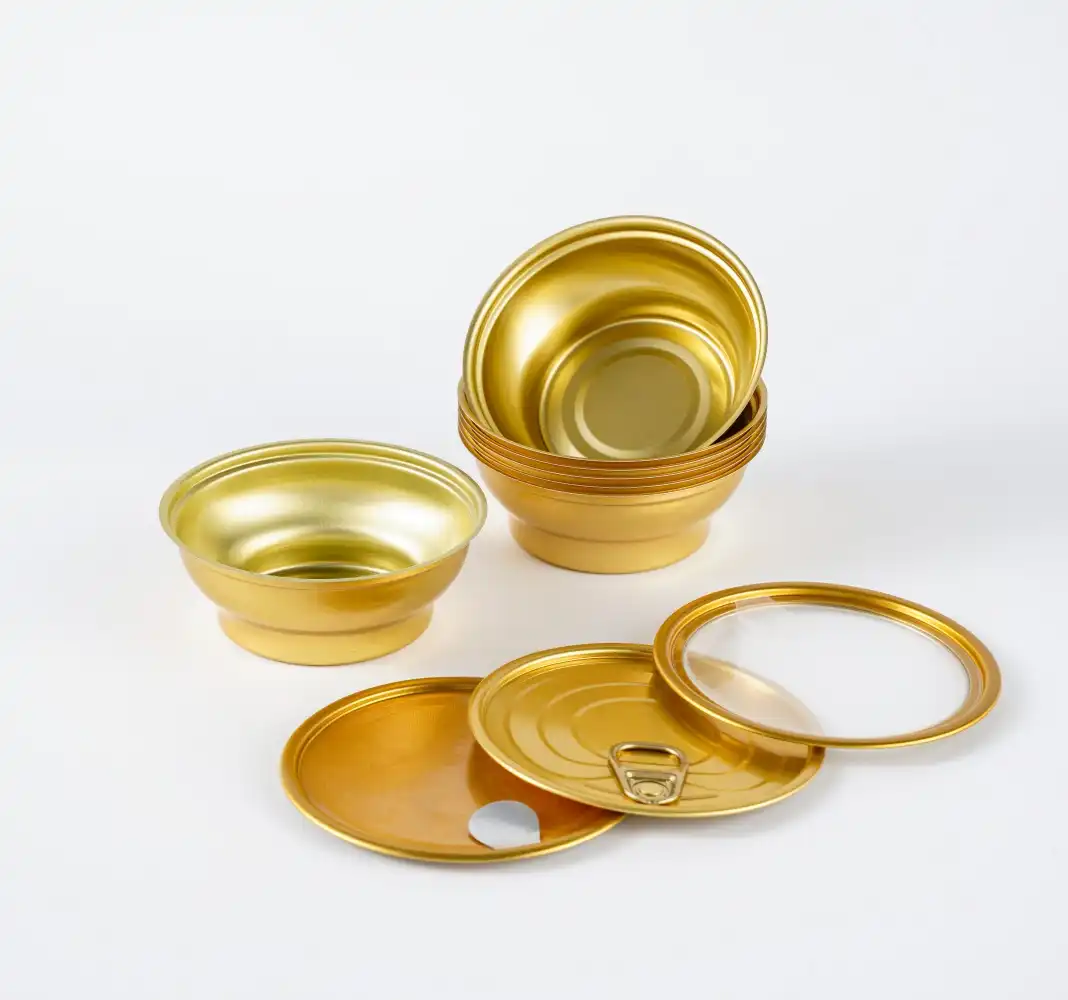
The sophisticated metallic finish on Plain Golden Aluminum Cans makes them stand out in the world of packaging. This finish instantly tells customers that the product is of high quality. Unlike standard silver, aluminum, or matte finishes, the golden look makes things stand out more on store shelves, which improves how people see the product. These cases are made from a high-grade aluminum alloy that is usually 0.22 mm thick. This alloy is very strong and lightweight at the same time. The outside is coated with plain lacquer, which keeps the golden shine while it's being moved and stored. The inside is coated with either plain lacquer or white lacquer to keep the container and its contents from touching each other.
Core Specifications and Industry Applications
The standard specs for Plain Golden Aluminum Cans meet the needs of a wide range of industries. A standard model, like Item Number 209.5#, has a round shape with a 61mm diameter and 36mm height. This makes it great for single-serving amounts or sample goods. The 0.22 mm aluminum used in the material gets the best balance between cost-effectiveness and structural stability. Black, green, red, yellow, and orange are the cover colors that can be used, so brands can match their packaging to their brand's look. Businesses that want to start expensive juice lines, cosmetic brands that want to package travel-size creams, and pharmaceutical businesses that need sterile, tamper-evident packaging will all love these Plain Golden Aluminum Cans. The food industry really likes these cans for handmade jams, gourmet spreads, and specialty sauces because the golden finish shows that they were made with care.
Advantages Over Alternative Packaging Materials
There are a number of useful benefits to Plain Golden Aluminum Cans over plastic or stainless steel cases. Aluminum is the best material for keeping air, light, and wetness out, which are all important for keeping food fresh without cooling. Over 75% of aluminum can be recycled around the world. This makes it a sustainable choice that appeals to people who care about the environment and helps brands meet their sustainability goals. Plastic can leak chemicals or impart tastes, but food-grade metal with the right coatings on the inside keeps the product's integrity. Even tho stainless steel lasts longer, it is much more expensive and weighs almost three times as much, which makes shipping more expensive. The golden finish meets the market need for high-end packaging that doesn't cost as much as glass or other specialty materials.
Challenges in Sourcing Plain Golden Aluminum Cans from China
Quality, Consistency, and Verification Concerns
When buying from foreign makers, B2B buyers often worry about how to keep the quality uniform across production runs. When applying the golden coating finish, you need to be very careful. If you change the lacquer thickness or drying temperature, the colors will not be the same, which can hurt how your brand looks. Strong quality control measures, such as visual inspections and coating adhesion tests, are needed to make sure that every batch meets the requirements. Buyers should ask for specific quality assurance paperwork that shows how the seal's integrity, the performance of the coating, and the accuracy of the dimensions will be tested. Reputable manufacturers use Enamel Rater Tests to find tiny flaws in the coating and axial load strength tests to make sure the cans can handle the pressure of stacking during storage.
Minimum Order Quantities and Supplier Trustworthiness
In China, traditional manufacturing often has high minimum order quantities (MOQs), which can be hard for smaller companies or companies that are trying out new product lines. However, manufacturers in the Linyi Economic and Technological Development Zone have responded to the needs of the market by providing low MOQ options. These allow businesses to order practical amounts without having to commit to too much inventory. It's still very important for buyers to be able to trust a supplier. They should look at business licenses, read reviews from past customers, and look for certifications like ISO9001, which show that the supplier follows international quality management standards. Offering free samples is an important way to see how well a product can be made before placing a large order.
Logistics and Customs Complexities
To keep the delicate finish on the outside of Plain Golden Aluminum Cans from getting scratched or dented while being shipped, they need special packaging. Companies that export goods often use stronger pallets, protective film wrapping, and smart container loading to keep damage to a minimum. To avoid delays, customs paperwork must correctly assign HS numbers to goods. For example, aluminum crates usually fall into certain tariff groups that are different for each target country. Importing is easier when you work with providers who know what U.S. customs rules are and can give you the certificates of origin, SGS reports, and other paperwork you need. Shipping from Chinese manufacturing hubs to U.S. ports can take anywhere from 18 to 35 days, depending on the method of shipping and the final destination. This means that buyers need to plan their inventory levels carefully.
Step-by-Step Guide to Sourcing Plain Golden Aluminum Cans from China
Defining Your Procurement Requirements
Make sure you know exactly what you need for your Plain Golden Aluminum Cans before you call makers. Write down the sizes you need, making sure to note whether common sizes like 61 mm circle will work for your product or if you need to make your own tools. Choose the coating you want. Plain lacquer on the outside will keep the golden look, and the coating on the inside should match the chemistry of your product. For example, white lacquer works well with light-colored contents, and plain lacquer works well with darker ones. Figure out how much you need based on production schedules, and keep in mind that ordering more than 50,000 units usually gets you better prices. Include any rules that are relevant to your business, like meeting FDA standards for food or having certain blocking properties for drinks.
Identifying and Vetting Manufacturers
China's packaging business is mostly concentrated in a few key areas. For example, many well-known can makers are in Shandong province. When looking at sites like Alibaba or Made-in-China, sort the results by source verification status and years in business. Businesses that have been around for ten years or more are likely to be stable in the market. Check the factory profiles for signs of production capacity. For example, a plant that makes 600 million cans a year and has multiple production lines from German and Japanese companies suggests that it has advanced capabilities. Check to see if the right certifications are clearly displayed. For example, ISO9001 confirms quality management systems, and SGS verification confirms that manufacturing standards have been met by a third party.
Requesting and Evaluating Samples
The most important part of choosing a supplier is evaluating samples. Ask for samples of Plain Golden Aluminum Can goods that are exactly what you want, down to the type of finish and size. Manufacturers with a good reputation give samples away for free or at a small cost because they see it as an investment in possible relationships. Once you get the samples, you should carefully check them out. Check to see if the golden finish is the same in different lighting, see if the seal is strong by filling it with water and turning it over, and see how well the coating sticks by scratching the surface with light pressure. If your product needs to be sterilized in a retort, put samples through heat cycles that are the same as your production process to make sure the coating is stable and the structure is sound.
Negotiating Terms and Managing Production
When negotiating, you should talk about how to set prices for different order amounts, how to make payments that are fair for both sides, and how to set production schedules with extra time built in in case there are delays. A lot of Chinese manufacturers will take payment terms like 30% down and 70% after inspection, before shipping. This gives buyers a good amount of security. Talk about your customization choices if you need specific cover colors or custom internal coatings. Companies with their own research and development teams can meet your unique needs. Set up clear lines of communication and name specific people to contact for information on orders and quality problems. You can organize your own supply chain operations by asking for production plans that show when production starts, when quality checks happen, and when shipments are ready.
How to Evaluate and Select the Best Golden Aluminum Can Supplier in China
Manufacturing Capacity and Technical Capabilities
By looking at a manufacturer's production infrastructure, you can tell if they can consistently fill your orders. Multiple production lines—for example, six German lines, six Japanese lines, and eight Swiss Soudronic high-speed production systems—show that a company has put a lot of money into quality and is committed to it. Production flexibility is more important than yearly output capacity. A company that makes 600 million cans a year can usually handle changes in orders and rush productions better than a smaller company that is going at full capacity. Technical abilities go beyond numbers and include customization services. For example, can the factory change the coating formulas, make changes to the sizes that are fair, or add special features like easy-open ends? Custom applications can get engineering help from manufacturers with specialized technical staff of at least 60 experts.
Certification Standards and Compliance
Certifications are proof that a product meets quality standards and legal requirements. With ISO9001 certification, you can be sure that your quality management system meets international standards. Regular audits make sure that you stay in line with the rules. Food-grade packaging needs extra certifications. For example, BPA-free certifications protect against chemicals that mess with hormones, and CE marking shows that the packaging meets European health and safety standards. Manufacturers that sell to customers all over the world often have more than one certification that covers a range of regulatory frameworks. In addition to certificates, you should look at the testing protocols. Reliable facilities test batches for coating integrity, accuracy in measurements, and seal performance. Ask for test records from recent production runs. These reports should explain how the tests were done and what the results were for different quality factors, ensuring each Plain Golden Aluminum Can meets your brand's strict requirements.
Making Partnerships that Last
Long-term buying relationships depend on more than just the price at the start. Check out the manufacturer's after-sales support: do they offer expert help for application problems, keep extra inventory on hand for quick restocking orders, or offer design advice for new products? How prompt communication is during the inquiry phase predicts future interactions. For example, providers who answer all questions fully within 24 hours usually keep up that level of service throughout the relationship. Using technology to improve partnerships: for example, makers who offer virtual plant tours through videoconferencing, real-time order tracking through online portals, and digital quality reports make it easier for people in different places to work together. The best relationships with suppliers turn into strategic partnerships where manufacturers suggest improvements, let buyers know about industry trends, and invest in skills that help both sides grow.
Sustainability and Future Trends in Golden Aluminum Can Procurement
Environmental Benefits and Circular Economy Integration
Recycling aluminum packaging is the most efficient way to recover metal products because it only takes 5% of the energy needed to make new aluminum from bauxite ore. Plain Golden Aluminum Cans are fully part of this circular economy because, when made correctly, the golden layer doesn't get into the recycling stream and burns off cleanly during the remelting process. More and more, business-to-business buyers are looking for suppliers that get their aluminum from sources with a lot of recycled content and show they care about the environment by getting ISO14001 certification. Aluminum packaging is lighter than glass or other heavy materials, so it emits less pollution during shipping. This helps lower carbon footprints throughout the supply chain. Customers like it when brands use aluminum's environmental story in their marketing. In fact, recent sustainability polls show that 73% of U.S. customers would rather buy packaging that can be recycled.
Innovation in Coating Technology
Coating technology keeps getting better to keep up with changing market needs. Newer epoxy-phenolic and polyester coatings improve performance and safety by getting rid of migration issues while keeping their barrier qualities. Modern coatings make the golden finish less likely to get scratched, so it keeps looking good through shipping and handling at retail. There are now some makers that make special coatings that make certain product formulas more compatible. For example, coatings made for acidic foods, high-fat foods, or products with essential oils solve specific problems. Smart package ideas are starting to appear. For example, some experimental coatings have color-changing signals that show how much weather exposure or freshness there is. However, these technologies are still in their early stages of being commercialized for metal cans.
Planning for strategic purchases
Procurement strategies that look to the future take into account both short-term goals and the long-term direction of the business. Aluminum prices change around the world based on the cost of energy and the amount of ore mined. To keep budgets stable, longer-term contracts with price adjustment clauses are helpful. Having relationships with manufacturers who are willing to invest in expanding their production capacity will help you avoid supply problems when demand is high. Manufacturers with flexible production systems and low MOQ policies will benefit from the move toward smaller batch sizes and a wider range of products. Buyers should keep an eye on changes in the rules that govern packaging. For example, proposed laws that would give producers more responsibility and plastic reduction rules in some places will help the aluminum packaging market grow.
Conclusion
To get Plain Golden Aluminum Cans from China, you need to carefully consider the makers, pay close attention to the specs, and build strategic relationships. Due to lower costs, skilled manufacturing, and rising quality standards, China is becoming a good place for food, drink, and private label companies looking for high-quality packaging options to source their goods. Businesses can successfully complete the buying process by focusing on certified manufacturers with a history of success, asking for detailed samples, and setting clear rules for communication. Golden metal cans are a smart long-term choice for packing because they are environmentally friendly and in line with what consumers want and what the law requires. In the end, buying works best when you work with makers who show they have the technical skills and care about customer satisfaction throughout the lifecycle of the product.
FAQ
What food safety certifications should Chinese manufacturers have?
As a minimum quality management standard, reputable companies that make Plain Golden Aluminum Can containers for food should be ISO9001 certified. Certifications that say an inner layer is BPA-free mean that it doesn't contain any bisphenol compounds that could get into food. Reports from independent labs that SGS checks make sure that international rules for food-contact materials are followed. Manufacturers who want to sell their products in the US need to show that they know how to follow FDA rules for materials that come into contact with food. On the other hand, manufacturers who want to sell their products in Europe need to follow EU Regulation 10/2011 for plastics and EU Framework Regulation 1935/2004 for all food contact materials.
How long does bulk order production typically take?
Production times for golden metal cans vary on a number of factors, such as the number of cans ordered, the level of customization needed, and how full the manufacturer's capacity is. Standard orders of 50,000 to 200,000 units that use current tools usually take 15 to 25 days to finish making. When custom orders need new dies or special finishes, the first production run may take up to 35–45 days longer. Reorders go faster after that. Shipping takes 18 to 35 days longer, based on where it's going and how it's being sent (sea freight to U.S. Ports on the West Coast takes 18–22 days on average, while ports on the East Coast take 30–35 days. Air freight speeds up delivery to 5–7 days, but it costs a lot more, so it's only useful for pressing small orders.
Can I customize branding on golden aluminum cans?
There are several ways to integrate your brand into Plain Golden Aluminum Can products that can be customized. Custom cover colors are the easiest way to do it. You can choose from black, green, red, yellow, and orange, and they can all be matched with your brand's color scheme. Printed labels that are put on after filling give you the most design options because they can have full-color pictures and different kinds of information. Some makers offer direct printing, which means that pictures can be put on the can body using offset or digital printing. However, these manufacturers usually need higher minimum orders to cover the costs of setup. Embossing adds a tactile element to branding that makes something seem more expensive. During the initial consultations, talk to manufacturers about your specific branding goals to find out what they can do, how much you need to order, and how much each customization method will cost.
Partner with Three for Reliable Plain Golden Aluminum Can Supply
Three is a reliable company that makes Plain Golden Aluminum Cans. They have state-of-the-art production facilities that cover 270,000 square meters in the Linyi Economic and Technological Development Zone and have been in business for decades. Our many certifications, such as ISO9001, SGS, BPA-free, and CE, show that we are devoted to quality and safety standards that safeguard your brand's reputation. Because we know how hard it is for business-to-business buyers, we offer low minimum order numbers, free samples, and solutions that can be changed to fit your exact packing needs. Our advanced equipment from Germany, Japan, Switzerland, and Italy ensures that the quality of every batch is the same, and our experienced technical team is there to help you every step of the way as you buy something. Our aluminum cans don't leak because they are made of a single piece. The customizable exteriors make your brand messaging stand out, and the recyclable materials appeal to people who care about the environment. You can email our team at info@threefoodcan.com to talk about your needs for a Plain Golden Aluminum Can source, get technical specs, or set up sample orders. Visit threefoodcan.com to see our full line of goods and learn how our packaging options can help your products stand out in the market and make your supply chain run more smoothly.
References
1. International Aluminum Institute. (2022). Aluminum Recycling: A Pathway to Circular Economy in Packaging Applications. London: IAI Publications.
2. Smith, J. & Chen, L. (2023). Quality Control Standards in Asian Metal Packaging Manufacturing. Journal of Industrial Packaging Technology, 45(3), 178-195.
3. U.S. Food and Drug Administration. (2021). Guidance for Industry: Food Contact Substances Derived from Coated Metals. Washington, DC: FDA Center for Food Safety.
4. Patterson, R. (2023). B2B Procurement Strategies for Global Packaging Supply Chains. New York: Industrial Press.
5. Environmental Packaging International. (2022). Sustainability Metrics in Aluminum Can Production: A Comparative Analysis. Brussels: EPI Research Division.
6. Zhang, W. & Martinez, A. (2023). Coating Technologies for Food-Grade Metal Containers: Recent Advances and Safety Considerations. Packaging Science Quarterly, 38(2), 89-107.
YOU MAY LIKE