

Tinplate Sheet 0.2mm: Best Practices for Industrial Use
2026-07-20
When using tinplate sheets in business settings, it's important to know the best ways to do things so that you get the most out of them. The 2.8/2.8 Tinplate sheet 0.2 mmhttps://www.threefoodcan.com/tinplate-sheets/2-8-2-8-tinplate-sheet-0-2-mm specification is the industry standard for lightweight packaging options that keep the structure strong while cutting down on material costs. The tin covering mass on both sides of this precision-engineered electrolytic tinplate is the same, at 2.8 g/m². This gives it the best rust protection for high-volume industrial uses.
Essential Selection Criteria for Industrial Tinplate Applications
Quality Standards and Certifications
To choose the right tinplate materials, you need to carefully look at a number of technical factors. The main thing that matters is the consistency of the coating mass. For reliable protection, a 2.8/2.8 Tinplate sheet 0.2 mm is used with precise electrolytic tinplating methods. Materials are safe for food around the world because they have quality approvals like ISO 9001:2015, FSSC 22000, and FDA compliance.
Another important factor is thickness flexibility. Premium materials keep tolerances of ±0.01 mm, which lets high-speed can-making lines work at the same level of quality. This level of accuracy stops uneven welding and makes sure that flanging operations are done evenly, which is important for keeping the integrity of the product.
The quality of the surface finish has a direct effect on how well it prints and sticks lacquer. Options with a bright finish make it easier to print on for branded packaging, while matte surfaces make it easier for certain coatings to stick. The passivation treatment, which is usually chemical passivation 311, stops sulphide stains from showing up and makes sure that organic coating systems stick well.
Mechanical Properties Assessment
The way a material acts during making is determined by its temper grade. The 2.8/2.8 Tinplate sheet 0.2 mm usually has a temper grade of T3 or T4, which means it is flexible enough for drawing applications while still being strong enough for structural applications. When more rigidity is needed, double-reduced tempers offer higher tensile strength.
The features of yield strength must match certain forming needs. When high-speed manufacturing is done, crack-free processing is made possible by materials with yield strengths that are right for flanging and beading operations. Keeping the iron-tin alloy layer continuous is important to avoid pin-holing when deep drawing or ironing.
The formability potential is affected by the elongation qualities. Even though the gauge is only 0.2 mm, good materials have enough flexibility to allow for complex shaping operations without affecting the structural stability. This mix lets makers meet their goals for lowering weight while still meeting performance standards.
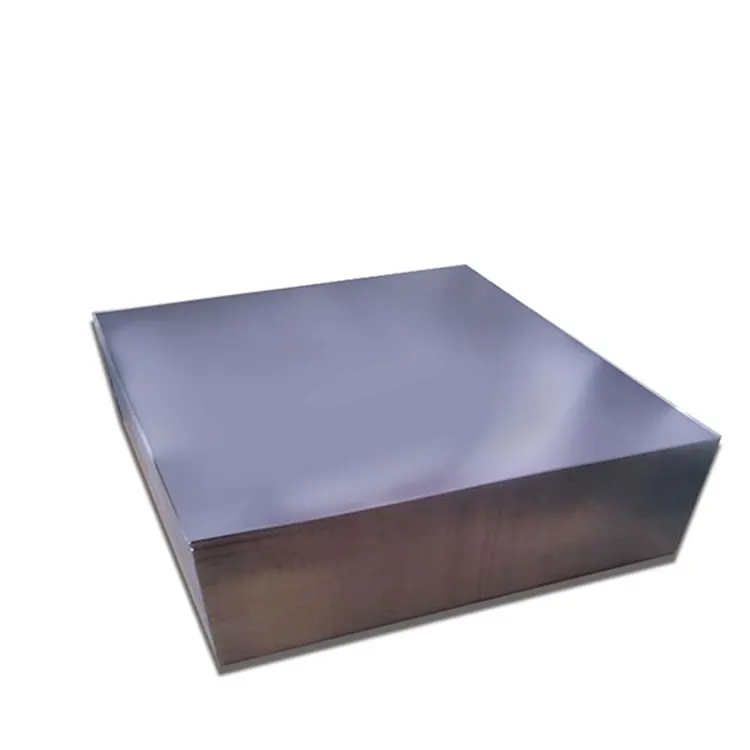
Comprehensive Product Analysis: 2.8/2.8 Tinplate Sheet 0.2mm
Technical Specifications and Performance Characteristics
The 2.8/2.8 Tinplate sheet 0.2 mm represents a sophisticated engineering achievement in metal packaging materials. This electrolytic tinplate specification features a precisely controlled 0.20 mm nominal steel substrate thickness with equal tin coating distribution of 2.8 g/m² on both top and bottom surfaces. The designation follows EN 10202 standards, ensuring international compatibility across diverse manufacturing environments.
Key technical parameters include:
- Gauge Precision: 0.20 mm with ±0.01 mm tolerance
- Coating Mass: 2.8 g/m² per side (equal coating configuration)
- Base Material: ETP (Electrolytic Tinplate) using MR or L-type steel standards
- Surface Treatment: Available in Bright, Stone, or Matte finishes
- Passivation: Standard 311 chromium treatment for enhanced stability
The material is very easy to weld because the thickness of the tin layer is just right. The 2.8 g/m² coating lowers the electrical contact resistance, which makes it perfect for high-speed electrical resistance welding, which is common in making three-piece cans. This specification makes it possible for the quality of the weld to stay the same over long production runs while reducing problems with electrode contamination.
The performance benefits include lacquer binding qualities that are important for packing acidic contents. The controlled surface topography made by electrolytic tinplating is perfect for organic coatings because it allows for the best mechanical bonding sites. This quality is especially useful for food packing, where the layers on the inside have to be able to handle being exposed to changing pH conditions for a long time.
Industrial Applications and Use Cases
Manufacturing food and drink cans is the main area where this tinplate standard is used. The 2.8/2.8 Tinplate sheet 0.2 mm works great for making normal food cans when efforts to cut down on weight call for smaller materials that don't compromise product safety. Big food companies use this specification for vegetable cans, soup containers, and pet food packaging, all of which need to keep costs as low as possible.
The consistent thickness properties of this material make it very useful for making aerosol containers. The consistent 0.2 mm gauge makes sure that the welding currents are stable during side-seam welding, which creates airtight rings that can withstand forces up to industry standards. The tin layer makes it easier to join wires without contaminating the electrodes too much. This cuts down on upkeep needs and boosts production efficiency.
The production of closures is another important application area. This material is perfect for making twist-off lug caps because it has the right amount of spring-back elasticity for threading mechanisms on glass jar lids. The coating, which weighs 2.8 grams per square metre, helps PVC-free compounds stick to it and is resistant enough to corrosion for long-term use.
When paired with the right coating systems, this material's resistance qualities are used in chemical and industrial packing. Tinplate is a strong body material that can handle solvent-based chemicals in containers that hold less than one litre. It can be protected with phenolic or epoxy-phenolic coatings. This mix stops internal corrosion in complicated storage environments and keeps the structure's integrity.
Manufacturing Process Optimization
Precision in cold rolling has a direct effect on the quality of the finished 2.8/2.8 Tinplate sheet 0.2 mm product. Modern rolling mill technology makes sure that the thickness is the same across the whole width of the sheet, so there are no differences that could make forming operations less successful. The managed reduction plan keeps the grain structure properties that are needed to reach the desired mechanical properties.
To get a uniform 2.8 g/m² coating distribution in electrolytic tinplating processes, the current density needs to be carefully controlled. Modern plating lines have high-tech tracking systems that keep changing settings to maintain the accuracy of the finish. This accuracy keeps the coating from changing in ways that could cause corrosion or failures in adhesion in later steps.
Throughout the manufacturing process, quality control protocols make sure that international standards are met. Coulometric analysis checks that the mass of the tin covering is within certain limits, and mechanical testing makes sure that the qualities of the temper meet the needs of the application. Surface screening systems look for flaws that could affect how well the final product works. This makes sure that only high-quality materials get to the people who will use them.
Global Market Characteristics and Regulatory Landscape
International Standards Compliance
The global tinplate business is governed by strict rules that make sure products are safe and work the same way every time. For markets in North America, tinplate specifications are set by ASTM A623, while in Europe, EN 10202 is the standard that applies. Asian markets usually use JIS G3303 standards, which make a complete global framework for using 2.8/2.8 Tinplate sheet 0.2 mm.
Different international markets have very different rules about how to handle food. Food-grade products must meet FDA compliance requirements, which set the bar for uses in North America. For EU countries, EFSA rules provide similar guidelines. In Asian markets, each country has its own rules, which are often based on international guidelines but also take into account local tastes and safety needs.
Environmental laws are having a bigger impact on the choices people make about what materials to use. The circular economy policies of the European Union encourage the recycling of materials. Tinplate is a good choice because it can be recycled over and over again. People want light materials, like sheets with a width of 0.2 mm, that reduce pollution from shipping while still meeting performance standards.
Market Trends and Regional Preferences
Sustainability efforts affect how all major markets choose to package their goods. Consumers are asking for eco-friendly packaging more and more, which is pushing manufacturers to use materials that have been shown to be good for the environment. Because it can be recycled, tinplate is a better choice for packaging than other materials, especially in North American and European markets that care about the environment.
Trends toward losing weight affect design choices around the world. The move toward 2.8/2.8 Tinplate sheet 0.2 mm is part of an effort across the industry to use less material while keeping the integrity of the package. This trend is especially clear in markets that care a lot about price, where optimising materials has a direct effect on profits.
How well a region can make things affects what materials are available and how much they cost. Asian production centers that have been around for a long time offer lower costs for large orders, while facilities in Europe and North America focus on high-end specifications and unique needs. This distribution makes it possible for strategic sourcing projects that balance the need for cost-effectiveness with the need for supply chain reliability.
Strategic Purchasing Recommendations and Implementation Guidelines
Supplier Evaluation Criteria
To make tinplate buying methods work, you need to have thorough processes for evaluating suppliers. The main thing that is used to judge suppliers is their technical abilities. They must show that they have consistent quality control systems and advanced manufacturing processes. Certifications like ISO 9001:2015, ISO 14001:2015, and industry-specific standards like FSSC 22000 show the quality in a clear way.
Aligning production capacity with predicted demand ensures supply stays steady during busy times. Most of the time, suppliers with current equipment lines that use German and Japanese production technology provide better stability and dependability. The financial stability assessment protects against supply problems that could throw off production schedules.
Logistics prices and transport dependability are affected by where goods can be sent. Suppliers with well-established delivery networks can offer more shipping choices and shorter lead times. This is especially important when buying things from other countries, since transportation costs have a big effect on the total cost of the materials.
Quality Assurance Implementation
Incoming material screening procedures make sure that the 2.8/2.8 Tinplate sheet 0.2 mm meets the standards before it is used in production. Checking the thickness with high-precision measuring tools proves that the gauge is consistent, and coating mass testing proves that the tin layer is uniform. Before the material goes into production, it is checked for surface quality to find any problems that might happen during printing or shaping.
Statistical process control systems keep track of how well materials work across multiple production runs. Collecting data on how things form, how well they weld, and how well coatings stick gives companies ideas for how to keep improving. This information lets suppliers talk to buyers ahead of time about ways to improve quality and make specifications better.
Supplier audit programs keep quality control going throughout all of a company's purchasing relationships. Regular inspections of the site make sure that the quality control systems and production skills are still up to date with the latest best practices in the industry. These evaluations give people the chance to work together on improvement projects that are good for everyone.
Advanced Processing Techniques and Best Practices
High-Speed Production Line Integration
Modern operations that make cans need materials that can work reliably at high production speeds. The 2.8/2.8 Tinplate sheet 0.2 mm works really well in these conditions because it has good mechanical qualities and a great surface. When line speeds are higher than 2,000 cans per minute, materials need to be very easy to shape and weld evenly.
When working with thin-gauge materials, it's important to make sure that the welding parameters are optimised. The 2.8 g/m² tin coating makes the metal the best electrical conductor for resistance welding while keeping the right thickness for a strong seam. Electrode care plans need to take into account the properties of the material so that pollution doesn't build up and lower the quality of the weld.
Progressive die design takes into account the unique qualities of materials that are 0.2 mm thick. Adjustments to the tool's shape make up for the material's decreased hardness while keeping the accuracy of the dimensions. Having the right die gaps stops the material from warping during the making process, which keeps the quality of the result the same over long production runs.
Surface Treatment and Coating Applications
Because of the way the surface is made, lacquer coating methods need to be changed when working with 2.8/2.8 Tinplate sheet 0.2 mm. The controlled structure of the tin coating makes it possible for organic coatings to bond mechanically in the best places. This means that coating thicknesses can be lowered while protection levels stay the same. This optimisation cuts down on the cost of materials and makes production more efficient.
The parameters of the printing process must take into account the bright finish that is typical of this specification. The controlled surface roughness made by the electrolytic tinplating process helps the way ink sticks to it. Precision rolling operations make the dimensions more stable, which improves the accuracy of colour registration.
Verification of the passivation treatment makes sure that the surface is properly prepared for the next coating operation. Chemical passivation 311 gives the best bonding properties and stops sulphide stains from showing up during storage. Regularly checking how well passivation is working stops binding problems that could damage the structure of the package.
Cost Optimization Strategies and Economic Benefits
Material Efficiency Maximization
When you switch to 2.8/2.8 Tinplate sheet 0.2 mm specifications, you save money on materials right away because they are lighter than heavier gauge options. About 15 to 20 percent more containers can be made from the same amount of material, which has a direct effect on the cost of raw materials. This increase in efficiency adds up over large production volumes, helping high-volume manufacturers save a lot of money every year.
Better formability traits help efforts to cut down on waste. The balanced mechanical properties keep quality standards high while lowering the amount of scrap that is made during forming. Trimming waste goes down because the dimensions are more stable, and forming rejects go down because the material is more flexible.
Lessening the weight of a package lowers its transportation costs. It is cheaper to ship full containers because they are lighter, and they are easier to handle throughout the distribution chain. These benefits also go to the end users, who find it easier to use products because the packaging is lighter while still protecting them.
Production Efficiency Enhancement
Using regular, high-quality products can cut down on setup time. 2.8/2.8 Tinplate sheet 0.2 mm from dependable sources doesn't need many process changes between production runs, which cuts down on switching time and makes the tools work better overall. This stability lets production runs last longer, which increases output efficiency.
Better material qualities lead to lower maintenance costs. The managed tin layer keeps the surface properties stable during making operations and stops tools from wearing out too quickly. The life of the welding electrodes is extended because contaminants don't build up as much, which means less upkeep and lower labour costs.
Consistent material properties make quality control more effective. Less variation in the properties of new materials makes checking easier while still meeting quality standards. The statistical process control method works better when working with materials that perform the same way every time.
Industry Trends and Future Outlook
The world's packaging business is still moving toward long-lasting options that meet both efficiency and environmental needs. The specifications for 2.8/2.8 Tinplate sheet 0.2 mm are perfect for these trends because they optimise materials in a way that uses fewer resources while keeping quality standards high. New technologies in making make it possible to reduce thickness even more, and smart sealing methods make security better. Tinplate is good for the earth, and better recycling facilities will make that even better. This will help the market grow in the future as circular economy ideas become more popular around the world.
Conclusion
Using the best methods for 2.8/2.8 Tinplate sheet 0.2 mm commercial uses takes a deep understanding of the properties of the material, the needs for processes, and how the market changes. This specification strikes the best balance between performance and cost-effectiveness for a wide range of packaging uses. Strategic partnerships with suppliers, good quality control, and ongoing process optimisation are all important for success. Tinplate is expected to continue to grow because of the global trend toward eco-friendly packaging options and because new technologies are making it work better. By improving efficiency and product quality, manufacturers who spend money on learning how to choose the right materials and use them correctly will gain a competitive edge.
FAQ
1. What makes 2.8/2.8 tinplate coating ideal for food packaging?
The 2.8 g/m² tin coating on each surface provides optimal corrosion resistance for food contact applications while maintaining cost effectiveness. This coating thickness offers adequate protection against galvanic corrosion while supporting excellent lacquer adhesion for interior coatings. The equal coating distribution ensures consistent protection across the entire surface area, preventing localized corrosion that could compromise food safety.
2. How does a 0.2 mm thickness affect forming operations?
The 0.2 mm thickness requires careful process optimization but delivers excellent formability when properly managed. Modern forming equipment handles this gauge effectively with appropriate die clearances and forming speeds. The reduced thickness actually improves deep drawing capabilities due to lower forming forces, enabling more complex geometries while reducing tool wear.
3. What quality standards should buyers verify when sourcing tinplate?
Essential quality standards include ISO 9001:2015 for quality management systems, FSSC 22000 for food safety management, and compliance with relevant national standards like FDA approval for food contact. Additionally, verify thickness tolerances within ±0.01 mm, coating mass consistency through coulometric analysis, and surface quality through visual inspection protocols.
4. Which industries benefit most from this tinplate specification?
Food and beverage manufacturing represents the primary application, particularly for standard food cans, pet food containers, and beverage applications. Aerosol packaging manufacturers utilize this specification for personal care and household products. Chemical packaging for smaller containers and closure manufacturing for twist-off caps also benefit from these material characteristics.
Partner with Three for Premium 2.8/2.8 Tinplate Sheet Solutions
Transform your packaging operations with Three's industry-leading 2.8/2.8 Tinplate sheet 0.2 mm solutions. As a trusted manufacturer with over 270,000 square meters of production facilities and advanced German, Japanese, and Swiss equipment lines, we deliver consistent quality that meets international standards. Our technical team provides comprehensive support for specification optimization and application development. Experience the reliability of ISO 9001:2015 certified processes and rapid delivery capabilities that keep your production lines operating efficiently. Contact our experts at info@threefoodcan.com to discuss your specific requirements and discover how our premium tinplate sheets can enhance your manufacturing operations.
References
1. International Tin Research Institute. "Tinplate Manufacturing Standards and Quality Control Procedures." Technical Publication Series, 2023.
2. American Society for Testing and Materials. "Standard Specification for Tin Mill Products: ASTM A623-22." Annual Book of ASTM Standards, Volume 01.06, 2022.
3. European Committee for Standardization. "EN 10202:2021 - Cold Reduced Tinmill Products - Electrolytic Tinplate and Electrolytic Chromium/Chromium Oxide Coated Steel." CEN Publications, 2021.
4. Food and Agriculture Organization. "Guidelines for Food Contact Materials: Metal Packaging Safety Standards." WHO Technical Report Series, No. 987, 2023.
5. Packaging Technology Research Institute. "Lightweight Packaging Solutions: Performance Evaluation of Thin Gauge Tinplate Applications." Journal of Applied Packaging Research, Volume 15, Issue 3, 2023.
6. International Steel Statistics Bureau. "Global Tinplate Market Analysis: Production Trends and Regional Demand Patterns 2020-2023." Annual Steel Market Report, 2023.
YOU MAY LIKE