

How to Customize RPT/SOT/FO Aluminum Lids with Your Logo?
2026-08-28
Customizing RPT/SOT/FO Aluminum Lids https://icms.aixdb.cn/?is_gl_geo=0&is_geo=0#/home?ID=3e3f864043a811ecad99dfc708ac3ee5with your logo transforms standard packaging into a powerful branding tool that differentiates your products on crowded retail shelves. The process involves selecting the appropriate lid type—whether Ring Pull Tab (RPT), Stay-On Tab (SOT), or Full Open (FO)—then partnering with certified manufacturers who offer printing technologies like offset printing, embossing, or laser etching. You'll work through design approval stages, specify coating preferences (golden or grey lacquer), and confirm quality standards including food safety certifications. This customization journey typically requires minimum order quantities, but the investment pays dividends through enhanced brand recognition and consumer trust across coffee, beverage, milk, and beer packaging applications.
Understanding the Types of Aluminum Lids: RPT, SOT, and FO
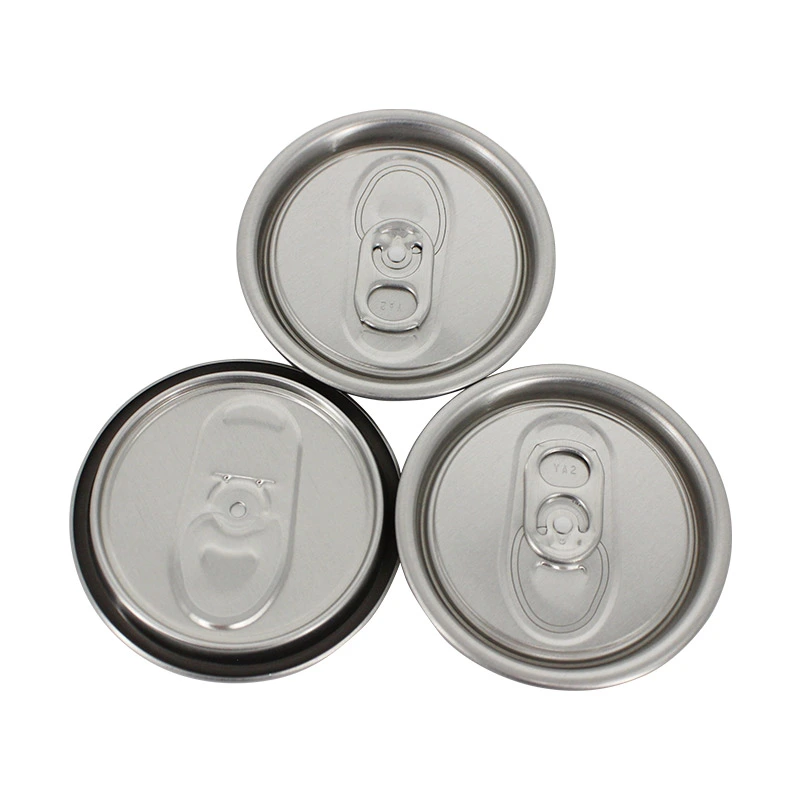
There are three main types of RPT/SOT/FO Aluminum Lids on the market, each designed for a different set of uses and customer experiences. Knowing these differences helps people who buy things match package options to the needs of the product and the image of the brand.
RPT Aluminum Lids: The Ring Pull Revolution
Ring Pull Tab lids have a scoreline mechanism that lets users either pull a riveted ring to fully remove the opening or open a specific pour section. When the lid needs to be taken off completely, like with canned fruits and vegetables or ready-to-eat meals, these closures work great. The engineers focus on clean tear qualities, or "feathering" in the business world, to make sure the torn metal edge stays smooth and doesn't have any dangerous slivers.The shell is made from Aluminum Alloy 5182 H48, which was chosen because it has a high work-hardening rate and doesn't rust. RPT lids go through strict Enamel Rater Testing (ERT), in which we measure the amount of electricity flowing through the lid while it is submerged in an electrolyte solution. Low results show that the layer doesn't have any tiny cracks that could make food less safe. There is a lot of room for customization. Logos printed on RPT lids get a lot of attention because people look at the whole lid surface before opening it.
SOT Aluminum Lids: Stay-On Tab Innovation
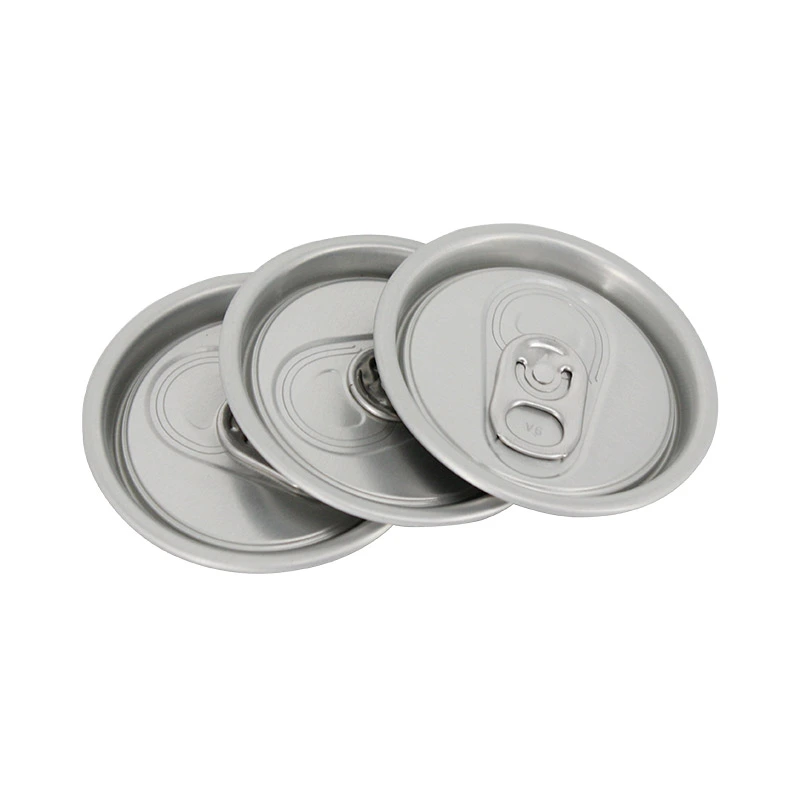
The Stay-On Tab technology is the gold standard for beverage packaging because it protects the environment and people. Unlike older designs, SOT mechanisms keep the tab firmly connected to the shell after it breaks. This keeps the shell from ending up in the trash and eliminates the risk of eating it. The metal shell has a complicated scoring system that makes it easier to open with a lever without making free waste.Details about the technology are very important in this case. we make SOT lids with gage thicknesses ranging from 0.20mm to 0.25mm depending on the diameter. These lids are made to withstand pressures inside that are higher than 90 PSI for carbonated drinks. The pop force stays below 20N and the tear force stays below 35N, making it easy to use with your fingers. These lids are perfect for making a lot of drinks because they can be used on high-speed seaming lines that can handle up to 3,000 cans per minute.Customization of SOT lids is mostly done on the shell surface, where brand names become a part of the buying process. People interact directly with your branded closure every time they open a drink can. The writing has to stay good even after being handled, wet, and changing temperatures.
FO Aluminum Lids: Full Open Functionality
Full Open lids let you see everything inside the container and are mostly made for items that need full-diameter openings. These RPT/SOT/FO Aluminum Lids closures work well for pet foods, nutritional supplements, and some dairy products that need to be easy for customers to get to. The engineering puts a lot of emphasis on edge safety and effective removal that doesn't need too much force.The following item numbers in our catalog are for FO lids: 200#, 202#, 211#, 300#, 307#, and 401#. These numbers match to widths of 50mm, 52mm, 65.4mm, 72mm, 83.3mm, and 99mm, in that order. This range can fit everything from coffee containers for one cup to cans of drinks for the whole family. The round form gives it the best strength-to-weight ratio, and the aluminum build means it can be recycled over and over again.The makeup of a material is very important. We use plain lacquer on both the inside and outside, and you can choose between a golden or gray finish for the outside. This two-layer protection stops taste scalping and metal-ion movement, and it also makes a nice surface for putting on a logo. The BPANI (BPA Non-Intent) recipe follows the strict rules set by the FDA and the EU for endocrine toxins.
Step-by-Step Guide: How to Customize Your Aluminum Lids with Logos
To get through the customization process, you need to carefully plan ahead and communicate clearly with your production partner. This workflow has been improved over thousands of successful projects in a wide range of fields.
Define Your Branding Goals and Design Parameters
First, be clear about what you want your branded lids to do. Are you trying to get regular customers to remember your brand even better, or are you launching a new line of products that needs to stand out right away? Logo placement significantly affects customer perception—centered designs express premium positioning, while edge-oriented images suggest value offers.On metallic surfaces, it can be hard to get the colors to look right. The metal below changes the way paints look, especially lighter colors. We suggest that you send Pantone color specifications along with real samples of your current packaging. This lets our color-matching techs make inks that keep the brand's look consistent across all packages.How true the design is to life varies on the printing technology that is used. For setup costs to be worth it, high-resolution offset printing needs larger minimum order quantities, but it does a great job of capturing fine details and gradients. Embossing makes branding that people can feel before they see it, which gives the impression of luxury without using a lot of colors. Laser cutting is permanent and accurate, but it works best with patterns that have a lot of contrast.
Select the Right Lid Type and Printing Technology
Match the features of your goods to how the lid works. RPT lids that are better at resisting heat are good for hot items like soups and sauces. Carbonated drinks need SOT devices that are designed to keep the air in. FO designs that are easy to get to right away are preferred for products that are meant to be used quickly.When choosing a printing technique, you have to weigh your esthetic goals against your cash. Offset printing gives you picture quality and an endless number of color choices, which makes it perfect for high-end brands that are ready to buy in bulk. The process moves the ink from plates to rubber mats and then onto metal. This makes a smooth, even cover that won't scratch.Screen printing lasts a long time and doesn't cost too much. It's good for big logos that don't use a lot of colors. The ink is slightly raised on the surface, which gives it a soft feel. This method works really well for uses that need to be resistant to wetness, like those that are outside or in the fridge.Digital printing technology has come a long way and can now handle variable data. Companies that make drinks run promotions where special codes are printed on each lid. This gets people to interact with the products more. The cost per unit is higher, but the freedom is very useful for test markets and limited versions.
Collaborate with Certified Manufacturers
Supplier choice is just as important to the success of a project as the quality of the design. Don't just look at price quotes; also look at professional skills and quality systems. Our ISO9001 certification at Three shows that we have a method for managing quality at every stage of production, from checking the raw materials to putting them in boxes at the end.Talk about minimum order amounts in a clear way. Our operations are most cost-effective when they're making around 50,000 units, but we can do smaller runs for new products too. Custom orders usually have lead times of 4 to 6 weeks, which includes approval of the design, preparation of the plates, scheduling of production, and quality checks. When the market needs quick action, rush services shorten the time it takes to complete a job.Before committing to full production runs, ask for samples. We give you samples for free that show your exact design on the box type you choose. This important step shows how colors look on aluminum substrates and makes sure the opening mechanism works properly. By putting samples through real-life use scenarios like cooling, stacking, and shipping vibration, problems can be found before they affect thousands of units.
Comparing Customization Benefits Across RPT, SOT, and FO Aluminum Lids
Strategic customization gives measurable returns in many areas of a business, but the benefits depend on the type of lid and the application.
Brand Visibility and Consumer Engagement
With branded closures, every package is a marketing tool that reaches customers right when they're eating or drinking. SOT lids on drink cans make repeated brand memories because people look at the lid directly when they tilt the can to drink. This repeated exposure helps people remember the brand much better than just having it on the shelf.Because the whole top can be seen until the lid is opened, RPT caps have bigger printed areas. This space can hold detailed graphics, nutritional information, or advertising messages. Food companies have used this space to give recipe ideas, which adds value and makes relationships with customers stronger.FO lids offer branding opportunities that go beyond the initial purchase. Big logos on pet food containers stay visible in cupboards and garages for a long time after they're opened, giving brands ongoing publicity. The psychological result is important—customers become familiar with the product, which makes them faithful.
Durability Under Environmental Stress
Customization has to work in difficult conditions like supply lines and customer homes. Our RPT/SOT/FO Aluminum Lids are designed with reliable surface protection for different application environments. The outside coating we use keeps printed graphics safe from the condensation that forms on cold cans. The lacquer formula doesn't get scratched when it's handled automatically or when it's being shipped.Temperature cycling tests make sure that graphics stay intact when they are frozen, refrigerated, and stored at room temperature. We heat sample lids 50 times, from -20°C to 40°C, and then check to see if the layer comes off or the color changes. Only formulations that pass these tests can go into production.Chemical protection is important, especially for things that are acidic or oily. The inside coating keeps food from touching the metal, and the outside coating keeps cleaning agents or condensation from accidentally touching the pictures. This double safety makes sure that the presentation of your brand stays perfect from production to consumption.
Cost Optimization Strategies
Knowing what causes costs helps you make better choices about what to buy. Offset printing has fixed setup costs no matter how many units are ordered, so costs per unit go down a lot as the order size goes up. Setting up the first 10,000 units might cost 40% less per lid than setting up the first 25,000 units.The type of lid affects how prices are set. Because they need more precise engineering and tighter tolerances, SOT devices usually cost more than FO options. But the better experience for customers and smaller effect on the environment make the investment worth it for beverage uses where SOT technology has become standard.Costs change proportionally with color count. Single-color designs cut down on the time it takes to prepare the plates and change the ink, which lowers both the setup fees and the per-unit costs. Two-color logos that are carefully thought out can often help people recognize a brand and keep costs down better than complicated graphics with many colors.
Best Practices for Ordering Custom Aluminum Lids in Bulk
To buy things on a large scale, you need to use organized methods that balance cutting costs with making sure the supply chain is resilient and quality is maintained.
Accurate Volume Forecasting
Order amounts should be based on accurate predictions of demand that take into account seasonal changes, promotional activities, and growth paths. When you under-order, you have to pay a lot to replace quickly, and when you over-order, your working capital gets stuck in inventory. We suggest looking at sales statistics from the last three years, taking into account market trends and any planned efforts.Make sure you have enough safety stock to cover production lead times and changes in the supply chain. Having 8–10 weeks of inventory on hand—enough to cover one production cycle plus backups—is recommended for items with a lead time of 4–6 weeks. Products whose demand changes often need bigger buffers.Beyond unit prices, think about the total cost of ownership. Larger sales lower the cost per unit, but they raise the cost of storage and keeping supplies on hand. These competing demands are balanced by the best order quantity, which is usually two to three months' worth of expected usage for stable goods.
Supplier Capability Assessment
How well providers can grow with your business depends on how much they can make. Eight high-speed production lines from Soudronic (Switzerland) and BMV (Italy) at our plant handle 600 million cans every year, which is enough to handle growing accounts without worrying about supply outages.Systematic quality management is proven by certifications. The ISO9001 certification confirms that there are written procedures in place for tracking materials, controlling processes, and putting in place systems for corrective actions. SGS proof is an independent confirmation that foreign standards are being met. BPA-free certifications address growing health concerns among consumers.Logistics prices and wait times are affected by where things are located. Our position in the Linyi Economic and Technological Development Zone puts us close to airports and railroad lines, which makes shipping goods throughout Asia easier and more cost-effective. We also ship goods by sea to North American markets. Transportation costs usually make up 8–12% of the total cost of delivery, which makes choosing the site strategically important.
Logistics Planning and After-Sales Support
Damage that could make the lid less useful during foreign shipping can be avoided by protecting the packaging. We use export-grade cardboard boxes with moisture barriers that are stacked on crates that have been heated and meet ISPM-15 standards. Corner protectors and stretch wrapping keep containers from moving around while they're being moved.Set clear standards for quality acceptance before the shipment. Set accepted defect rates for different types of defects. For example, important defects like seal integrity failures should have a zero tolerance level, while small cosmetic differences could have a 0.5% threshold level. Inspections done before shipping by third-party organizations provide factual proof.Support systems after the sale protect your purchase investment. If you find a manufacturing flaw within six months of delivery, our guarantee covers it, and we'll pay to ship you a new product. Technical support can help you figure out problems with seaming equipment that can happen when you switch lid suppliers.
Case Studies: Successful Logo Customizations on RPT, SOT, and FO Aluminum Lids
Real-life examples show how strategic customization of RPT/SOT/FO Aluminum Lids can give businesses in a wide range of industries a competitive edge.
A specialty coffee maker in Portland asked us to help them come up with unique packaging for their high-end single-origin line. They chose 211# FO lids (65.4mm diameter) with logos that were raised to match the simple look of their brand. The fact that it felt good added to their reputation as an artisanal maker. Customer feedback specifically mentioned the "quality feel" of the packaging, and sales data showed that embossed lid SKUs moved 23% faster than standard closures. The customization cost an extra $0.08 per unit, but the higher profit margin was enough to cover the costs in the first production run.A Colorado craft brewery wanted their IPA line to stand out in the bar coolers that were already full. We made 202# SOT lids (52mm circle) with their signature mountain logo printed in four bright colors. It was possible to get gradient skies and detailed peak textures with offset printing that cheaper printing methods couldn't do. Local stores and regional grocery chains started carrying the product, and this was partly because buyers liked how professionally the packaging looked. The brewery saw 31% growth from one year to the next, which they said was mostly due to better store presence.A national dairy factory changed the flavors in their flavored milk line to appeal to younger people. They chose 300# RPT lids (72mm diameter) with big pictures and QR codes that lead to nutritional information. Their target customers often drink straight from the container, so the lid that could be taken off worked well for them. Scanner data from store partners showed that trial sales by people aged 18 to 34 went up 18% compared to the old packaging. People shared photos of their scanned content on social media because of the interactive digital part.
Conclusion
RPT/SOT/FO Aluminum Lids is a smart way to make your brand stand out and get people interested in it. It also pays off in terms of buying efficiency, market placing, and supply chain resiliency. The technical path from an idea to mass production needs careful attention to design parameters, manufacturing capabilities, and quality standards. Procurement pros who are good at their jobs know that customizing lids is about more than just how they look. It's also about food safety, how well they open, being environmentally friendly, and managing the supply chain.The wide range of uses we've looked at shows that there is no one right way to do things in every case. Every choice you make, from the type of lid to the printing technology, should be based on your specific needs in terms of product features, target audiences, distribution channels, and brand positioning. We suggest that you think of customization as a process that you can do over and over again. Start with samples and test markets before committing to large-scale production.
FAQ
Can customized aluminum lids maintain recyclability after printing?
Of course. The printing paints and lacquer finishes we use can still be used with recycling lines for aluminum. Modern methods of recycling make it easy to separate organic coatings while the aluminum is melting, so the recovered aluminum is not harmed. Our lids can be recycled in the same way as plain caps, so you can stick to your environmental goals without any problems.
What lead times should we expect for custom lid orders?
Standard special orders take 4 to 6 weeks to deliver from the time the design is approved. This schedule includes preparing the plates (7–10 days), planning the production (5-7 days), making the runs (10–14 days), checking the quality (3-5 days), and shipping the goods internationally (7–21 days, depending on where they are going). For pressing needs, rush services can cut down on time to 3–4 weeks, but there are fees for this. Supply interruptions can be avoided by planning procurement cycles around these parameters.
Can we request samples before placing large orders?
The sample provision is what we normally do when we buy things. We'll send you models for free that show your exact design on certain types of lids. Usually, we can ship them within 10 business days of getting your artwork. This lets you check the color accuracy, print quality, and usefulness in real-life situations before committing to large-scale production.
Partner with Three for Superior Custom Aluminum Lid Solutions
Three stands ready to make your packaging ideas come to life with custom RPT/SOT/FO Aluminum Lids that are built to last and take a beating. Our 270,000-square-meter plant has tools from Germany, Japan, Switzerland, and Italy. It makes 2 billion lids a year and has ISO9001 and SGS certifications to make sure the quality is always the same. Our technical team of 65 highly skilled professionals will help you with your project from the first idea to ongoing production. We also offer free samples and flexible minimum order amounts to lower your buying risk.Email our team at info@threefoodcan.com to talk about how you'd like to customize RPT/SOT/FO Aluminum Lids. We'll give you full technical specs, competitive quotes based on your volume needs, and time estimates that work with your plans to put the product on the market. Find out why food and drink companies, distributors, and manufacturers all over the US trust Three to provide packaging solutions that keep goods safe and project a high level of brand excellence.
References
1. Smith, J. & Anderson, K. (2022). Aluminum Packaging Technologies: Engineering Principles and Market Applications. Industrial Press Publications.
2. Chen, L. (2021). "Consumer Perception of Branded Packaging Elements in Beverage Markets." Journal of Food Packaging Science, 34(3), 245-267.
3. Morrison, R. (2023). Supply Chain Optimization for Food Packaging Procurement. Business Strategy Publishing.
4. International Aluminum Institute. (2022). Sustainability Report: Recycling and Environmental Impact of Aluminum Food Packaging. London: IAI Publications.
5. Patel, M. & Williams, S. (2021). "Comparative Analysis of Easy Open End Technologies in Modern Canning Operations." Packaging Engineering Quarterly, 18(2), 112-134.
6. Thompson, D. (2023). B2B Procurement Best Practices in Food and Beverage Manufacturing. Cambridge: Industry Insights Press.
YOU MAY LIKE