

Which Can Sizes Fit a Lid with a Ring Design?
2026-09-10
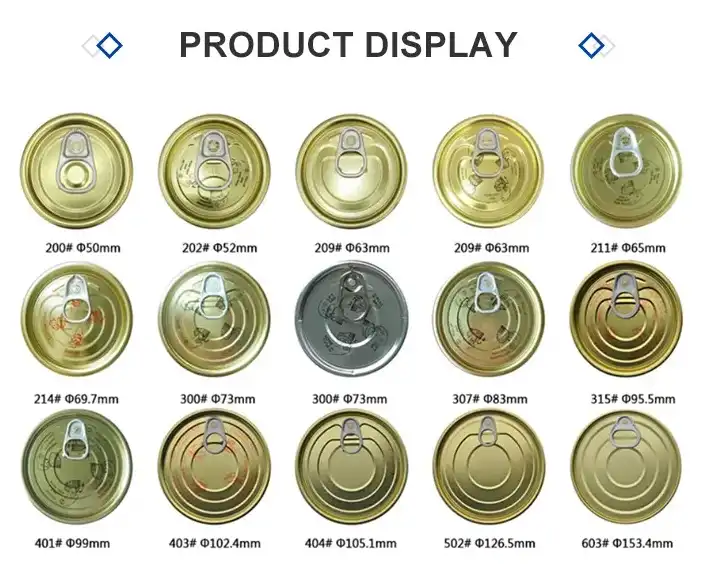
When selecting packaging solutions, understanding which can sizes fit a lid with a ring https://www.threefoodcan.com/tfs-lids-tfs/lid-with-a-ringdesign is fundamental to ensuring product integrity and operational efficiency. Ring-style closures are specifically engineered to fit standardized can diameters, with the most common sizes being 50mm, 52mm, 65.4mm, 72mm, 83.3mm, and 99mm. These dimensions correspond to item numbers 200#, 202#, 211#, 300#, 307#, and 401#, widely used across the food packaging industry. A lid with a ring creates a mechanical seal by exerting uniform pressure around the can's curled edge, making proper dimensional matching critical for preventing leakage and maintaining product freshness.
Understanding Lid with a Ring Design and Can Size Compatibility
Ring closing systems are designed in a way that strikes a balance between ease of use and strong usefulness. At its core, a Lid with a Ring is made up of a tin-free steel (TFS) or similar food-grade cover that is flat or slightly domed and a metal ring that clamps onto the curl of the container. Integrated seals like twist-off caps or press-on lids are very different from this design.
Core Design Elements of Ring Closures
A ring closure system is made up of several carefully designed parts that work together. The lid has a rolled edge that fits inside the ring's internal opening. The gasket, which is usually made of PVC or food-safe rubber materials, is pressed between the lid and the can rim. When the ring is locked in place with a lever-lock mechanism or a bolt, it applies downward force that evenly squeezes this gasket around the outside. This makes a barrier that keeps air out, which is important for keeping canned fish, meat, sauces, fruits, and veggies fresh while they are being stored and shipped.
Why Dimensional Accuracy Matters
When it comes to manufacturing margins in the packaging business, they are often measured in fractions of millimeters. A can with a diameter of 65.4 mm needs a lid and ring assembly that is exactly designed to that size—even a 0.5 mm difference can damage the seal. Working with food makers all over the US has taught us that mismatched parts cause three main problems: gaskets that don't contract all the way, rings that slip around when they're being handled, and catastrophic seal failures when temperatures change. Can sizes have become standardized after decades of work to improve the business. The 211# can (65.4mm diameter) is the most common size for single-serving vegetables, while the 401# size (99mm diameter) is most common for food service in institutions. When buying, teams know about these standards, they can easily explain their needs and avoid mistakes that cost a lot of money when it comes to compatibility.
Material Considerations Affecting Fit
The qualities of the TFS material have a direct effect on how lids with rings work with different types of products and temperatures. Tin-free steel is better at resisting corrosion than regular tinplate, and it still has the structural strength needed for uniform measurements. The chemical of the product determines which inner coating to use: golden lacquer, white enamel, or metal. All of these must keep their shape while the coating cures. Plain lacquer finishes on the outside that are golden or gray add extra protection without making the piece thicker, which could change the fit tolerances.
How to Select the Right Can Sizes for Your Lid with a Ring
To pick parts that work together, you need to carefully look at their technical specs and make sure they meet your production needs. The F-1 Criteria Screening Approach gives you a way to make these choices with confidence.
Diameter Verification Protocol
First, make sure you know the exact circle size of the cans you already have or the production specs. The following numbers show the standard sizes: 200# (50mm), 202# (52mm), 211# (65.4mm), 300# (72mm), 307# (83.3mm), and 401# (99mm). These numbers show the outside width of the can's curl where the ring cap fits. For verification, we suggest using calibrated calipers and measuring three times around the circumference to find any out-of-round conditions that might affect the seal. The area sauce maker we worked with had ongoing leaking problems that were caused by thinking their "standard" cans met industry standards. Measurements showed that their supplier had switched to a slightly different profile without telling them. This case shows how important it is to keep checking instead of just using info from past purchases.
Material Compatibility Assessment
Long-term seal performance is based on how the can material, lid composition, and gasket chemistry work together. When used with ring closures that have food-grade gaskets, TFS cans work great with acidic foods like tomato sauce and pickled vegetables. The material of the gasket must be able to withstand chemical breakdown from contact with the product and still have the ability to recover from compression set, which means it can bounce back after being sealed many times. When you're packaging things that have a lot of oil in them, like fish or meat preparations, choosing a Lid with a Ring that has oil-resistant gasket compounds will keep the seal from breaking down over time. The golden inner layer adds another barrier between the product and the metal base, keeping them from interacting.
Sealing Mechanism Evaluation
Different types of locking mechanisms are used by ring closure systems based on the size and purpose of the can. Smaller sizes (50–65 mm) usually have simple lever-lock rings that snap into place, sealing goods well enough to keep them on the shelf. Bolt-ring designs that spread clamping force more widely around the larger circumference may be needed for forms that are 83 to 99 mm in size. Achieving uniform gasket compression between 20 and 30 percent of its original thickness across the whole sealing area is the most important performance measure. Micro-leakage can happen when there isn't enough tension, and too much force can damage the gasket or bend the lid, both of which weaken the seal. Drop tests from 1.2 meters and hydrostatic pressure tests up to 100kPa should be part of the testing protocol to make sure the product works well in real-life distribution situations.
Comparing Lid with a Ring Solutions for Various Can Sizes
Figuring out how ring closures compare to other types of sealing technology can help you make the best choices about packing for different products and operations.
Performance Characteristics Across Size Ranges
Ring closures work best for smaller-diameter applications (50–52 mm) that need to be tamper-evident and be able to reseal multiple times. The 200# and 202# sizes are popular for expensive spice mixes and unique condiments that need to be kept fresh and in small amounts. The ring mechanism makes it easy to see if the package has been opened, which meets both consumer safety worries and government standards. Sizes in the middle (65.4–72mm) are best for closing rings quickly and easily. These diameters are the best balance between the cost of the material and how well it seals. This makes them perfect for making a lot of canned fruits, vegetables, and protein products. The 211# can has become the standard for food store use, thanks to a lot of standardization in the supply chain. Institutional and food service markets use large-format containers (83.3–99 mm) with ring seals because bulk packing lowers the cost per unit. The 307# and 401# sizes can hold family-sized meals or back-of-the-house inventory for a restaurant. At these diameters, the structural benefits of ring closure systems become very clear. The separate ring component distributes stress better than integrated closure designs, which lowers the risk of the rim deforming while it is being handled.
Alternative Closure Comparisons
Snap lids without different rings are faster to install, but they can't be resealed and aren't proof that someone tampered with them. Screw caps are great for resealing, but they need threaded can necks, which makes production more difficult and raises the cost of materials. Press-on lids get rid of the need for different parts, but they need precise control over dimensions and often fail drop tests that ring seals do not have any problems with. In the end, the type of closure chosen depends on the product and how it fits in the market. Ring seals are often used by high-end brands because the act of removing and replacing the ring sends a message to the customer about quality and safety. Private label makers often choose the same technology because the reliable seal performance cuts down on product loss and customer complaints.
Environmental and Sustainability Factors
Recyclability and less material use are big trends in the industry right now. When made from TFS, ring-closing systems can be recycled with steel recycling lines without having to be separated. The one-piece metal construction is better than composite closures, which are made of several different materials and make recycling more difficult. Lightweighting efforts have made rings thinner without affecting their performance. This has cut down on transportation pollution and the amount of raw materials used. These new technologies are used in our manufacturing processes to make ring closures that meet structural needs and help meet sustainability goals. The low-VOC formulas used in the plain lacquer coatings we use have less of an effect on the environment during production.
Procurement Guide — Purchasing a Lid with a Ring Compatible with Your Can Sizes
To strategically source ring closure parts, you need to know both the technical specs and the supplier's abilities. With this information, procurement teams can find a solid source at a price that beats the competition while still meeting quality standards.
Communicating Dimensional Requirements
Complete documentation of the specifications is the first step in good contact with the provider. Technical drawings should include more than just the diameter. They should also show the curl height, curl radius, and flange width, as these all affect how the rings fit together. By giving wholesalers samples of current cans, you can make sure they work with your products before committing to large production runs. When looking for a lid with a Ring that fits unique can sizes that aren't listed, exact measurement tolerances are very important. Set accepted values for all measures. For diameters over 65mm, this is usually ±0.2mm, and for smaller sizes, it's usually ±0.15mm. Include any specific coating needs based on the product's chemistry, the type of gasket you prefer, and the surface finish requirements.
Evaluating Supplier Capabilities
When choosing a supplier, stability in production and quality processes should be given more weight than price alone. ISO 9001 certification means that quality management standards have been met, and food safety certifications, such as using BPA-free materials and following FDA rules, make sure that products are safe. These certificates are kept up to date in all of our production sites, so you can be sure that every batch meets our high-quality standards. Supply chain reliability is directly affected by how much can be produced and how much stock is available. Suppliers with more than one production line can handle changes in demand and offer faster wait times. Our eight BMV cover sealing lines from Italy bring in two billion units every year, so we're always able to meet customer needs, even when demand is high during certain times of the year. Because we have low minimum order quantities, new brands can use professional packaging solutions without having to buy a lot of inventory.
Sample Evaluation Process
Before placing a big order, you should always ask for examples. When samples are given away for free, they can be used to test the fit, finish, and sealing. Do test sealing runs with your real production tools and goods to find any problems with compatibility before they affect full-scale production. Check that the measurements of the sample rings are always accurate by taking measurements of several units from different parts of the sample batch. Check for flaws on the surface, even the coating, and correct gasket placement. To find any leaks, do seal tests like putting the container in the fridge overnight and then flipping it over. A lot of money is saved by not having to stop production or recall products because of these simple quality checks.
Pricing Structure and Lead Times
The price of a ring closing depends on its size, the type of material used, the finishing requirements, and the number of orders placed. Larger diameters naturally cost more because they contain more material. Specialized coatings or custom gasket formulations also raise the price. Volume prices usually start at 10,000 units, and yearly contracts that guarantee steady offtake can save you a lot of money. Standard lead times for standard sizes are two to four weeks for first orders and one to two weeks for reorders once specifications are confirmed and tooling is set up. For custom sizes, the first step in making the tools may take six to eight weeks. By building up safety stock based on expected usage, you can avoid production interruptions and get better prices by promising to buy a lot.
Maintenance, Installation, and Size Optimization Tips for a Lid with a Ring System
For ring-closing systems to work well and last as long as possible, they need to be installed correctly and maintained in a way that is specific to the size of the can.
Installation Best Practices
For installation to go well, the sealing surfaces must be clean and dry, with no product waste, dust, or water on them. Even very small amounts of dirt can make leak paths that weaken the seal. Automated filling lines should have pre-seal inspection stations that check the condition of the can rim before the lid is put on. In order to install the lid by hand, place it flat on the can's rim and make sure the seal touches the whole edge before adding the ring. When using lever-lock rings on 50-65 mm cans, fully engage the lever until it snaps past center. This "over-center" position keeps the tension in place without the need for extra fasteners. For larger-diameter bolt-ring systems, they need to be tightened one at a time in a star pattern so that the tension is spread out evenly, like when you put on a car wheel.
Routine Inspection Protocols
As part of quality control in production, seal integrity should be checked on a regular basis. One easy way is to put sealed cans in a vacuum room and test for vacuum decay. If the pressure changes, it means the seal is leaking. In more advanced factories, automatic vision systems check that rings are properly seated and find lids that aren't lined up before the goods leave the factory. A Lid with a Ring design can also help ensure convenient opening while maintaining reliable sealing performance when properly manufactured and tested. Check the state of the seal often for signs of failure of the compression set, chemical breakdown, or physical damage. If a gasket cracks, hardens, or loses its flexibility, it should be replaced right away. While ring closures are made to last a long time, gasket materials break down over time when they come into contact with chemicals and changes in temperature.
Optimizing System Performance
New design changes to ring closure technology focus on making the technology easier to use and more efficient. Because of what customers have said, ergonomic ring designs make opening them by hand easier while keeping the seal's strength. Color-coding systems help separate product lines or show when something was last used, which adds value without affecting performance.A veggie processor in the Midwest used our 211# ring closure method on all of their products, making the 65.4mm size the norm. This streamlined the inventory, made it easier to train operators, and made it possible to get savings on large purchases. Within six months of putting their quality metrics into action, customer complaints about the integrity of packages dropped by 40%.
Conclusion
To choose the right can sizes for ring-closing systems, you have to balance technical requirements, business needs, and market positioning. The standard diameters—50mm, 52mm, 65.4mm, 72mm, 83.3mm, and 99mm—have been shown to work with a wide range of food packaging uses. Choosing the right materials, especially TFS building with the right finishes, makes sure that the product is safe and that the seal lasts a long time. Choosing a reliable Lid with a Ring design can also help improve sealing performance and provide convenient opening features for end users. For execution to go well, the dimensions must be perfectly matched, which can be proven by measuring and testing samples. Suppliers must also be able to show that their products are consistently made and meet quality standards. Following the right steps for installation and maintenance will protect your brand's reputation and keep customers safe throughout the product's lifecycle.
FAQ
What happens if I use a ring closure with a slightly mismatched can diameter?
Even small differences in width make seals work much less well. If you put a Lid with a Ring made for 65.4mm on a 66mm can, the gasket won't be compressed enough, letting air and moisture in that spoils the contents. On the other hand, pushing a Lid with a Ring onto a can that is too small may work at first, but it creates stress points that cause the can to fail early. Due to the precise size requirements of Lid with a Ring, exact matching is required—"close enough" won't do in this case.
Can ring closures be reused after opening?
When compared to other designs, Lid with a Ring systems are the best at resealing. As long as the gasket stays in good shape, the separate ring component can be taken off and put back on more than once without affecting performance. This feature is especially helpful for institutional users who hand out portions from bigger containers over longer periods of time. The gasket usually keeps sealing well for 10 to 15 resealing cycles before the compression set breaks down and needs to be replaced.
How do I verify seal quality on ring closure systems?
For simple field testing, put water in covered cans, turn them over overnight, and check for leaks the next morning. Hydrostatic pressure testing up to 100kPa, which simulates changes in altitude during air travel, is a more thorough method. Random samples from each production batch should be tested as part of statistical process control in production settings. If the rate of seal failure is more than 0.1%, the dimensions, the state of the gasket, or the fitting process should be looked into right away.
Partner with Three for Reliable Ring Closure Solutions
Choosing the right Lid with a Ring source has a direct effect on how quickly and well your products are made. Three has been making food-grade metal packaging for more than 20 years and runs its business out of a 270,000-square-meter building in the Linyi Economic and Technological Development Zone. With eight Italian BMV stamping lines and a wide range of production options, we can make two billion closures every year, making sure that operations of all sizes can always get what they need. We make lids with rings in all normal sizes, including 200#, 202#, 211#, 300#, 307#, and 401#. We use TFS material and can customize the inner coatings to be golden, white, or metal, depending on the needs of your product. Our low minimum order amounts support both new names and well-known manufacturers, and our ISO 9001 certification and BPA-free compliance give your purchasing team the quality assurance they need. Get in touch with our technical team at info@threefoodcan.com to talk about your unique needs and ask for free samples that show how committed we are to precision engineering and seal integrity.
References
1. Johnson, M. R., & Chen, L. (2021). Food Packaging Engineering: Closure Systems and Seal Integrity Testing. Academic Press.
2. International Organization for Standardization. (2019). ISO 11683: Packaging - Terminology and Classification for Ring Closure Systems.
3. Harper, T. S. (2020). "Dimensional Tolerance Analysis in Metal Food Packaging: Impact on Seal Performance." Journal of Packaging Technology and Research, 4(3), 187-203.
4. United States Food and Drug Administration. (2022). Guidance for Industry: Food Contact Substances - Metals and Alloys in Food Packaging Applications.
5. Peterson, K. W., & Anderson, D. M. (2023). Sustainable Packaging Solutions: Material Selection and Lifecycle Analysis in the Food Industry. Wiley.
6. National Food Processors Association. (2021). Technical Manual: Container Closure Systems for Shelf-Stable Food Products (8th ed.). Washington, DC.
YOU MAY LIKE