

What Makes Premium Empty Cans for Meat More Marketable?
2026-09-17
Premium empty cans for meat https://www.threefoodcan.com/empty-food-can/empty-cans-for-meat stand out in competitive markets because they deliver on three non-negotiable fronts: structural integrity, food safety compliance, and brand adaptability. When buyers source meat cans for luncheon meats, corned beef, or ready-to-eat proteins, they need packaging that survives retort sterilization above 121°C, prevents sulfide staining, and carries shelf-stable performance for two to five years. The right empty cans for meat combine advanced material science with customizable design options, making them a direct lever for both product protection and commercial differentiation in today's demanding food supply chain.
Understanding Premium Empty Cans for Meat: Materials and Standards
Material Options That Define Performance
What the Empty Cans for Meat are made of affects everything from how well they resist corrosion to how well their seals stay in place over time. Our meat cans at Three are made from Tin-Free Steel (TFS) and are the exact right width, between 0.18mm and 0.22mm. TFS is very rigid, can handle cycles of high pressure in a retort, and doesn't panel when internal vacuums happen during cooling.
Coatings on the inside are just as important. Our golden and aluminum single and double coatings make a chemical barrier between meat proteins and bare metal. This stops the formation of black iron sulfide, which is a common sign that food is going bad and hurts both appearance and consumer trust. When proteins break down, sulfur ions are released. Phenolic and aluminized epoxy lacquers with zinc oxide are very good at collecting these ions.
Compliance Standards Buyers Cannot Compromise
Food companies that want to sell their goods in the U.S. must follow the FDA, ISO 9001, HACCP, and BRC Global Standards for Packaging Materials. Our Empty Cans for Meat are certified by ISO 9001 and follow strict rules for cleanliness and sterilization that keep the purity of the product safe throughout the supply chain. Aligning regulations is a must—it's the only way to get into a market.
Size Specifications That Match Production Realities
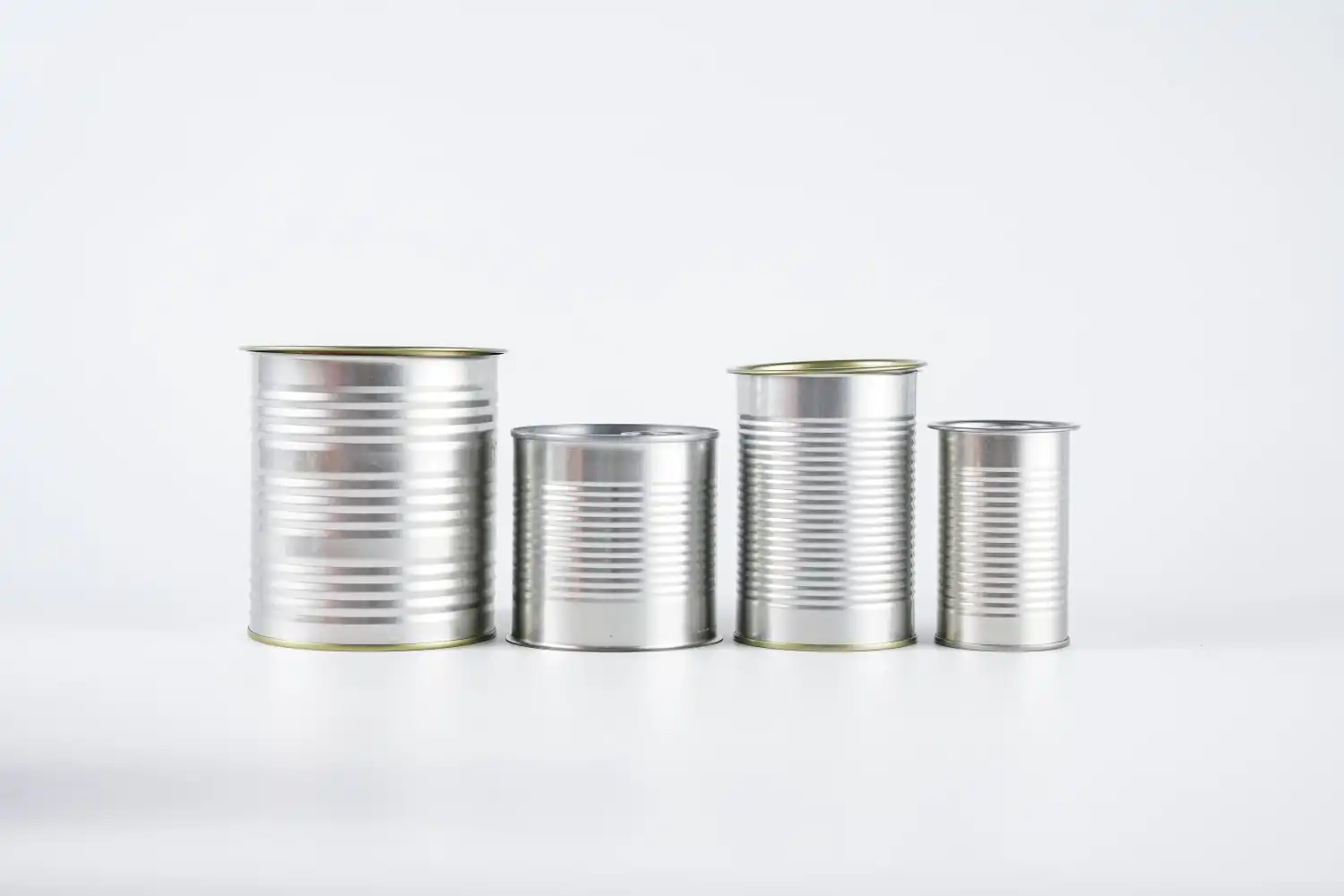
We have items with widths of 65.4mm, 72.9mm, 83.3mm, and 99mm, numbers 211#, 300#, 307#, and 401#. Heights can be changed to fit sizes ranging from 50g to 3,000g. This gives small and large manufacturers the freedom to match the size of the packaging to their specific fill weights and retail SKU strategies.
Benefits of Using Premium Empty Cans in Meat Packaging
There are many business reasons to buy high-quality meat cans besides just protecting the meat. Brand reputation, positioning for sustainability, and overall cost of ownership are all affected.
These are the main performance benefits that make premium meat cans a great choice for buying:
- Extended shelf life without refrigeration: Hermetic double seaming and sulfur-resistant inner layers allow for two to five years of stability at room temperature. This directly lowers reliance on the cold chain and lets companies send to places where refrigerated shipping is expensive or not dependable.
- Custom CMYK offset printing for brand differentiation: Our outer coating can handle full CMYK offset printing, which lets food makers and private label producers show off bright brand images, legal text, and tracking codes. At the store level, customers make faster choices to buy when items are displayed in a way that draws attention.
- Recyclable materials supporting ESG commitments: TFS cans can be recycled in their entirety, which is in line with the growing demand from stores for environmentally friendly packaging. Buyers who care about sustainability can meet their own ESG standards without sacrificing structural performance.
- Economies of scale and long-term ROI: When you buy in bulk from an approved Empty Cans for Meat maker, the cost per unit goes down by a lot. This is called economies of scale and long-term ROI. Our infrastructure for fast delivery and large inventory helps keep production going without costly supply disruptions.
These benefits all help with the most annoying problems that come up when buying meat packaging: the risk of spoilage, keeping the brand's image, government rules, and keeping costs down. When these factors are important to packaging engineers and sourcing managers, they gain a real competitive advantage in both local and foreign markets.
Comparing Types of Empty Cans for Meat: Making the Right Choice
Not every type of can works for every kind of meat. Before choosing a seller, procurement teams often compare metal to plastic, aluminum to steel, and standard to eco-engineered choices.
In every way that matters for preservation, metal cans are better than plastic ones. More fully block light, air, and moisture. They can handle higher temperatures in retorts than plastics can, and they last longer at room temperature. Plastic may be lighter per unit, but it can't produce the same level of airtight sealing and can move when heated.
When it comes to metals, aluminum cans are lighter and naturally don't rust, which makes them a good choice for export logistics. When it comes to high-volume luncheon meat and corned beef production, steel and TFS cans are the best options because they are more rigid, stack better, and cost less per unit.
As a result of store sustainability requirements, new eco-friendly options are becoming more popular. These include biodegradable lacquer coats and lightweight wood structures. Even though performance standards for these materials are still developing, forward-thinking providers like Three are keeping an eye on new developments and incorporating them into our Empty Cans for Meat to keep up with changing market needs.
How to Procure Premium Empty Cans for Meat: A Practical Guide
Where you buy metal meat packaging has real effects on how quickly you can make it and how well it turns out. When buyers compare online platforms to working directly with manufacturers, they should look at more than just the unit price. They should also consider wait times, MOQ options, and customer service after the sale.
The 270,000-square-metre building that Shandong Three Iron-Printing & Tin-Making Co., Ltd. uses is in the Linyi Economic and Technological Development Zone. It has production lines that were brought in from Germany, Japan, Switzerland, Italy, and Taiwan. Our yearly production capacity is 600 million cans, which means we can handle both small orders and big contracts with reliable delivery.
When choosing an Empty Cans for Meat seller, these factors should come first:
- Certification portfolio: ISO 9001, FDA, HACCP, and BRC approvals show that quality management systems can be checked and tracked, not just said to exist.
- Customisation depth: Check to see if the seller can handle different can heights and diameters, two different coating choices, and CMYK writing on the outside in a single production run.
- Sample availability: Reliable suppliers offer free samples before you commit to buying in bulk. We offer free samples so that buyers can check the correctness of the measurements and the performance of the covering before committing to a purchase.
- MOQ and lead time transparency: Smaller brands can't make things when MOQs aren't set correctly. Our team works with both small and large businesses to make sure they meet their lead time commitments.
When buyers evaluate suppliers as a strategic exercise instead of just looking at price, they consistently report better production continuity and fewer quality claims later on.
Sterilisation, Storage, and Labelling: Keys to Maintaining Premium Quality
Premium Empty Cans for Meat are just the beginning. How they are handled, kept, and labeled before they are filled determines how well the quality gets to the customer.
When sterilizing empty cans, the goal is to get rid of any surface bacteria before the filling line. For the retort to be valid, the internal coatings must stay chemically stable through thermal cycles higher than 121°C. The double seam's integrity must also be checked by measuring the hook overlap and using WACO raters to test the enamel porosity, usually aiming for less than 5mA current flow to find micro-pores.
Empty cans should be stored in places with temperatures between 10°C and 30°C and relative humidity below 70%. The stacking heights must not go over the axial load limits of the can gage so that it doesn't deform before it's filled. Damaged cans make it harder to close them properly and increase the risk of contamination.
Labels on high-quality meat cans do two things. In order to follow the rules, products must have correct ingredient lists, net weights, tracking codes, and country-of-origin labels. In addition to compliance, label design affects the decision to buy. Our CMYK offset printing makes sure that the images are sharp and uniform even when printing a lot of them. Brands can also choose between plain and fully printed outer coatings, so they don't have to buy from multiple suppliers.
Conclusion
Premium Empty Cans for Meat have an edge in the market thanks to their precise metalworking, advanced sealing technology, adherence to government rules, and adaptable design. Every choice about specifications affects how well a product keeps its shape, looks good, and works when it's made on a large scale. This includes choosing TFS materials, making sure the manufacturing process is ISO-certified, and printing in custom CMYK. Brands that spend money on the right metal meat packaging see improvements in the meat's shelf life, the value of their brand, and the reliability of their supply chains in both the domestic and international markets.
FAQ
What material are your empty cans for meat made from?
Tin-Free Steel (TFS) that is 0.18mm to 0.22mm thick is used to make our meat cans. This material has good structural rigidity, resistance to rot, and corrosion protection, making it good for storing meat at room temperature.
What internal coating options are available?
You can get our golden and metal finishes in both single and double application styles. During decontamination, these layers stop sulfide stains and chemical movement between meat proteins and the can wall.
Can I order custom sizes?
Yes. There are four common item numbers that range in width from 65.4mm to 99mm: 211#, 300#, 307#, and 401#. You can change the height of the can to fit your exact fill weight and product size.
Do you provide samples before bulk orders?
Before agreeing to a full production order, we give free samples to eligible buyers so they can check the specs, coating quality, and accuracy of the measurements.
What certifications do your cans carry?
Our goods carry ISO 9001 certification and meet the Global Standards for Packaging Materials set by the FDA, HACCP, and BRC. This makes sure that all the rules are in line for entering the U.S. market.
Partner with Three for Certified Empty Cans for Meat
Three provides Empty Cans for Meat that meet the strict needs of food manufacturers in the U.S., private label makers, and exporters around the world. As a reliable producer of Empty Cans for Meat with ISO 9001 certification, the ability to make 600 million cans per year, and full CMYK customization, we give your brand the packaging it needs. Get in touch with our team right away to ask for free samples or talk about your specific needs. You can email us at info@threefoodcan.com or go to threefoodcan.com.
References
1. Packaging Technology and Science – Wiley, 2022
2. Journal of Food Engineering – Elsevier, 2021
3. Food Packaging: Principles and Practice – CRC Press, 2020
4. Comprehensive Reviews in Food Science and Food Safety – Institute of Food Technologists, 2023
5. Metal Packaging Manufacturers Association (MPMA) Industry Report – MPMA, 2022
6. Journal of Food Protection – International Association for Food Protection, 2021
YOU MAY LIKE