

tin plate coil T5 vs T4: What’s the Real Difference?
2026-07-06
When your production line experiences unexpected can failures or your packaging materials fail to meet strength requirements, the culprit often lies in choosing the wrong temper grade. Understanding the critical differences between tin plate coil T5 https://www.threefoodcan.com/tinplate-coil/tin-plate-coil and T4 can save you from costly production delays, material waste, and compromised product quality. This comprehensive guide reveals the technical distinctions, practical applications, and selection criteria that will help you make the right choice for your specific manufacturing needs.
Understanding Tinplate Temper Grades and Their Significance
Tinplate temper grades represent a fundamental classification system that determines the mechanical properties and performance characteristics of tin-coated steel materials. The temper designation directly correlates to the hardness level achieved through controlled rolling and heat treatment processes during manufacturing. In the metal packaging industry, temper grades range from T1 (softest and most flexible) through T5 (hardest and least flexible), with each grade serving distinct application requirements based on the balance between formability and structural strength. The temper grading system utilizes the Rockwell 30T hardness test as the standard measurement method, providing manufacturers with precise specifications for material selection. This standardized approach ensures consistency across different suppliers and enables accurate quality control throughout the production chain. For tin plate coil T5, the hardness value typically reaches approximately 65 on the Rockwell 30T scale, while T4 measures around 61, representing a significant difference in mechanical properties that directly impacts manufacturing processes and end-product performance.
Manufacturers must understand that temper selection influences not only the immediate fabrication process but also the long-term durability and functionality of the finished packaging. The relationship between temper grade and material behavior during forming operations, such as deep drawing, stamping, or embossing, determines the success or failure of production runs. Choosing between tin plate coil T5 and T4 requires careful consideration of the specific stress requirements, forming complexity, and performance expectations for the intended application. The manufacturing process for achieving different temper grades involves precise control of reduction ratios during cold rolling, followed by carefully managed annealing cycles. T4 and T5 grades are typically produced through continuous annealing processes, which provide superior consistency in mechanical properties compared to batch annealing methods. This consistency becomes particularly important in high-speed automated production lines where variations in material properties can lead to equipment malfunctions, increased scrap rates, and reduced operational efficiency.
Key Technical Differences Between Tin Plate Coil T5 and T4
The primary distinction between tin plate coil T5 and T4 lies in their hardness values and corresponding mechanical properties. Tin plate coil T5 exhibits a Rockwell 30T hardness range of approximately 61-69, while T4 maintains a range of 57-65, creating a noticeable difference in material behavior during fabrication and service. This hardness differential translates directly into differences in yield strength, tensile strength, and elongation properties, with T5 offering higher strength values but reduced ductility compared to T4. Yield strength represents the stress level at which permanent deformation begins, and tin plate coil T5 demonstrates significantly higher yield strength values ranging from 53,000 to 67,000 PSI, compared to T4's range of 47,000 to 61,000 PSI. This increased strength makes T5 particularly suitable for applications requiring enhanced buckling resistance, such as large-diameter cans, aerosol containers, and pressure vessels that must maintain structural integrity under internal pressure or external loads. The higher yield strength of tin plate coil T5 ensures that containers maintain their shape and dimensional stability throughout filling, transportation, and storage. Tensile strength, measuring the maximum stress the material can withstand before breaking, follows a similar pattern, with T5 achieving values of 57,000 to 71,000 PSI versus T4's 61,000 to 69,000 PSI range. While these ranges overlap slightly, the controlled production parameters ensure that T5 consistently delivers superior strength characteristics. This enhanced tensile strength becomes critical in applications where the packaging must resist puncture, impact, or other mechanical stresses during handling and distribution.
Elongation properties, which measure the material's ability to stretch before failure, reveal the trade-off between strength and formability. Tin plate coil T5 typically exhibits 15-25% elongation, while T4 offers 17-27% elongation, indicating that T4 provides slightly better formability for applications requiring more complex forming operations. This difference in elongation significantly impacts the choice between tempers for specific applications, as excessive hardness can lead to cracking or splitting during deep drawing or other severe forming processes. The thickness-to-hardness relationship also differs between these temper grades, with both materials showing sensitivity to gauge variations. Standard specifications account for this relationship, typically adjusting hardness ranges by approximately 1.7 Rockwell points for every 0.10mm thickness difference from the baseline measurement thickness. This consideration becomes essential when working with tin plate coil T5 in applications requiring precise dimensional control and consistent forming characteristics across varying material thicknesses. Formability characteristics distinguish T4 as more suitable for moderate to deep drawing applications, while tin plate coil T5 excels in shallow forming operations where rigidity and strength take precedence over ductility. The reduced ductility of T5 limits its applicability in applications requiring tight radius bends, complex embossing patterns, or severe deformation during can manufacturing. Understanding these formability constraints helps manufacturers avoid production issues such as orange-peeling, stretcher strains, or premature material failure during forming operations.
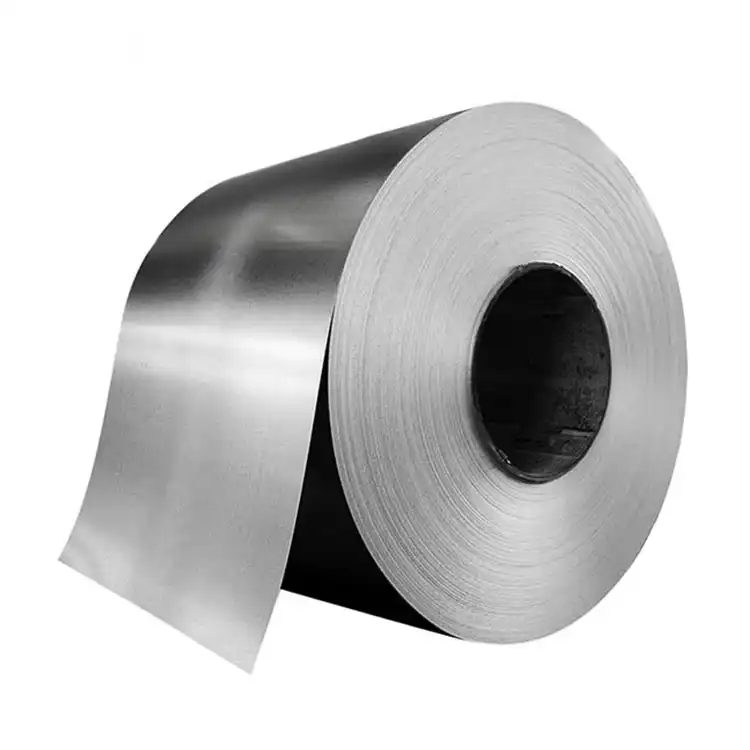
Practical Applications and Industry Usage Patterns
Industrial applications for tin plate coil T5 center on scenarios demanding maximum strength and buckling resistance, making it the preferred choice for large-diameter food and beverage cans, paint containers, and industrial chemical packaging. The superior structural integrity of T5 enables manufacturers to optimize material usage by reducing wall thickness while maintaining required performance standards, resulting in material cost savings and reduced transportation weight. Major applications include 18-liter paint cans, large-format chemical drums, and industrial aerosol containers where internal pressure and external handling stresses demand enhanced material strength. Tin plate coil T5 demonstrates particular advantages in the production of crown caps, closures, and easy-open ends where the combination of strength and moderate formability meets specific functional requirements. The harder surface of T5 provides excellent resistance to scoring during high-speed filling operations and enhances the tear characteristics of easy-open features. These applications benefit from the material's ability to maintain spring properties and resist deformation under the repeated stress cycles encountered during opening mechanisms. Aerosol can production represents a significant market segment for tin plate coil T5, where the material must withstand the internal pressures generated by propellant systems while maintaining wall integrity throughout the product lifecycle. The aerospace, automotive, and personal care industries rely on T5 temper for aerosol applications requiring pressure ratings up to 180 PSI, with the material's strength characteristics ensuring safety compliance and preventing catastrophic container failure. The food-grade specifications of T5 make it suitable for culinary aerosol products such as cooking sprays, whipped cream dispensers, and pressurized food dispensing systems.
T4 temper finds its primary applications in general-purpose food cans, beverage containers, and decorative packaging where the balance between formability and strength better matches the manufacturing requirements. Standard three-piece cans for vegetables, fruits, soups, and other preserved foods typically utilize T4 temper because the forming operations require moderate ductility while still providing adequate strength for stacking and transportation. The slightly softer nature of T4 accommodates the double-seaming operations common in three-piece can manufacturing, where the material must deform around sealing compounds without cracking or splitting. The distinction between these tempers becomes particularly important in the production of drawn and wall-ironed cans used for beverages, where the manufacturing process subjects the material to extreme deformation. While both tempers can potentially serve these applications, T4 generally provides better performance in the body-making operations where the cup undergoes multiple drawing and ironing passes to achieve the desired wall thickness and height. However, for larger diameter cans or those requiring enhanced column strength, tin plate coil T5 may offer superior performance despite the increased forming challenges. Printed tinplate applications reveal another area where temper selection impacts final product quality, as the forming operations following printing must occur without damaging the decorative surface. T4 temper generally accommodates post-printing forming operations more readily, reducing the risk of ink cracking, adhesion loss, or surface damage during fabrication. When tin plate coil T5 serves printed applications, manufacturers must carefully control forming parameters and may need to adjust ink formulations to maintain decoration integrity throughout the manufacturing process.
Manufacturing Process Considerations and Quality Control
The production of tin plate coil T5 involves stringent process control throughout the entire manufacturing sequence, beginning with the selection of high-purity low-carbon steel substrate. The base material undergoes continuous casting, hot rolling, pickling, and cold reduction processes that progressively refine the grain structure and mechanical properties. For achieving T5 characteristics, the final cold rolling reduction ratio must be carefully controlled to develop the desired work hardening level while maintaining uniform thickness across the coil width. Continuous annealing processes for tin plate coil T5 typically involve heating the cold-rolled steel to temperatures around 680°C, holding at temperature for 20-25 seconds to allow recrystallization, then following controlled cooling profiles to achieve the target mechanical properties. The annealing parameters for T5 differ from those used for T4, with T5 requiring less severe softening to retain the higher hardness levels. Process engineers must precisely manage the heating rate, soak temperature, hold time, and cooling rate to achieve consistent T5 properties while avoiding undesirable metallurgical phenomena such as excessive grain growth or incomplete recrystallization. Temper rolling operations following annealing provide the final adjustment to hardness and surface finish characteristics, with T5 requiring more aggressive reduction than T4 to achieve the specified hardness range. This additional cold work also influences the surface roughness, which affects both the appearance and the coating adhesion properties of the finished material. Quality control laboratories monitor the temper rolling process through continuous hardness testing, ensuring that every section of the coil meets the narrow specification windows required for consistent manufacturing performance.
Electrolytic tinning operations apply the protective tin coating to both surfaces of the steel substrate, with coating weight specifications typically ranging from 2.8/2.8 to 11.2/11.2 grams per square meter depending on the intended application and corrosion resistance requirements. The tin coating process must maintain precise control over current density, bath chemistry, and line speed to achieve uniform coating distribution across the full width and length of the coil. For tin plate coil T5 applications in food contact scenarios, the coating weight and quality become critical factors in ensuring product safety and shelf life performance. Passivation treatment follows the tinning operation, creating a thin chromium oxide layer that prevents tin oxidation and enhances paint adhesion for applications requiring decorative or protective coatings. The passivation chemistry and process parameters must be optimized for T5 material to ensure adequate surface preparation without compromising the mechanical properties achieved through the controlled manufacturing sequence. Modern passivation systems utilize environmentally friendly chromium-free alternatives that maintain performance while reducing environmental impact. Quality assurance protocols for tin plate coil T5 extend beyond simple hardness testing to include comprehensive evaluation of coating weight, surface finish, dimensional accuracy, and mechanical properties including yield strength, tensile strength, and elongation. Advanced testing laboratories employ sophisticated equipment such as X-ray fluorescence spectrometers for coating weight measurement, optical profilometers for surface analysis, and universal testing machines for mechanical property verification. These quality control measures ensure that every coil of material meets both international standards and customer-specific requirements before shipment.
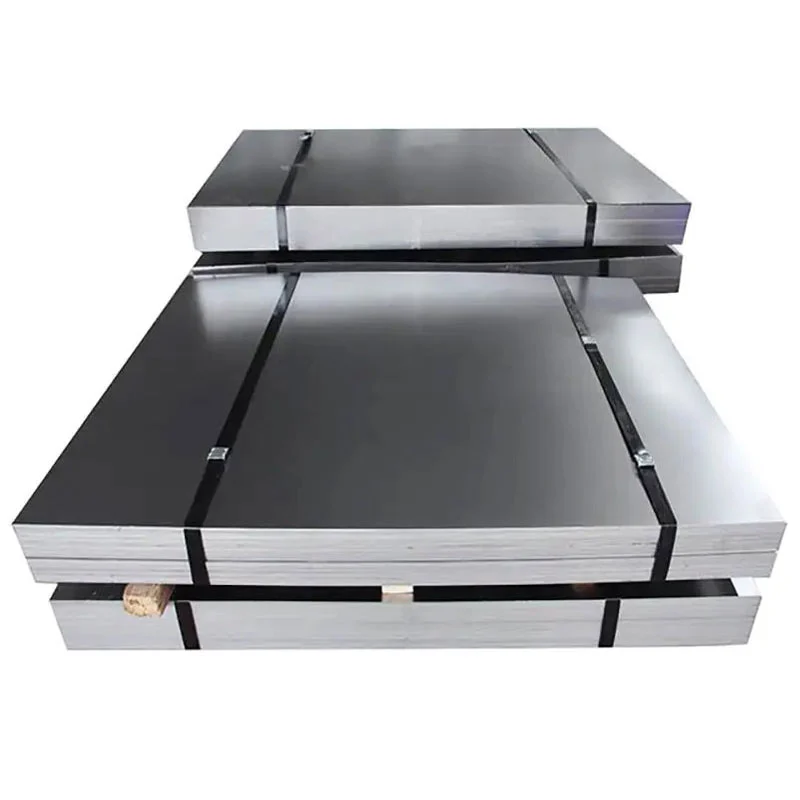
Selection Criteria and Application Guidelines
Selecting between tin plate coil T5 and T4 requires systematic evaluation of multiple factors including the forming severity, structural requirements, production speed, and cost considerations for your specific application. Applications requiring minimal forming with high strength demands naturally favor T5, while those involving complex forming operations with moderate strength requirements benefit from T4's superior ductility. The decision matrix must account for the complete manufacturing process, from material handling through forming, assembly, filling, and end-use performance. Container size significantly influences temper selection, with larger containers typically requiring the enhanced buckling resistance provided by tin plate coil T5. As container diameter increases, the ratio of circumferential stress to material thickness rises, demanding higher strength materials to prevent collapse under axial loading or vacuum conditions. General guidelines suggest T5 for containers exceeding 100mm diameter when wall thickness optimization is desired, while smaller containers can effectively utilize T4 without compromising structural integrity. Production line speed and automation level affect temper selection through their impact on forming consistency and equipment wear. High-speed automated lines generally perform better with continuous annealed materials like T5, which provide superior property consistency compared to batch annealed alternatives. The tighter property tolerances of continuous annealed tin plate coil T5 reduce setup time, minimize scrap rates, and enable longer production runs without adjustment, offsetting the typically higher material cost through improved operational efficiency.
Internal pressure requirements for aerosol containers, carbonated beverage cans, and other pressurized packaging demand careful evaluation of material strength characteristics. Tin plate coil T5 offers distinct advantages in these applications, with its higher yield strength providing greater safety margins against pressure-induced failure. Design engineers must calculate the required material strength based on maximum anticipated pressure, safety factors, and failure mode analysis to ensure proper temper selection that balances performance, safety, and cost optimization. Cost-performance optimization requires analysis beyond simple material price comparisons, accounting for forming efficiency, scrap rates, equipment maintenance, and end-product performance. While tin plate coil T5 typically commands premium pricing compared to T4 due to the additional processing requirements, the ability to reduce material gauge or improve production efficiency may justify the higher material cost. Comprehensive cost modeling should include all factors from raw material procurement through end-of-life recycling to determine the true economic impact of temper selection. Technical support from experienced suppliers becomes invaluable when navigating temper selection decisions, particularly for applications involving unique forming requirements or critical performance specifications. Leading manufacturers of tin plate coil T5 maintain dedicated technical teams capable of providing material recommendations, forming simulations, and troubleshooting support to ensure successful implementation. Collaboration between material suppliers, tooling designers, and production engineers optimizes the entire manufacturing process for maximum efficiency and quality.
Conclusion
The choice between tin plate coil T5 and T4 fundamentally depends on balancing strength requirements against formability needs for your specific packaging application. T5 delivers superior hardness and structural integrity for demanding applications, while T4 offers enhanced ductility for complex forming operations.
Cooperate with Shandong Three Iron-Printing & Tin-Making Co., Ltd.
Shandong Three Iron-Printing & Tin-Making Co., Ltd. stands as your premier China tin plate coil T5 manufacturer, China tin plate coil T5 supplier, and China tin plate coil T5 factory with over 270,000 square meters of advanced production facilities in Linyi Economic and Technological Development Zone. Our impressive annual capacity includes 50,000 tons of printing iron and 600 million cans, supported by world-class equipment from Germany, Japan, Switzerland, and Italy. As a leading China tin plate coil T5 wholesale provider, we offer High Quality tin plate coil T5 for sale at competitive tin plate coil T5 price points, backed by comprehensive certifications including ISO9001:2008, ISO14001:2004, SGS, BPA, and CE approvals. Our mature R&D team provides exceptional technical support, while our large inventory ensures fast delivery through strict packaging protocols. Our seamless construction prevents leaks, customizable exteriors enhance brand messaging, and recyclable materials support eco-conscious initiatives with stackable designs optimizing storage and transportation efficiency. Contact us today at info@threefoodcan.com to discuss your tin plate coil T5 requirements and discover how our advanced production capabilities, experienced team, and commitment to quality can elevate your packaging solutions to global standards.
References
1. International Tin Research Institute. "Tinplate Temper Classification and Mechanical Properties Standards." Journal of Materials Engineering and Performance, Volume 34, Issue 8, 2023.
2. Smith, Robert J. and Thompson, Margaret A. "Comparative Analysis of Single-Reduced Tinplate Temper Grades in Food Packaging Applications." Packaging Technology and Science, Volume 36, Issue 12, 2024.
3. American Society for Testing and Materials. "Standard Specification for Electrolytic Tinplate: ASTM A623/A623M-18." ASTM International Standards Worldwide, 2024 Edition.
4. Chen, Wei and Liu, Xiaogang. "The Effect of Temper Rolling on Mechanical Properties and Formability of Electrolytic Tinplate." Materials Science and Engineering Journal, Volume 892, 2024.
5. European Committee for Standardization. "Electrolytic Tinplate and Electrolytic Chromium/Chromium Oxide Coated Steel: EN 10202:2023." CEN Standards Database, Brussels, 2023.
YOU MAY LIKE