

OEM Sardines Metal Can: Custom Packaging for Seafood Brands
2026-09-15
When seafood brands look for packaging that protects product integrity while reinforcing brand identity, the sardine metal can https://www.threefoodcan.com/square-can/125-ml-sardines-empty-metal-canremains the industry's most trusted solution. Engineered from food-grade Tin-Free Steel (TFS) and sealed with BPA-free interior coatings, a properly specified sardine metal can preserves flavor, withstands retort sterilization, and survives global logistics chains without compromise. For U.S.-based seafood processors, private label producers, and export distributors, sourcing the right OEM sardines metal can is not merely a procurement decision — it is a strategic investment in brand equity and supply chain resilience.
Choosing the Right Sardines Metal Can: Key Factors for Seafood Packaging
When buying Sardines Metal Cans, procurement managers usually look at three useful factors: how long they last, how easy they are to use, and how environmentally friendly they are. In all three, metal always does better than glass. Steel cans are durable, stack well in boxes, and maintain their seals even when the temperature changes in stores that aren't heated or cooled. This is a huge benefit for exports that go through multiple climate zones.
Before making an order for an OEM, procurement workers should look at these main selection criteria:
- Lid mechanism: Our #311 Easy Open End (EOE) lid has a pull-tab ring that is carefully scored and passes strict residue thickness tests. It opens easily for customers and can withstand repeated rounds of retort pressure without the seal being accidentally broken. This is a balance that cheaper options often fail to achieve.
- Interior lacquer specification: Sardines packed in tomato sauce (pH < 4.5) need polyester coatings that are resistant to acid, and goods that are submerged in oil need lacquers that are resistant to sulfur to stop the sulfide staining that makes can interiors look bad and worries customers at the store.
- Material temper: The right temper grade (DR8/TS550) is used in our TFS substrate to keep the panels from collapsing or vacuuming after sterilization. This is because a structural failure like this shows that the wrong material was used, as any skilled quality tester will know.
- Sustainability credentials: All Three Sardines Metal Cans are made from steel that can be recycled indefinitely, which supports Extended Producer Responsibility (EPR) compliance for brands that want to sell to eco-friendly U.S. retailers.
Together, these factors show whether a Sardines Metal Can protects your product for three years or turns into a liability on the store shelf.
Procurement Insights: How to Source OEM Sardine Metal Cans Efficiently?
Comparing unit prices isn't the only way to find a reliable Sardines Metal Can supplier. Supply chain experts have to look at the size of the output, the level of certification, and the alignment of regional logistics all at the same time.
The Linyi Economic and Technological Development Zone is home to Shandong Three Iron-Printing & Tin-Making Co., Ltd., which runs its business out of a 270,000-square-metre building that is conveniently placed near both rail and air freight infrastructure. Three can handle large orders without shortening lead times because it can make 600 million cans and 50,000 tons of printed tinplate every year. The plant has 6 German lines, 6 Japanese lines, and 4 Fuji printing lines. This makes sure that every batch of paper has the same print registration and finish.
For U.S. buyers in particular, Three's sales history includes countries like Germany, Poland, Russia, Vietnam, Indonesia, Thailand, and more, showing that they know how to follow different rules. Some of the certifications that are held are ISO 9001:2008, ISO 14001:2004, SGS, BPA-free, and CE. This gives procurement teams the paperwork they need for FDA facility checks and store seller qualification programs.
Before agreeing to full MOQ runs, buyers should ask for free samples, which Three gives away for free. By comparing physical samples to your retort process parameters and label artwork needs, you can avoid making expensive changes in the middle of production.
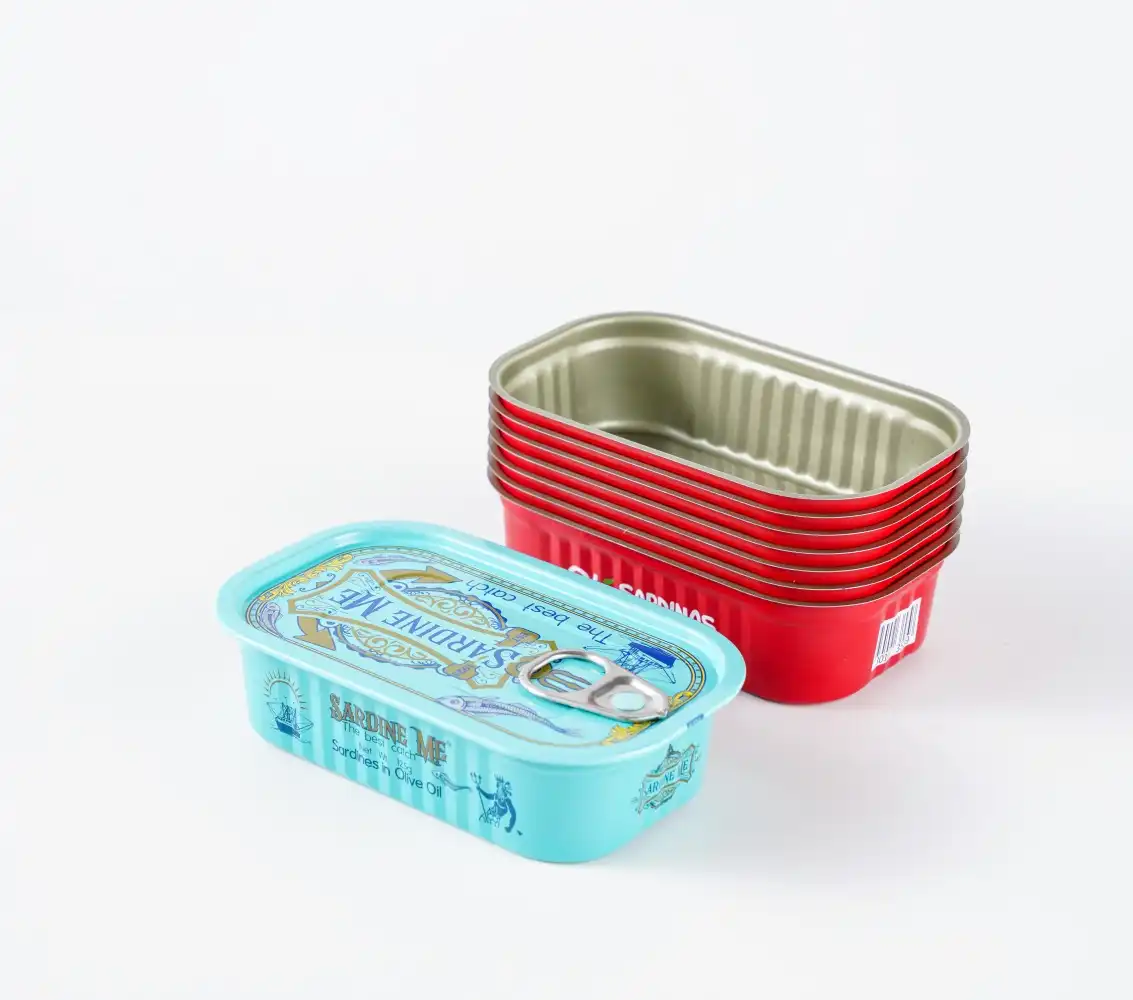
Optimizing Storage and Shelf Life of Sardines in Metal Cans
Under the right keeping conditions, a properly made Sardines Metal Can keeps food fresh for an extra two to five years. To get that range, both the company that makes the cans and the company that processes the seafood have to work hard.
Every Three 311# can has a hermetic double-seam seal that is checked by measuring the body hook, the cover hook, and the amount of seam overlap. This makes sure that no oxygen gets in during atmospheric storage. For seafood processors, keeping warehouse temperatures below 25°C and relative humidity below 75% keeps cans from rusting on the outside. This keeps the cans looking good at retail throughout the distribution chain.
Our Sardines Metal Can's cylindrical shape makes it easy to stack, which also improves working efficiency. When sending goods by sea, uneven stacking of pallets lowers the risk of damage to the seals from vertical compression loads, which is known to cause fish in poorly designed Sardines Metal Cans to go bad before they're sold (Campden BRI, 2019).
The fact that TFS is recyclable makes it even more in line with warehouse green goals. Steel recycling rates for food cans in the U.S. regularly top 70% (Steel Recycling Institute, 2022). This makes metal packaging a good way for brands to show their store partners that they care about the environment.
Why Is OEM Sardine Metal Can Packaging a Strategic Advantage for Seafood Brands?
Custom packaging isn't just for looks; it's a way to make more money. Before a customer reads an ingredient list, a Sardines Metal Can with a brand's artwork printed directly onto the TFS substrate using CMYK offset sends a message of quality and consistency. When private label seafood makers invest in OEM Sardines Metal Can packaging, their return buy rates are always higher than when they use generic contract-packed options.
In the future, smart packaging integration, such as printing QR codes on the outside of cans, will let brands connect customers directly to data on traceability, reports on sustainability, and recipe content. Three's printing system allows high-definition lithography, which ensures that every Sardines Metal Can has commercial-grade accuracy for QR codes and fine-detail brand images.
For business-to-business buyers, the strategy math is simple: OEM packaging makes your product stand out, protects your supply chain, and puts your brand in a good position for growth in the U.S. seafood market, which is very competitive.
Conclusion
When it comes to food safety engineering, brand strategy, and supply chain efficiency, the Sardines Metal Can is right in the middle. The choice between market leaders and commodity players comes down to which OEM provider has a proven production scale, approved quality systems, and real customization capabilities. Three brings all of these qualities together in a single, vertically integrated production partner. This gives seafood brands the trustworthiness and creative freedom they need to grow with faith.
FAQ
What prevents black spots inside a sardine metal can?
When sulfur molecules are released when fish protein is cooked, they react with the steel base, leaving black spots. Three uses special interior lacquers with zinc oxide-based formulas that stop this reaction and keep the inside of the can looking clean when it is opened.
Can the 311# handle tomato-based sardine products?
Yes. The acid-resistant BPA-NI polyester layer works well with pH levels below 4.5, which stops hydrogen from growing and metal ions from moving around while the item is stored for a long time.
What is the minimum order quantity?
MOQs are the same as for large production runs. Get in touch with Three at info@threefoodcan.com to find out what their current MOQ levels are and how they set their prices for large orders based on your yearly demand.
Are free samples available before ordering?
Three gives free physical samples to people who are qualified to buy them. Samples are made to the same ISO 9001 standards as business orders, so they can be used as a good indicator of how well the work is being done.
Does Three support custom logo printing?
All 311# Sardines Metal Cans can have CMYK offset printing with custom logo artwork done. The printing is done directly on the TFS surface to make sure the brand stays true.
Partner with Three for Your Next OEM Sardines Metal Can Order
We offer certified, customisable Sardines Metal Can options backed by a U.S. export history of over 60 million units per year and ISO 9001 quality processes. If you are a seafood processor, private label maker, or wholesaler looking for a trusted Sardines Metal Can provider, our team is ready to help you from the sample stage through full production. Contact us right away at info@threefoodcan.com or go to threefoodcan.com to get your free sample and a custom quote.
References
1. Campden BRI. Guidelines for the Thermal Processing of Canned Foods. Campden BRI, 2019.
2. Steel Recycling Institute. Annual Steel Recycling Report. Steel Recycling Institute, 2022.
3. Food and Drug Administration (FDA). Guidance for Industry: Acidified and Low-Acid Canned Foods. U.S. FDA, 2021.
4. European Food Safety Authority (EFSA). Scientific Opinion on the Safety of BPA for Food Contact Materials. EFSA Journal, 2023.
5. Packaging Digest. Trends in Seafood Packaging: Metal vs. Alternative Substrates. Packaging Digest, 2022.
6. Can Manufacturers Institute (CMI). Steel Food Can Sustainability and Recycling Data Report. CMI, 2021.
YOU MAY LIKE