

How to Customize Peel Off Lids for Food with Your Brand?
2026-09-07
Customizing Peel Off Lids for Food https://www.threefoodcan.com/peel-off-lids/peel-off-lids-for-foodwith your brand transforms standard packaging into a powerful marketing asset while ensuring product safety and freshness. This process involves selecting appropriate materials—typically aluminum foil laminates with food-grade coatings—designing eye-catching graphics that communicate your brand identity, partnering with certified manufacturers who understand regulatory requirements, and testing samples rigorously before full production. By investing in customized peel-off sealing solutions, food manufacturers, private label producers, and distributors can differentiate their products on crowded retail shelves while meeting stringent quality standards that protect both consumers and brand reputation.
Understanding Peel Off Lids for Food Packaging
Today's food packaging needs to find ways to balance keeping food fresh, making it easy to use, and communicating the brand. Nowadays, peel-off sealing methods have become complex closures that meet all of these different needs well.
What Makes Peel Off Lids Essential for Food Products
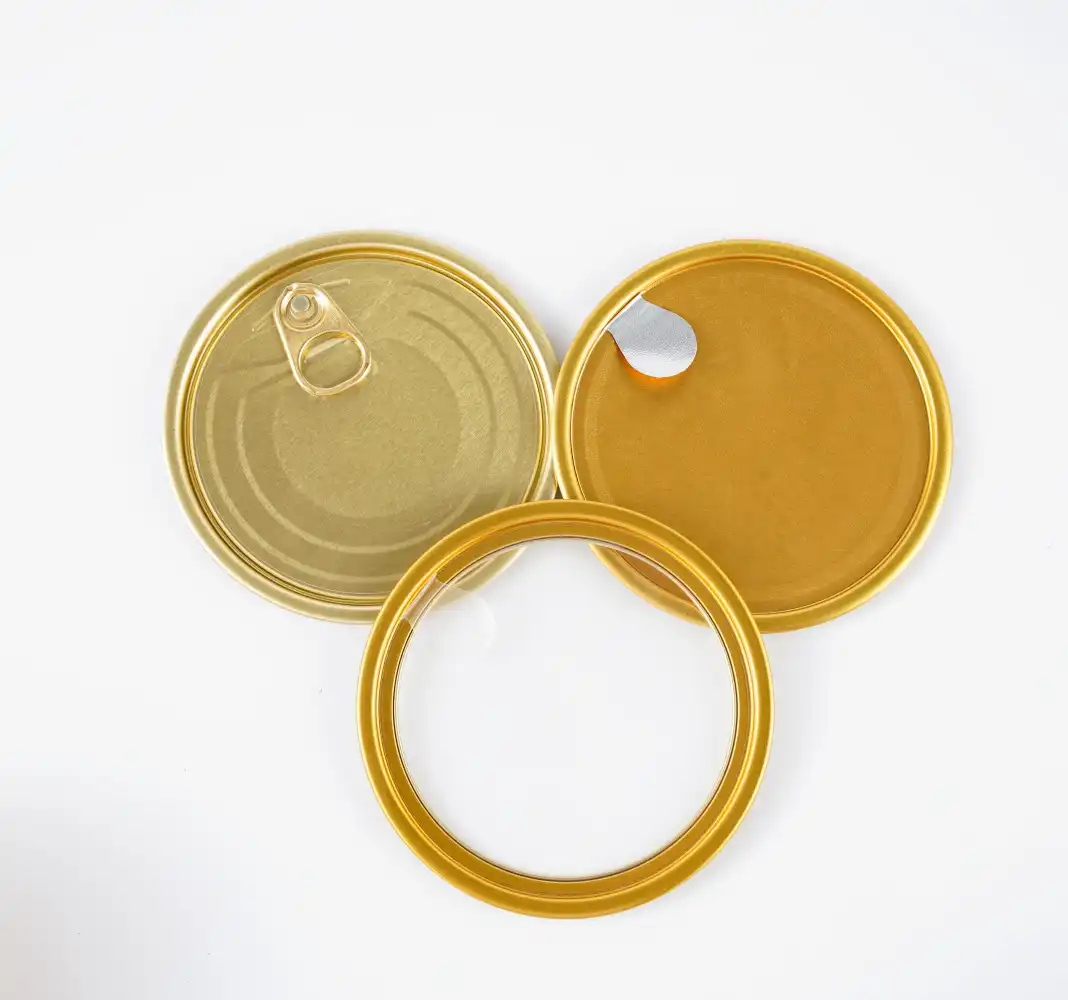
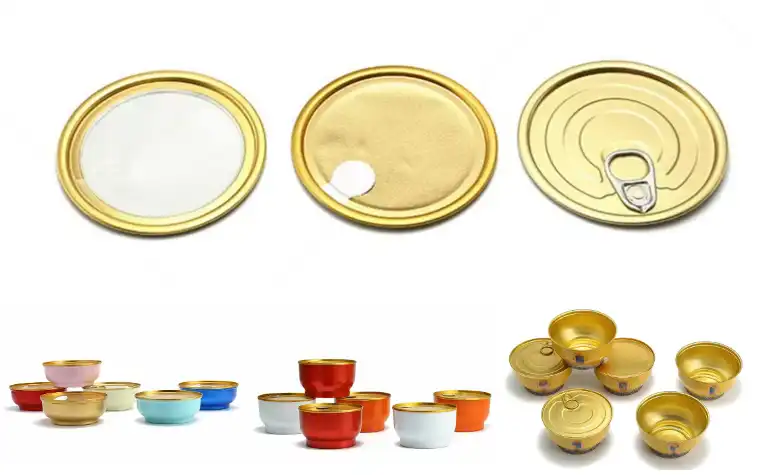
Peel Off Lids for Food are a new kind of flexible packaging that is made up of a rigid metal ring (usually made of aluminum or tinplate) and a multi-layer composite membrane. This membrane is generally made up of polyester film to keep it strong, metal foil to protect it from damage, and polypropylene to allow it to seal with heat. Instead of traditional metal ends that need can openers, these lids have smooth-edge openings that keep hermetic seals throughout distribution and eliminate the risk of injury. When compared to regular metal ends, the lightweight construction cuts shipping costs by about 30 to 40 percent, giving real transportation benefits to companies handling complicated supply chains across the US market.
Material Options and Their Applications
Different types of food need different types of material arrangements. Peel-off covers made of aluminum are great at blocking oxygen and moisture, which makes them perfect for things like baby formula, coffee, and nutritional powders that need to keep air from getting in. The structure of the material, which has a thickness that usually ranges from 50μm to 120μm based on the diameter of the can, has a burst strength higher than 200kPa and can be used for nitrogen flushing and vacuum packing. On both the inside and outside, food-grade lacquer coats protect against chemical damage in acidic, oily, or salty environments while still following FDA rules. Our normal aluminum peel-off systems have item numbers 211#, 300#, 307#, and 401#, which match the diameters of 65.4mm, 72.9mm, 83.3mm, and 99mm. This means they can fit a range of container sizes for powders, cookies, and snack foods.
Regulatory Compliance and Safety Standards
Meeting food safety rules is an important requirement for all packing options. High-quality Peel Off Lids for Food are put through strict tests based on ASTM F1140 standards to see if they can burst and find leaks. The inner coating systems use regular lacquer formulas that keep the coatings from corroding or delaminating over a long period of time, usually 24 to 36 months. Manufacturers who have ISO9001 certification show that they manage quality in a systematic way, which ensures that production standards are always met for large orders. These approvals give people who work in buying proof that sealing solutions follow all food contact material rules in the United States and other countries.
Why Customizing Peel Off Lids with Your Brand Matters
Generic wrapping doesn't say anything about the unique value of your goods. When you customize functional closures, they become strategic brand touchpoints that affect buying decisions at key times.
Amplifying Brand Recognition Through Visual Identity
Peel-off closures have a flat membrane surface that is perfect for high-resolution gravure printing. This lets full-color graphics, brand logos, and product information show up. This level of visibility is very important in stores where customers have to make quick decisions. Printed closures help your goods stand out from the other dozens of choices on store shelves by making them look different right away. Consumer psychology studies show that when all aspects of a package present the brand in the same way, recall goes up by as much as 80%. This directly leads to repeat purchases and customer trust.
Building Consumer Trust Through Quality Signals
Heat-sealed peel-off systems have features that make it impossible to tamper with the product. People think that the quality and safety standards are higher when they see a professionally branded, tightly sealed closure. This way of thinking is especially useful for high-end products whose prices need to be justified. Customization also lets you add traceability features like batch codes, production dates, and QR codes that lead to more information about the product. These features of openness are in line with the rising demand for supply chain exposure among consumers, especially among Gen Z and millennials who care a lot about brand credibility.
Meeting Regulatory Requirements Efficiently
Customized Peel Off Lids for Food make it easy to put the required marking information right on the surface of the lid. Along with branding elements, nutritional disclaimers, allergen warnings, and handling instructions can be printed. This makes sure that the rules are followed while still keeping the product's good looks. The plain lacquer coats, which come in golden or gray finishes, make good writing surfaces that don't fade or smudge during distribution. This unified method makes marking easier and lessens the chance of mistakes that can happen when using different sticker systems.
Step-by-Step Guide to Customizing Peel Off Lids for Food Packaging
For customization to work, it needs to be carefully planned so that technology requirements and business goals are balanced. Breaking the process up into separate steps makes it easier to handle.
Define Your Packaging Requirements and Target Audience
Start by looking at the specifics of your product and the types of people who are likely to buy it. Powdered foods, like protein supplements, need different seal strength requirements than semi-moist foods, like dog toys. Which container diameter to use depends on the amount of product and how it will be displayed on the shelf. For example, 65.4mm lids work best for single-serving formats, while 99mm lids work for family-size packages. Think about whether the people you want to sell to value convenience features like easy-peel or environmental benefits like recyclable aluminum construction. We've found that procurement managers who spend time on this first phase of definition are happier with the end results and have more trouble-free customization processes.
Choose Materials That Balance Performance and Sustainability
Material selection directly impacts product preservation, customer experience, and environmental impact. Aluminum peel-off membranes let almost no air through and let water vapor through, so they have the same shelf life as standard metal ends. Aluminum can be recycled, which addresses environmental issues that are becoming more important to customer tastes and business social responsibility programs. Plain lacquer coating systems keep food safe in a range of pH environments while keeping neutral taste profiles that keep flavors from mixing. When choosing materials, make sure you get thorough technical data sheets that show the bursting strength (it should be higher than 200kPa), the peel force range (it should be between 8 and 15N for easy customer access), and the heat seal temperature parameters that work with your production equipment.
Design Impactful Brand Graphics and Functional Elements
A good lid design balances how it looks with how it works to give information. Work with graphic artists who have experience with cylinder-shaped products and know how curved surfaces change the way we see things. Your artwork should have a logo that stands out, product names that are easy to read using high-contrast color schemes, and enough white space to keep things from looking crowded. Add useful elements like "Open Here" signs with lines pointing in the right direction to improve the user experience, especially for older people or people who have trouble moving their fingers. QR codes that lead to recipes, how-to guides, or proof of authenticity are useful and don't take up much room. Complex designs with gradients and picture elements can be printed with premium gravure printing, but simpler designs usually work better in store settings.
Partner with Certified Manufacturers Offering Flexibility
Choosing a supplier is probably the most important choice you will make during the customization process. Give more weight to manufacturers who have relevant certifications, such as ISO9001, which show that they have systematic quality control processes. Carefully look at the production capacity—facilities that make 2 billion closures a year show that they have a lot of experience and can keep the supply going. Low minimum order quantities (MOQ) give you the freedom to test your product line and make sure the market wants it before you commit to large inventories. We offer flexible MOQ to meet the needs of new brands and private label makers who are trying out new market segments. Check to see if sellers offer free samples so you can see for yourself how the peels work, the quality of the writing, and the strength of the seals before committing to production. Geography is also important. For example, domestic suppliers can communicate more quickly and have shorter lead times, but for very large orders, international manufacturers may offer lower prices.
Conduct Comprehensive Sample Testing and Validation
Don't go ahead with full production until you've thoroughly tested samples. Test the peel force with measured tension equipment to make sure the opening force stays in the 8–14N range, which is safe for consumers, even when the temperature changes and the product ages. Do burst pressure tests by inflating sealed containers to find the points where they break. Peel Off Lids for Food that are placed correctly should stay in place under normal sterilization pressures. Leak testing with methylene blue dye entry in a vacuum shows tiny pinholes or seal channels that let bacteria get into the product and make it less fresh. Check samples under the real production conditions, including thermal processing cycles if needed, looking for whitening, blushing, or layer separation that could mean the materials don't work well together. It is important to go through this validation phase so that expensive production runs don't fail to meet quality standards.
Comparison and Evaluation of Custom Peel Off Lid Solutions
To make an informed choice, you need to compare the different sealing technologies that are out there and see which ones work best in different situations.
Peel Off Versus Traditional Sealing Methods
Metal easy-open ends (EOE) with pull-tabs have been the standard for decades because they are easy to use and have a history of reliability. But once they're open, the sharp edges can be dangerous, and they're very heavy, which makes transportation more expensive. Heat-sealed foil lids work well as barriers and show that the package has been tampered with, but sometimes they need to be taken off with tools, which can be annoying for customers. Peel Off Lids for Food combine the safety of heat-sealed lids with the ease of use of pull-tab systems. They also don't have any sharp metal edges, so they are safer for everyone. The composite design is 30–50% lighter than regular metal ends, which saves money on operations across delivery networks. A cost comparison shows that peel-off systems usually cost a little more per unit than basic metal ends, but they give customers a better experience and make companies less vulnerable to lawsuits for injuries caused by packing.
Disposable Design and Environmental Considerations
All of our aluminum peel-off closures are made in a way that makes them fully recyclable. This is in line with the circular economy ideas that are becoming popular in the food industry. The metal ring and foil membrane parts can be recycled in regular ways, unlike some multi-material laminates that need special processing facilities. There are reuse container systems for some uses, but single-use peel-off designs work better for goods that need hermetic seals and to stay stable on the shelf for a longer time. The recyclability factor takes into account environmental concerns without lowering food safety standards or removing features that make it easier for people to use.
Tamper Evidence and Consumer Confidence
The heat-sealed connection between the metal ring and the composite membrane makes it obvious when someone tries to open the container and see what's inside. This built-in security feature is especially useful for high-end goods, baby food, and pharmaceutical-grade foods where proving accuracy is very important. When calibrated correctly, easy-peel technology makes it easy for people of all ages to open the package while keeping the closure secure during shipping. This balance between safety and ease of use is a key difference that supports charging more in markets with a lot of competition.
Procurement Insights: Buying Custom Peel Off Lids for Food Packaging
How strategic sourcing is done determines whether customization projects deliver the value that was expected or end up being expensive disappointments. Buyers with a lot of experience get around this by focusing on a few key points.
Navigating MOQ, Lead Times, and Pricing Structures
Different providers have very different minimum order amounts, which can be anywhere from a few thousand to hundreds of thousands of units. We know that new brands and product line extensions need flexible MOQ arrangements that let them test the market without having to buy too much inventory. Our low MOQ edge meets this need perfectly, making customization affordable for smaller production runs. When you expect a lead time, you should take into account how long it takes for artwork to be approved, printing plates to be prepared (usually two to three weeks), and the production schedule. Rush orders often come with extra fees, so planning your purchases around when your products are going to be released saves you money. Pricing models normally offer bulk discounts, where the cost per unit goes down a lot as the number of units ordered goes up. Ask for detailed quotes that show price breaks at different levels of volume. This will help you predict how much it will cost to buy things as your sales volume increases.
Supplier Reliability and Quality Assurance
Production capacity is a key sign of how stable and capable a supplier is. With dedicated high-speed production lines, facilities that make 600 million cans a year show that they are operationally mature and can grow as demand does. Make sure that sellers keep enough standard parts in stock, like metal rings with different sizes (65.4mm, 72.9mm, 83.3mm, and 99mm), so that they can quickly fill repeat orders. Ask for examples from current customers who have bought similar types of food. This will give you an idea of how well the business really does in real life in terms of shipping reliability, quality stability, and problem-solving. While ISO9001 certification shows that quality management is being done in a planned way, it does not guarantee that the service will be better. If you want to find out what the real practices are, you should do facility audits.
Emerging Sustainability Trends and Compliance
As brands try to meet customer expectations and government requirements, environmental responsibility plays a bigger role in their buying choices. Aluminum peel-off covers are naturally more environmentally friendly because they can be recycled, and their light weight means they produce less pollution during transport. You should judge suppliers by their environmental management systems. For example, ISO14001 certification shows that a company is dedicated to reducing its environmental impact throughout all of its operations. Some buyers who are looking to the future now ask about the energy sources that power production facilities, as well as efforts to save water and reduce waste. These things help make sure that buying things fits in with the company's overall sustainability goals. They may also help goods get eco-label programs that make them more valuable to environmentally conscious customers.
Conclusion
Putting your logo on Peel Off Lids for Food is a smart investment that pays off in many ways: better brand recognition, better customer experience, regulatory compliance, and standing out from the competition. To complete the process, you need to carefully choose the materials you use, carefully carry out the plan, and work with certified manufacturers who can offer flexible output and a quality guarantee. Our 211#, 300#, 307#, and 401# metal peel-off systems can be used for a wide range of food goods that need to be sealed, such as powders, cookies, snacks, and more. We make it easy for procurement professionals to handle the complexity of customization by offering free samples, low minimum order quantities (MOQs), and plain lacquer coatings that ensure food safety. Businesses make package solutions that protect the integrity of their products and successfully communicate brand values across all retail channels by following a set of steps, from defining requirements to testing samples.
FAQ
Are peel-off closures safe for retort processing?
Peel-off systems for retorts use special high-temperature polypropylene films and glue that are made to last through 121°C decontamination cycles without coming apart. Counter-pressure retort profiles control the pressure inside the can while it cools, which keeps the membrane from imploding. During the procurement process, make sure that the material meets the retort-grade requirements so that it can be used with your thermal processing parameters.
What customization timeline should we expect?
Standard customizing, which includes finalizing the artwork, setting up the printing plates, and starting production, usually takes 4-6 weeks from the time the order is placed. This schedule assumes that the artwork is approved quickly and doesn't need to be changed more than once. We offer free samples within 7–10 days so that you can try them out before agreeing to full production runs.
Can complex multi-color logos be printed effectively?
High-resolution gravure printing can handle complicated images like stripes, photographic elements, and patterns that are made up of more than one color. We can print designs with a lot of details, but simpler images often work better on cylindrical boxes where viewing angles are different. Work with experienced packaging designers to make sure that the artwork on the closure surfaces is the best it can be.
Partner with Three for Premium Peel Off Lids for Food Manufacturing
Choosing the right Peel Off Lids for Food provider is important for the success or failure of your customization project. Three is in the Linyi Economic and Technological Development Zone and has been making closures for over 30 years. They use high-speed production lines and advanced Italian BMV stamping equipment to make 2 billion closures every year. Our ISO9001 certification, SGS verification, and thorough quality control protocols make sure that every closure meets the highest standards for food safety. We help food makers, private label producers, and marketers with product development by offering metal construction in a range of diameters, plain lacquer coatings, low minimum order quantities, and free samples. Our experienced research and development team can help you with unique problems in powder packing, cookie containers, and snack food uses. Contact us at info@threefoodcan.com to talk about your customization needs with skilled experts who know how to meet the needs of B2B buyers and provide dependable supply chain solutions that help your brand grow.
References
1. Robertson, G.L. (2016). Food Packaging: Principles and Practice (3rd ed.). CRC Press.
2. Marsh, K., & Bugusu, B. (2007). Food Packaging—Roles, Materials, and Environmental Issues. Journal of Food Science, 72(3), R39-R55.
3. Yam, K.L. (2009). The Wiley Encyclopedia of Packaging Technology (3rd ed.). John Wiley & Sons.
4. Coles, R., McDowell, D., & Kirwan, M.J. (2003). Food Packaging Technology. Blackwell Publishing.
5. Singh, S.P., & Burgess, G. (2014). Packaging Materials and Sustainability. In Innovations in Food Packaging (pp. 473-494). Academic Press.
6. Selke, S.E.M., Culter, J.D., & Hernandez, R.J. (2004). Plastics Packaging: Properties, Processing, Applications, and Regulations (2nd ed.). Hanser Publications.
YOU MAY LIKE