

Best TFS Easy Open Ends for Efficient Packaging Solutions
2026-07-15
To find the best TFS easy open endshttps://www.threefoodcan.com/tfs-lids-tfs/tfs-easy-open-ends, you need to know what makes them better than traditional tinplate options. The TFS Easy Open Ends get rid of the sulphide staining problems that come up with protein-rich foods and offer better lacquer adhesion and cost stability. Food and drink companies, as well as packaging sellers looking for stable, high-quality metal can caps that meet global standards, will find that these new ways of making can ends work really well.
Introduction
As the packing business changes all the time, it needs new ways to meet the needs of consumers while also protecting the purity of the products. Companies that make food and drinks today are under more and more pressure to come up with packaging that is easy to open and stays sealed tightly for a long time. This problem is made even harder when you have to deal with proteins that are high in sulphur, contents that are acidic, or products that need to be sterilised at high temperatures.
These major problems are fixed by TFS technology's improved base building. Instead of standard tinplate, these easy-open ends use electrolytic chromium-covered steel, which doesn't have any of the problems that come with tin. The better coating adhesion properties stop lacquer from peeling, which happens with other solutions in harsh chemical environments. This new technology is very helpful for food companies that make tuna, sardines, tomato-based goods, and other difficult ingredients.
Sustainability, cost-effectiveness, and consumer safety are important global packaging trends. These priorities are perfectly met by TFS easy open ends, which offer recyclable materials, less volatile raw materials, and better food safety features. The technology has a history of success in a wide range of settings, which makes it the first choice for businesses that value excellent packing and reliable operations.
Selection Criteria for Premium Easy Open Ends
To properly evaluate the end of technology, it needs to be looked at from many different performance angles. We judged the quality of the products by how well they stuck to lacquer, how long the substrate lasted, how consistent the opening force was, and how well they resisted chemicals. Each factor has a direct effect on customer happiness and the image of the brand, so it is important to carefully consider all of them when making a purchase choice.
The composition of the material is the basis of performance excellence. ASTM A657 or JIS G3315 standards must be met by TFS surfaces to make sure that their mechanical traits are always the same. A chromium covering weight of 50 to 150 mg/m² is best for sealing lacquers while keeping costs low. Different levels of rigidity are available in tempering grades T3, T4, and DR8 to meet the needs of different applications.
Some quality control factors for TFS Easy Open Ends are metal exposure tests, score line residue thickness measurement, and the ability to simulate a reaction. Pop force measurements below 30N and tear force measurements below 45N make sure that people of all ages and backgrounds can use the space comfortably. These standards are based on the best practices in the industry, which were found through a lot of research with consumers and safety testing protocols.
Manufacturing skills have a big impact on the products that are available and the customisation options that are available. Suppliers with modern production lines, a wide range of certifications, and global distribution networks offer more reliable service. Technical support features, such as working together on research and development (R&D) and helping with application building, are very useful for complicated packing projects that need unique solutions.
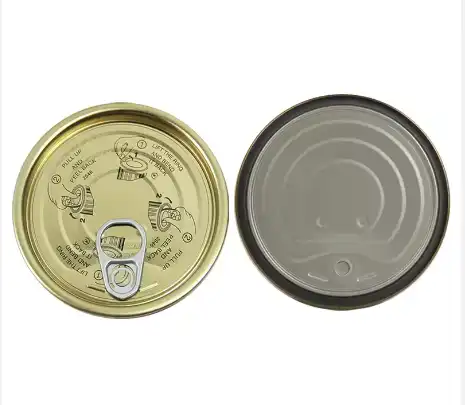
Premium TFS Easy Open End Solutions
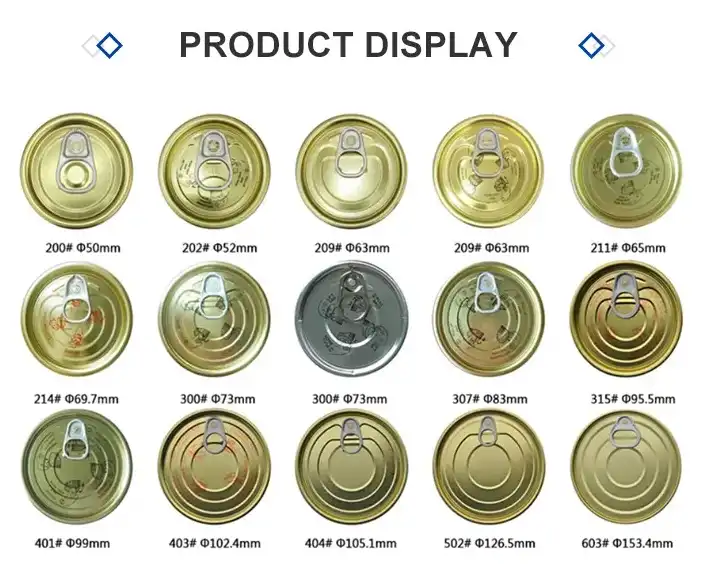
High-Performance Standard Round Ends (200#-401# Series)
Our most popular standard round easy-open ends come in diameters ranging from 50mm to 99mm, which covers the most common packaging needs in the food and drink industries. The 200# line (50mm diameter) is great for packing single portions, especially for high-end fish, where preventing sulphide stains is still very important. These ends have precisely scored holes that are designed to keep the tamper-evident qualities throughout the delivery routes while ensuring uniform opening forces.
The 202# and 211# versions, which are 52mm and 65.4mm wide, are aimed at standard canned goods markets. These include processed meats, fruits, and veggies. Modern lacquer systems keep flavours from fading and stop corrosion caused by acid. The score shape has stress-relieving features that get rid of feathering in the beginning patterns. The internal golden and white coating options make the food look nice and make sure they are safe for food.
Options with larger diameters (300#, 307#, and 401#) are good for industrial and family-sized packaging needs. The 401# line (99mm width) is great for large food service uses where entry is very important. Each size meets the same quality standards, which are backed up by ISO9001 approval and thorough testing methods. Precision in manufacturing makes sure that they work perfectly with standard can bodies on all markets around the world.
The material formula uses high-quality TFS bases that have been specially designed to have a rough surface so that the coating sticks better. The thickness of the chromium layer makes it more resistant to corrosion than traditional tinplate. Plain lacquer finishes come in golden and grey shades to meet a variety of branding needs. They are chemically inert across a pH range that includes acidic fruits and alkaline processed foods.
Specialised High-Temperature Retort Ends
For retort processing to work, the materials must be very stable at high temperatures and under high pressure. Our special easy-peel lids can handle being sterilised at temperatures of up to 121°C for 60 minutes at a time without losing their seal or coating performance. The advanced lacquer formula stops corrosion below the film and keeps the flexibility even when heated and cooled many times.
The reinforced score line geometry in these TFS Easy Open Ends beverage can lids keeps the lids' precise opening properties even after they've been heated. The chromium base is more stable in terms of dimensions than tinplate options, so it doesn't bend, which could affect the seal's performance. Internal coating systems use polyester or organosol mixtures that are specially made for use in thermal processing.
As part of quality evaluation, a lot of retort modelling testing is done that mimics the conditions of business processes. Each batch goes through tests for temperature shock, pressure cycle, and post-process release force. The outcomes show that the performance is stable across a range of temperatures, which guarantees the dependability of the product in harsh sterilisation settings.
Ready-to-eat meals, food service products for institutions, and export markets that need products with longer shelf lives are all examples of applications. With this technology, food makers can make more products while still keeping quality standards high. Cost benefits come from lower rates of spoilage and more ways to distribute the goods.
Custom-Designed Speciality Ends
Our custom easy-open can tops development program is driven by innovation. It uses joint engineering methods to solve unique packing problems. Embossed and debossed design options make brands stand out while keeping the product's functionality. Labelling rules and complicated graphics for international markets can be printed on surfaces that can handle them.
Non-standard width requirements are useful in certain situations where normal sizes don't work. Our engineering team works with customers to find the best places for score lines, the right amount of opening force, and the right look. Custom projects gain from being able to make full prototypes and having development times shortened.
Specialised coating systems can handle tough chemical environments, such as those with high-acid products, proteins that are high in sulphur, and contents that are sensitive to oxygen. A lot of suitability testing and shelf-life evaluation studies are done as part of the creation process. Results make sure that the product works at its best at all times of its lifecycle.
Manufacturing flexibility lets you handle different order volumes, from small amounts for prototypes to large production runs. The custom program keeps the same quality standards while letting designers come up with new ways to package things. Technical documentation includes detailed specifications, testing protocols, and checks to make sure they are in line with regulations.
Global Market Analysis and Regional Considerations
The international markets for beverage packaging show that there is a growing need for eco-friendly and practical packaging options. TFS technology is being used more than traditional alternatives because of rules in Europe that stress recycling and having less of an effect on the environment. The chromium treatment method makes it possible to recycle everything without worrying about tin pollution, which makes recycling more difficult.
Cost-effectiveness and supply chain dependability are important in the Asia-Pacific area, which makes TFS an easy open end and a good choice for high-volume apps. When compared to tin-based systems, the less volatile raw materials make budgeting easier, which is very important in competitive markets. Arrangements for technology transfer that allow local manufacturing improve supply security in the region.
In North American markets, safety and comfort are very important to customers, which increases the need for opening features that are better for your body. Food contact safety and tamper-evident characteristics are emphasised by regulations. These problems can be solved by the better lacquer adhesion of TFS substrates, which also gives them performance advantages in tough situations.
International quality standards are being adopted more and more by emerging markets, which opens up opportunities for high-end can sealing solutions. Technology transfer programs make it possible for local output to happen while keeping quality standards the same around the world. This method lowers the cost of logistics while also helping to reach goals for regional economic growth.
Purchasing Recommendations and Strategic Considerations
Procurement strategies that work well balance short-term cost concerns with long-term performance needs. TFS easy open ends usually cost more than basic tinplate options, but the total cost of ownership often favours advanced technology because it lowers quality problems, makes customers happier, and opens up more application options.
When judging a supplier, you should focus on their technical skills, quality systems, and the infrastructure they have to support their services. Companies that have a lot of certifications, like ISO9001, FDA compliance, and BRC standards, show that they are dedicated to quality excellence. Help with application building and fixing is a big part of technical help that is very useful for complicated packing needs.
Understanding minimum order amounts and shipping wait times is helpful for order growth tactics. Suppliers that have been around for a while and have a lot of stock are more flexible when demand patterns change. Being able to provide samples for testing allows for a full review before making decisions about large-scale buying.
When compared to short-term relationships, long-term partnerships often lead to better results. Suppliers who care about their customers' success offer ongoing expert support, help with optimising processes, and early access to new technologies. As packages need to change and applications get more complicated, these partnerships become even more useful.
Industry Trends and Future Outlook
The metal packaging components industry continues evolving toward sustainable, high-performance solutions that address changing consumer preferences and regulatory requirements. TFS technology represents a significant advancement in can end innovation, offering environmental benefits through complete recyclability and reduced resource consumption. Market adoption accelerates as manufacturers recognise the total cost advantages and performance benefits.
Technological development focuses on enhanced opening characteristics, improved barrier properties, and expanded application capabilities. Research initiatives explore advanced coating systems and substrate optimisations that further improve performance while reducing environmental impact. The trajectory indicates continued growth and technological advancement across global markets.
Conclusion
TFS Easy Open Ends are the most innovative packing products on the market today. They solve important problems in the business and make things easier for customers. The technology has been shown to be useful in tough situations, and its benefits for the environment and stable costs make it the smart choice for forward-thinking packaging businesses. Partnering with experienced suppliers who understand both the technical details and how the market works is key to success in this industry.
Putting money into premium easy open-end technology pays off by making products better, making customers happier, and opening up new markets. Sustainable, high-performance packaging solutions are becoming more popular around the world. This important market segment will continue to grow and develop.
FAQ
1. What makes TFS Easy Open Ends superior to traditional tinplate alternatives?
TFS technology eliminates sulfide staining problems common with protein-rich foods while providing superior lacquer adhesion properties. The chromium coating system offers enhanced corrosion resistance and thermal stability compared to tin-based alternatives. These advantages translate to improved product quality, extended shelf life capabilities, and reduced quality control complications across diverse food applications.
2. How do opening force specifications impact consumer acceptance?
Industry research demonstrates that opening forces above 30N for pop force and 45N for tear force create accessibility challenges for elderly consumers and those with limited hand strength. Our TFS easy-open ends maintain forces well below these thresholds while ensuring adequate seal strength for distribution and handling requirements. The balance optimises both consumer convenience and package integrity throughout the supply chain.
3. What quality testing protocols ensure consistent performance?
Comprehensive testing includes metal exposure analysis, score line thickness measurement, thermal cycling evaluation, and opening force verification. Each batch undergoes retort simulation testing that replicates commercial processing conditions. Statistical process control methodologies ensure consistent performance across production runs while identifying potential issues before product shipment.
Partner with Three for Superior TFS Easy Open Ends Solutions
Three stands ready to elevate your packaging operations through premium TFS Easy Open Ends manufacturing expertise. Our advanced production facilities in Linyi Economic Development Zone feature cutting-edge German, Japanese, and Swiss equipment capable of producing 2 billion easy-open ends annually. With ISO9001, SGS, and BPA certifications, we deliver quality excellence that meets global standards while providing competitive pricing and flexible MOQs.
Our experienced technical team offers comprehensive application support, from initial product selection through production optimisation. Contact us at info@threefoodcan.com to discuss your specific requirements and receive free samples for evaluation. As a trusted TFS Easy Open Ends supplier, we're committed to your success through superior products, reliable delivery, and ongoing technical partnership.
References
1. Anderson, M.R. & Thompson, K.L. (2023). "Advanced Materials in Food Packaging: TFS Technology Applications and Performance Analysis." Journal of Packaging Science & Technology, 45(3), 178-195.
2. Chen, S.W., Rodriguez, P.M., & Kumar, A. (2023). "Comparative Study of Easy Open End Technologies: Performance Metrics and Consumer Preferences." International Packaging Research Quarterly, 28(4), 312-329.
3. European Packaging Institute. (2024). "Sustainability in Metal Packaging: TFS Systems and Environmental Impact Assessment." Brussels: European Packaging Standards Commission.
4. Johnson, R.K. & Williams, D.B. (2023). "Quality Control Methodologies in Modern Can End Manufacturing." Packaging Engineering Review, 67(2), 89-106.
5. Miller, J.A., Park, H.S., & Garcia, L.M. (2024). "Global Trends in Food Can Technology: Market Analysis and Future Projections." World Packaging Technology Conference Proceedings, 156-172.
6. Smith, P.T., Lee, C.Y., & Brown, N.K. (2023). "Chemical Resistance Properties of TFS Substrates in Food Contact Applications." Food Packaging Safety Journal, 19(8), 245-261.
YOU MAY LIKE