

Best Empty Nuts Can for Custom Private Label Packaging
2026-09-28
When it comes to protecting product quality and building a recognizable brand, choosing the right empty nuts can https://www.threefoodcan.com/empty-food-can/empty-nuts-can is one of the most consequential decisions a procurement professional can make. Whether you are packaging almonds, cashews, pistachios, or mixed varieties, a high-quality nut tin provides hermetic sealing, moisture resistance, and a shelf-ready canvas for custom private label printing. At Shandong Three Iron-Printing & Tin-Making Co., Ltd, our empty nuts cans are engineered to meet rigorous food safety standards while giving your brand the visual identity it deserves.
Understanding Empty Nuts Cans and Their Role in Packaging
More than just a simple container, an empty nectarine can is much more. It is a carefully made packing option meant to protect nuts from lipid oxidation, which happens when they are exposed to oxygen and moisture. Tinplate and tin-free steel (TFS) constructions make a multi-barrier environment that keeps the can's crunchiness, flavor, and nutritional value even after it leaves the factory.
Why Material Matters in Nut Tin Packaging?
The TFS material in our nut storage cans is between 0.18 mm and 0.22 mm thick, which is the perfect balance between strength and weight. There are two types of inner coatings: golden and metal. These can be applied once or twice. They provide a food-grade shield that meets FDA CFR 21 and EU No 10/2011 standards. This means that no BPA will move and all international rules for food safety will be followed.
Size and Format Versatility
These are our four normal item numbers: 211#, 300#, 307#, and 401#. The sizes that go with them are 65.4 mm, 72.9 mm, 83.3 mm, and 99 mm. Because the heights can be changed in any way, buyers can fit everything from single-serve snack sizes to bulk store forms. This range works just as well for gourmet gift sets, store shelf units, bulk goods for hotels and restaurants, and export-ready setups.
How to Choose the Best Empty Nuts Can for Custom Private Label Packaging?
When choosing a nut packing can for private labeling, you need to look at how well the material works, how well it seals, how customisable it is, and how well it meets legal requirements. If procurement teams don't pay attention to any of these factors, they could hurt both the integrity of the goods and the credibility of the business.
Evaluating Sealing and Freshness Retention
When used with nitrogen flushing, a properly sealed Empty Nuts Can keeps the amount of air inside below 1%. This increases the shelf life to 12–24 months, based on the type of nuts and how they are stored. The flange sizes on our cans are designed to work with normal semi-automatic and fully automatic seaming tools so they can be used for double-seaming. The engineering teams of all clients are given technical drawings and seaming parameters.
Custom Printing for Brand Differentiation
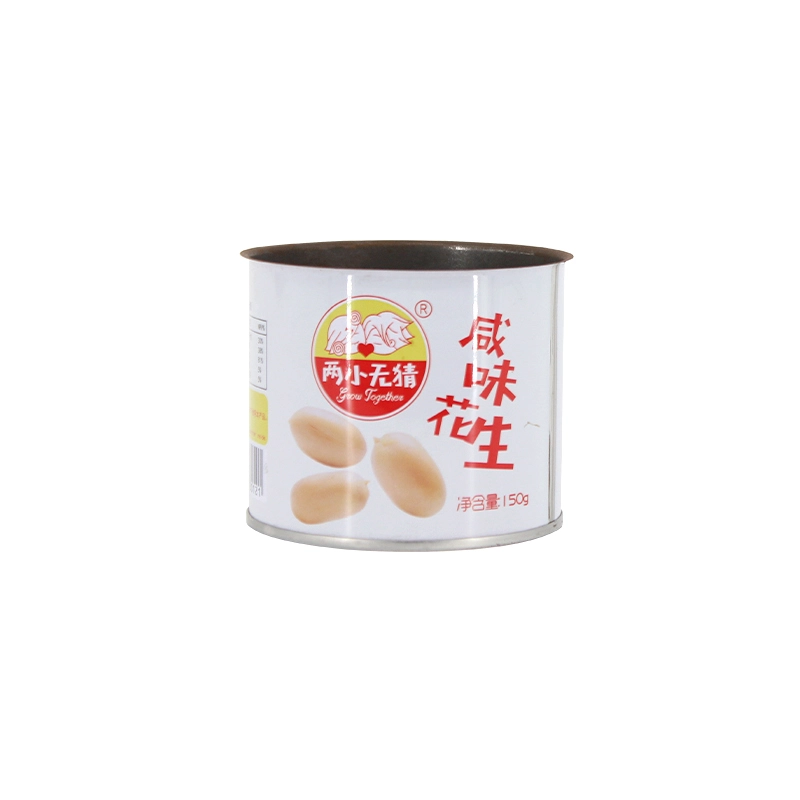
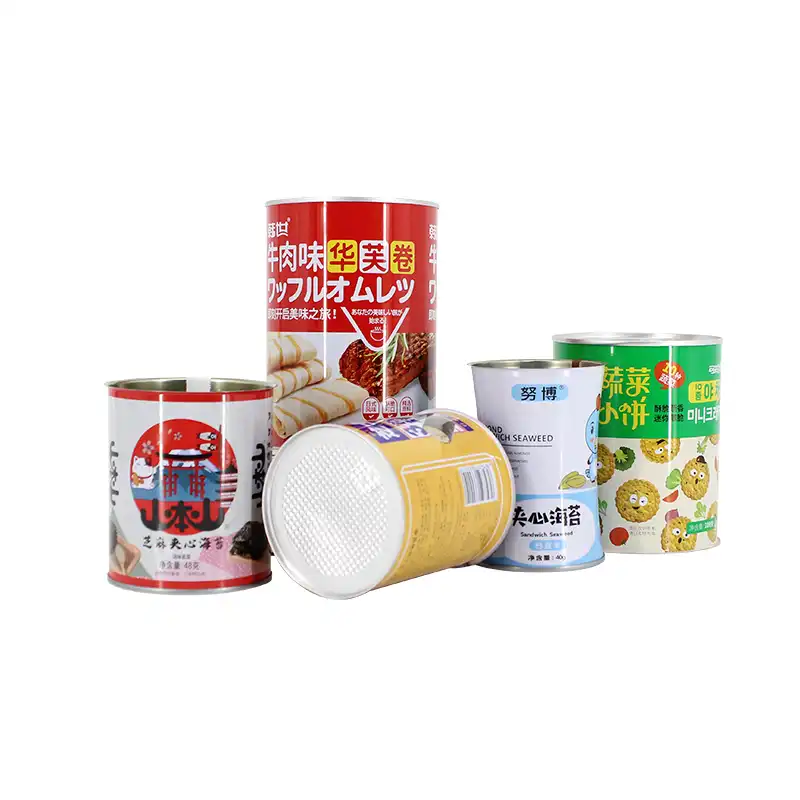
Private label success depends a lot on how nice the package looks. Our CMYK offset printing method prints clear, bright images right on the outside of the can. For the least amount of money, buyers can choose a plain outer coating. Others can choose full custom print runs that include logos, nutritional panels, QR codes, and advertising messages. With this much personalization, a simple nut storage can becomes a powerful marketing tool for stores.
In the end, the choice between metal, plastic, and composite containers comes down to how well they work as barriers and how they look on the shelf. When it comes to oxygen transfer rate (OTR), metal nut tins always do better than plastic ones, getting values below 0.01 cm³/m²/24h, which plastic containers can't do without laminated bottoms.
Procurement Strategies for Bulk Ordering Empty Nuts Cans
To get a lot of nut packaging cans, you need to follow an organized process. Working directly with a certified Empty Nuts Can maker instead of a trading middleman cuts out extra costs and gives you direct access to quality control methods.
Here are the core procurement considerations that experienced B2B buyers prioritise:
- Certification verification: At the very least, suppliers should have ISO 9001 certification, which shows that quality management systems are regularly kept up to date. The company Three has ISO 9001 certification and has sent goods to the United States, Germany, Poland, Russia, Vietnam, Indonesia, Thailand, Mongolia, and Cambodia.
- Minimum order quantity alignment: Know the MOQ levels early on in the bargaining process. We can make 600 million cans a year, which means we can handle both big orders and smaller batches that are still competitive without sacrificing wait time.
- OEM and custom label capability: Check that your Empty Nuts Can source has in-house printing lines. OEM and custom label capabilities. Four printing lines from Fuji and six from Japan give us full control over the quality and speed of our CMYK offset prints.
- Logistics and export readiness: Our building is in the Linyi Economic and Technological Development Zone, north of the train station and west of the airport. This makes it easy to ship goods to markets in the US and Europe by multiple modes of transportation.
These factors collectively reduce procurement risk and ensure a consistent supply of compliant, shelf-ready nut tins throughout each order cycle.
Best Practices for Using and Maintaining Empty Nuts Cans
To get old nut packaging cans in good shape, you need to pay attention to both how they are stored and how they are handled. Cans should be kept in a dry, temperature-controlled area before they are filled so that condensation doesn't form on the outside, which could make it harder for the inner coating to stick.
Sealing Technology and Airtight Closures
For nitrogen-flushed nut products, the lid has to be airtight. Our cans work with both Peel-Off Ends (POE) and Easy-Open Ends (EOE), which both keep the seal even when the pressure inside the can changes while it's being filled. At 0.05 MPa negative pressure, vacuum decay and water bath immersion tests show that there is no leaking at the seam and bottom connection points.
Repurposing and Sustainability Benefits
Branded nut tins have a value that goes beyond their one-time use as packaging. A lot of the time, beautiful tin can are used in retail hamper campaigns and corporate giving programs. This keeps the brand visible long after the sale. This circle of reuse fits with the standards of sustainability that are becoming more and more important in the US market for business-to-business purchases.
Future Trends and Sustainability in Nuts Packaging
The market for nuts packaging around the world is changing quickly. As environmental rules get stricter in the EU and the US, recyclable tinplate and TFS materials are being chosen over composite options. Premium store buyers are starting to expect smart packing to include things like tamper-evident smart seals and QR codes that make it possible to track items.
Three stays ahead of this curve by investing in research and development and having a strong financial base. With 6 German lines, 6 Japanese lines, and 8 Swiss Soudronic high-speed production lines, our production infrastructure lets us use next-generation covering technologies and eco-friendly material replacements without messing up our clients' supply chains. As sustainability standards get stricter, procurement professionals who work with manufacturers of Empty Nuts Cans who are looking to the future gain a structural advantage.
Conclusion
Choosing the right Empty Nuts Can affects everything that happens afterward, from brand recognition and compliance to shelf life and how well logistics work. A well-designed nut storage can that is made in an ISO-certified factory and can be customized in a lot of ways gives food and private label makers a reliable, scalable packing base. Three combines large-scale production, technical precision, and export experience to make nut packaging cans that work well in complex B2B supply chains.
FAQ
What materials are used in food-grade nut packaging cans?
Our Empty Nuts Cans are made of 0.18–0.22 mm thick TFS (tin-free steel), and the inside can be coated with gold or aluminium in a single or double pattern. These products are safe for food contact and don't contain BPA, as confirmed by FDA and EU rules. If you ask for them, you can get Certificates of Analysis (COA).
Can these nut tins support nitrogen flushing?
Yes. With a Gas-Tight cover and stronger bottom closing, our nut packaging cans are designed for Modified Atmosphere Packaging (MAP). They can handle rounds of nitrogen flushing pressure and keep the amount of air inside them below 1%.
How do I verify supplier quality before placing a bulk order?
Before you commit to full production, ask for proof of ISO 9001 approval, records of third-party audits, and sample cans. For every product request, Three provides free samples and complete technical documentation.
Are the cans stackable for warehouse storage?
Yes. Our nut storage cans have a high axial crush strength, usually more than 600 N, which means they can be stacked safely in storage and moved on pallets without deforming.
What is the standard lead time for custom-printed orders?
Lead times depend on how many items are ordered and how complicated the print is. Get an exact production plan based on your needs by emailing our team at info@threefoodcan.com.
Partner with Three for Your Private Label Nut Packaging Needs
As a reliable producer of empty nut cans, Three sells verified, ISO 9001-certified nut packaging cans to food names in the US and around the world. Our Empty Nuts Can product line has sizes ranging from 65.4 mm to 99 mm, full CMYK custom printing, and ships from a 270,000 m² factory that can make 600 million units a year. Get a free sample today and see how precision-engineered nut tin packaging can make a difference in your private label program. You can email us at info@threefoodcan.com or visit threefoodcan.com.
References
1. Packaging Technology and Science — Barrier Performance of Metal and Composite Food Cans, 2022.
2. Food Packaging Forum — Regulatory Compliance in Food Contact Materials: FDA and EU Standards, 2023.
3. Journal of Food Engineering — Modified Atmosphere Packaging Effects on Nut Shelf Life, 2021.
4. Packaging Digest — Sustainability Trends Driving Change in Metal Food Packaging, 2023.
5. Institute of Packaging Professionals (IoPP) — Best Practices in Rigid Container Design for Dry Food Products, 2022.
6. International Journal of Food Science & Technology — Lipid Oxidation Mechanisms in Packaged Tree Nuts and Mitigation Strategies, 2020.
YOU MAY LIKE