

What Is the Shelf Life of Peel Off Lids for Food?
2026-08-18
When examining packaging durability in the food industry, the shelf life of Peel Off Lids for Food https://www.threefoodcan.com/peel-off-lids/peel-off-lids-for-foodtypically ranges from 18 to 36 months when stored under controlled conditions—approximately 68°F to 77°F with humidity levels below 60%. These composite membrane closures, combining aluminum foil with polymeric sealant layers, maintain their hermetic integrity and peel functionality throughout this period, provided they remain protected from direct UV exposure and temperature extremes. Material degradation, adhesive aging, and storage environment collectively determine whether these flexible closure systems will deliver consistent performance when integrated into your production line.
Key Factors Affecting the Shelf Life of Peel-Off Lids for Food
Knowing what affects the length of time a closure lasts helps procurement professionals make decisions that protect both the quality of the product and the reputation of the brand. A lot of different factors affect whether or not these flexible systems will work the same way for as long as they're supposed to.
Material Barrier Properties and Degradation Patterns
The aluminum foil barrier in composite membranes does a great job of protecting against external factors at first, but over time, the polymeric layers change slowly. When polyethylene and polypropylene sealant films are exposed to high temperatures or UV light, they break down through oxidation, which could weaken the seal. High-quality membrane systems have UV protectors and antioxidants added to them to slow down this breakdown. This makes the useful shelf life longer than what is normally expected for a basic material. So that it's like two years of normal storage, procurement teams should ask suppliers for accelerated aging test data, specifically looking for peel force retention after six months at 40°C, especially when evaluating Peel Off Lids for Food packaging solutions.
Storage Environment and Temperature Management
Conditions in the warehouse have a big effect on how long empty clothes keep their best performance traits. Aluminum parts stay stable over a wide range of temperatures, but the layers of glue that hold the membrane to the metal ring change behavior depending on the temperature. Keeping adhesives above 86°F speeds up the hardening process, which could make the peel force higher than the 8–14 Newtons that most people are comfortable with. On the other hand, exposing some polymer formulations to low temperatures for a long time may weaken them, which can make them open in unpredictable ways. To keep closing functions, distribution centers should keep their settings cool and use first-in, first-out (FIFO) inventory rotation.
Compatibility with Food Product Characteristics
How long hermetic seals work depends on the chemicals that are inside the package. Foods that are acidic, like tomato sauces or citrus fruits, can react with lacquer coatings inside if the formulations don't have the right resistance profiles. Oily foods like nut butters and salad dressings can move through sealant layers that aren't as strong over time, making the adhesion weaker. Before placing a big order, procurement professionals should make sure that the new formulations will work with the old ones. They should also keep an eye on how the peel force changes after 12 months of accelerated storage at the planned fill temperatures.

Peel Off Lids vs Other Lid Types: Shelf Life and Performance Comparison
Before choosing the right closure system, you need to know how the various technologies compare in a number of performance areas that are important to both manufacturers and end users.
Performance Metrics Against Traditional Foil Seals
Standard foil induction seals work great as a barrier, but customers have to take off the whole membrane before they can get to the product's contents. This makes it harder to throw away and could make it harder to reseal. Peel-off closure methods build the barrier right into the device for opening the container. This means that you don't have to take extra steps to remove the membrane, but the product still has a longer shelf life, usually two to three years for low-moisture items. The metal ring part gives the structure rigidity that foil-only seals don't have, which keeps the foil from accidentally puncturing during shipping and handling. Burst pressure tests show that good peel-off systems can handle internal pressures above 200 kPa, making them suitable for nitrogen-flushed and vacuum-packed situations where pressure differences happen.
Consumer Convenience and Tamper Evidence
Screw caps and twist-off covers can be used more than once, which is something that single-use peel membranes can't do. However, they can fail if the threads wear out or if the customer doesn't reapply them correctly. Because heat-sealed membranes are tamper-evident, you can see right away that the package is still whole. This is especially helpful for products aimed at safety-conscious consumers, like infant nutrition and food supplements that are similar to pharmaceuticals. Peel-off systems need less force to open than many screw caps, which makes them better for older people or people who don't have strong hands. This is becoming a more important demographic factor as people age in developed markets.
Cost-Efficiency and Sustainability Balance
Peel-off seals usually cost 15–25% more per unit than basic metal ends, but this is usually more than made up for by the fact that you don't need to buy separate induction sealing tools and shipping costs are lower because of less weight. Sustainability studies show that there are many complicated trade-offs. For example, metal parts are very easy to recycle, but the structure of the composite membrane makes separation and processing more difficult. New developments in structures made of only one material—using special polypropylene films instead of aluminum foil—address worries about recycling while still providing good barrier qualities for products with a medium shelf life. Instead of just looking at the price per piece, procurement teams should look at the total cost of ownership, which includes things like how well the equipment works with other equipment, how efficient the line is, and how much it costs to get rid of at the end of its useful life.
Environmental Impact and Recycling of Peel Off Lids
Sustainability commitments made by companies are having a bigger impact on the choice of packaging materials. This means that environmental factors are becoming just as important as functional performance when making purchasing decisions.
Material Composition and Recycling Challenges
Traditional peel-off membrane designs, such as Peel Off Lids for Food, are made of metal, polyester, and polyolefin plastics that are bound together using lamination adhesives. This multi-material design works better as a barrier, but it makes it harder for normal recycling lines to separate the materials. Municipal recycling centers don't have the right tools to easily separate these bonded layers, so these composite structures are usually sent to landfills or burned. If the aluminum ring part is made of pure aluminum instead of tinplate, it can be separated and recycled using current metal recovery systems. However, the customer will have to take the time to remove membranes before throwing it away.
Emerging Sustainable Alternatives
Concerns about recycling have been addressed by a number of innovative options. Mono-material structures made of metalized polypropylene films get rid of aluminum foil while still having moderate barrier properties good enough for dry goods with shelf life goals of 12 to 18 months. Some makers now make reusable membranes with polylactic acid (PLA) and other bio-based polymers, but these usually don't work as well as barriers and need certain composting conditions that aren't available in many markets. Instead of depending only on what suppliers say about their sustainable choices, procurement professionals should ask for third-party certifications like the ASTM D6400 compostability standard or Plastics Recycling Association of Europe (APRE) recyclability ratings.
Best Practices for B2B Implementation
Food makers can make the use of peel-off closures more environmentally friendly in a number of ways. Material recovery rates go up when people are taught how to separate metal rings from composite membranes before throwing them away as part of recycling education campaigns. By working with specialized recycling processors that accept multi-material packaging structures through mail-back programs, businesses can find ways to get rid of their waste that go beyond what cities can do. Comparing the total environmental impact of different closure systems, such as production energy, transportation emissions, and disposal scenarios, through lifecycle assessments (LCAs) helps stakeholders and regulatory bodies that are looking more closely at packaging choices understand why certain materials were chosen.
Procurement Considerations: Buying Peel Off Lids in Bulk for Optimal Shelf Life
When you're looking for flexible closure systems strategically, you need to look at more than just price when comparing suppliers. You should pay special attention to quality assurance protocols and the reliability of the supply chain.
Quality Certifications and Regulatory Compliance
Food-contact packaging materials must meet strict safety standards set by the European Food Safety Authority (EFSA) in the EU and the Food and Drug Administration (FDA) in the US. Suppliers who are responsible keep ISO 9001 quality management certifications, which show that they control processes in a planned way, and ISO 14001 environmental management certifications, which show that they are committed to using sustainable manufacturing methods. Teams in charge of buying things should make sure that the lacquer coats inside meet the migration limits for food contact. Usually, this means making sure that any substances that can be extracted stay below detection levels when put through standard food simulators at high temperatures. Ask for certificates of analysis (COA) for every batch of production, making sure to look over the gas chromatography test results to make sure that the residual solvent levels stay below 5 mg/m². This will keep off-flavors from getting into the packaged products.
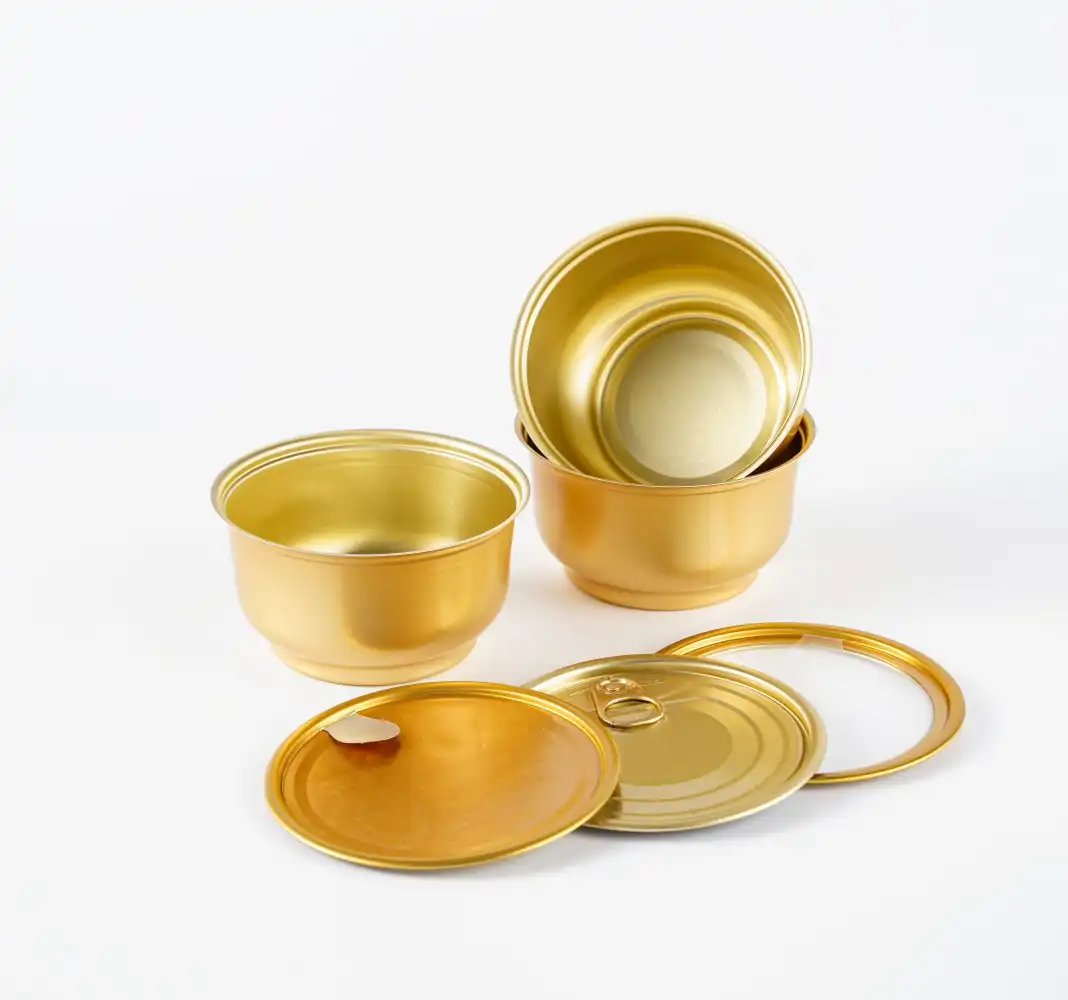
At Three, we know these compliance rules inside and out. Our factory in the Linyi Economic and Technological Development Zone is certified by ISO 9001:2008, and our food-contact materials have been checked by SGS. Peel-off aluminum lids come in four standard diameters: 65.4mm (211#), 72.9mm (300#), 83.3mm (307#), and 99mm (401#). These can be used for powder, cookies, and other dry foods. The basic lacquer layer on the inside keeps the product's integrity, and the finish on the outside can be golden or gray to match the brand's style. Our testing methods include full peel force evaluation across aging conditions to make sure that customers have a uniform experience for the full 24-month shelf life.
Customization Capabilities and Minimum Order Quantities
Private label makers and brand owners want packaging that stands out more and more, and they want it to have custom printing, special finishes, or measurement requirements that no one else has. Suppliers that offer flexographic or gravure printing can put brand messages directly on the lid membrane surface, which cuts down on the steps needed for separate marking and makes the product look better on the shelf. Being able to change the thickness of the membrane, the peel force requirements, or the sealant formulations to make certain products work with them shows that the supplier is technically sophisticated, which is something that should be taken into account. Many manufacturers have trouble with minimum order quantities (MOQ) that take up too much warehouse space and working capital.
For smaller brands or testing phases for new product lines, suppliers with lower MOQ levels are especially helpful. Three addresses these concerns by keeping the minimum order size low. This way, both new brands and well-known manufacturers can get high-quality Peel Off Lids for Food. We offer free samples so that you can test the fit of our products before making big purchases. This lowers the risk of buying and lets you make decisions with confidence. Our eight high-speed production lines, which came from Switzerland and Italy, make sure that the quality of every order is the same, whether you need 10,000 units for a product launch or 10 million for distribution across the country.
Lead Times and Supply Chain Reliability
Planning production and keeping track of goods depend on being able to predict how well suppliers will deliver. Closure makers with limited capacity or operations in a single location put the supply chain at risk, especially when demand spikes happen across all customer groups. Checking a supplier's production capacity, which can be expressed as units per shift or yearly volume, can help you figure out if they can grow with your business without affecting wait times. Being close to your filling operations cuts down on transportation costs and carbon emissions and speeds up reaction times for pressing orders, but this must be weighed against the technical skills and reputation for quality of the seller.
Our 270,000-square-meter building has high-tech machines from Germany, Japan, and Taiwan that can make 600 million cans and 2 billion easy-open caps every year. With this large capacity and a lot of standard-sized items in stock, we can quickly fill regular orders while our experienced research and development team comes up with custom solutions for unique needs. The closeness to the Linyi railroad station and airport makes it easy to ship goods to Chinese producers and customers in North America, Europe, and Southeast Asia. Established transportation partnerships ensure that deliveries happen on time.
Conclusion
Peel-off flexible closures have a shelf life that goes beyond the physical durability of their composite materials. It also includes things like how well they work, how well they follow the rules, and supply chain issues that can affect product quality and brand reputation. When you buy these advanced closure systems, including reliable Peel Off Lids for Food, from quality-focused makers who understand material science, follow strict testing methods, and keep communication open throughout the procurement process, they will work perfectly for 18 to 36 months. Effective packaging plans balance the initial cost of materials with the total cost of ownership, commitments to sustainability with functional needs, and supplier abilities with long-term business goals. These choices are very hard to make, which is another reason why procurement professionals are looking for partnerships with technically skilled sellers instead of just doing business with them based on price per unit.
FAQ
How long do peel-off membrane closures maintain seal integrity after production?
If you store good composite membrane systems in climate-controlled warehouses that stay between 68°F and 77°F and have a relative humidity below 60%, they will keep their hermetic seal properties for 24 to 36 months. It is impossible for air and water to pass through the aluminum barrier layer, but polymeric sealant sheets slowly oxidize over time, which changes their peel force properties over time. Accelerated aging testing, which involves putting closures through long amounts of time at high temperatures like 40°C, helps predict how performance will decline. For example, quality sources show less than a 20% change in peel force after simulating 24-month storage.
Can these flexible closures withstand retort sterilization processes?
High-temperature polypropylene (RCPP) sealant layers are engineered into retort-grade membrane formulations that can withstand sterilization cycles at 121°C for 30 to 60 minutes without delaminating or failing the seal. It is important to define "retort-compatible" requirements during purchase talks because standard closure specifications made for goods that are left open to the air don't have the thermal stability needed for autoclave processing. Counter-pressure retort profiles, which balance the pressure inside the can with the pressure outside the chamber, stop membrane implosion during cooling stages, which would happen otherwise and damage the structure of the package.
What quality control testing should procurement teams require from suppliers?
Comprehensive quality assurance procedures include tensile testing machines for peel force testing to make sure opening forces stay within 8–14 Newton ranges that are safe for consumers, burst pressure testing to make sure packages can withstand internal pressures exceeding 200kPa without the seal separating, and dye penetration testing to find tiny pinholes in sealed containers by submerging them in a methylene blue solution under vacuum. Gas chromatography analysis shows that off-flavor migration is prevented when leftover solvent levels are below 5 mg/m². Retort modeling puts samples through real heat processing cycles to check for whitening or layer separation.
Partner With Three for Reliable Peel Off Lids for Food Supply
Three has all the answers that procurement professionals looking for reliable Peel Off Lids for Food manufacturer partnerships need. Our aluminum closure systems, which come in diameters from 65.4mm to 99mm, can fit a wide range of products, from gourmet cookies to powdered supplements. They are all protected by plain lacquer coatings that meet international standards for food contact. The seamless construction keeps things from getting dirty, and the high-resolution printing on the exterior makes it possible to customize the look of the outside. Our ISO 9001 approval, SGS proof, and many years of exporting to the US, Germany, and many other countries in Asia show that we have the technical know-how and consistent quality that B2B buyers need. You can email our buying support team at info@threefoodcan.com to get free samples, talk about custom specs, or get technical data sheets with lots of information. We keep a lot of goods on hand so that orders can be filled quickly. At the same time, we don't skimp on quality control, which protects your brand's image and makes sure customers are happy throughout the product's shelf life.
References
1. Robertson, Gordon L. Food Packaging: Principles and Practice. 3rd ed. CRC Press, 2012.
2. Coles, Richard, and Mark Kirwan. Food and Beverage Packaging Technology. 2nd ed. Wiley-Blackwell, 2011.
3. Marsh, Kenneth, and Betty Bugusu. "Food Packaging—Roles, Materials, and Environmental Issues." Journal of Food Science 72.3 (2007): R39-R55.
4. Yam, Kit L. The Wiley Encyclopedia of Packaging Technology. 3rd ed. John Wiley & Sons, 2009.
5. Risch, Sara J. "Food Packaging History and Innovations." Journal of Agricultural and Food Chemistry 57.18 (2009): 8089-8092.
6. Selke, Susan E.M., John D. Culter, and Ruben J. Hernandez. Plastics Packaging: Properties, Processing, Applications, and Regulations. 3rd ed. Hanser Publications, 2015.
YOU MAY LIKE