

How Does a Lid with a Ring Compare to a Stay-On Tab?
2026-08-22
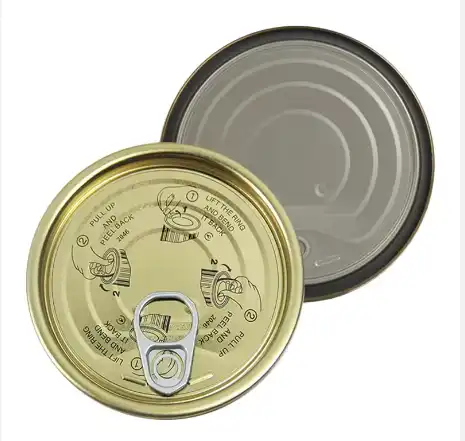
When comparing a lid with a ring https://www.threefoodcan.com/tfs-lids-tfs/lid-with-a-ring to a stay-on tab, the primary distinction lies in their sealing mechanisms and reusability. A lid with a ring employs a mechanical closure system where a separate tensioning ring secures the lid onto the container's curl, creating a robust, resealable seal ideal for industrial applications requiring frequent access. Stay-on tabs, conversely, utilize a pre-scored opening mechanism that remains partially attached to the can after opening, offering single-use convenience but limited resealing capability. This fundamental difference shapes their respective roles in food packaging, with ring-secured lids excelling in applications demanding repeated opening and closing while maintaining product integrity.
Understanding Lid with a Ring and Stay-On Tab Technologies
Design and Material Composition of Ring-Secured Lids
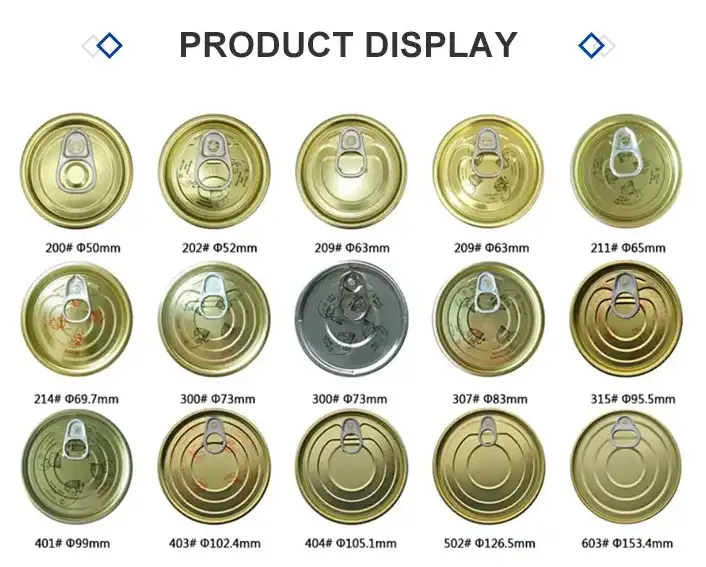
Ring-secured closing methods have three main parts: the lid, a gasket that can be compressed, and a tensioning ring. This kind of manufacturing usually uses Tin-Free Steel (TFS) or tinplate, which are chosen because they don't rust and are safe for food. The gasket, which fits inside the lid's opening, is made of PU or EPDM materials that are chemically resistant to acidic or oily contents.Three makes ring-secured lids out of high-quality TFS material and gives you the choice of golden, white, or metal finishes on the inside. Our exterior coverings, which come in golden or gray plain lacquer finishes, offer extra defense against the elements. The round form comes in different sizes, such as 50mm, 52mm, 65.4mm, 72mm, 83.3mm, and 99mm, and can hold item numbers 200#, 202#, 211#, 300#, 307#, and 401# to fit different container needs.
Manufacturing Process of Stay-On Tab Closures
Through special scoring and welding methods, stay-on tab systems are built right into the can while it is being made. The tab design has a pull ring connected to a scored part of the lid, which lets users make a hole without having to take the tab off fully. To make sure the hole is clean and doesn't have any sharp edges, this design needs precise die-cutting and scoring levels.Tight tolerances are needed for the production process when it comes to metal thickness and scoring pressure. Manufacturers use high-tech stamping tools that can make consistent score lines that make the products easy to open while still keeping their shape during transport and storage.
Sealing Mechanisms and Their Performance Characteristics
Ring-secured systems use mechanical compression to make a seal that keeps air out. When the lever-lock ring enters the container curve, it pushes the gasket down against the edge of the container with even force. This compression makes hoop stress, which properly spreads sealing pressure around the circle. This keeps leaks from happening even when there is hydrostatic pressure or temperature changing.The double-seam construction of the can is what keeps the stay-on tabs in place until the can is opened. Once the metal is scored, its engineered weakness lets it fail in a controlled way along lines that have already been set. However, this is a one-time seal—once the container is opened, the original closure can't be used to close it again.
Key Differences Between Lid with Ring and Stay-On Tab
User Experience and Operational Convenience
The way end users engage with these closure types is basically different in how they work. Ring-secured locks, such as Lid with a Ring designs, need to be used with two hands; one hand holds the container steady while the other moves the lever-lock device. This design lets users reseal cases more than once during the product’s shelf life and gives tactile feedback to check proper contact. Stay-on tab methods are great for making things easy with just one click. The container can be opened with one hand by pulling it open. This is especially helpful in food service settings or when people are eating on the go. The tab stays in place, so there is no loose part that could cause litter problems.From a purchasing point of view, ring-secured lids are flexible for products that need to control portions or have more than one use. Distributors who deal with bulk goods like being able to give out the right amount while keeping the rest of the items fresh. Stay-on tabs work better for single-serving or immediate-consumption items where being able to reseal the package doesn’t add much value.
Durability and Lifecycle Performance
Total cost of ownership in packaging processes is affected by how long materials last in a big way. Ring-secured closure systems are more durable and can withstand more opening and closing cycles. The metal parts won't bend, and good seals will keep the compression set recovery after dozens of uses. This quality is useful for institutional buyers who break down large items into smaller ones.Certified lab tests show that ring-secured lids that were made correctly keep their seals even after being dropped from 1.2 to 1.8 meters and put under water pressure up to 100kPa. These performance standards are in line with UN rules for transporting dangerous materials in packages, but most food uses don't go too far outside of these safety limits.For initial ease, stay-on tabs give up the ability to be used again. Once the scored metal section is opened, it can't go back to being structurally sound. Even though the exposed edges were made with consumer safety in mind, they can interact with oxygen and moisture in the air, which lowers the quality of the remaining product over time.
Security Features and Tamper Evidence
Food companies are very worried about tamper evidence because they want to protect their brand's reputation and keep customers safe. Ring-secured systems have latch pins or breakable bands built into the ring device that make tampering obvious. If you try to get to the contents of a container without the right tools, you will clearly be interfering.Ring systems can seal by compression, which also works with extra security features. Child-resistant designs that meet Consumer Product Safety Commission standards can be used by manufacturers. This is especially important for goods with ingredients that need to be kept out of the reach of children.Stay-on tab designs naturally show cheating by the position of the tab and the strength of the seal around the scored area. Visual inspection shows right away if there is any early opening or seal damage. This built-in feature meets the legal standards for a lot of different types of food products without the need for extra packing parts.
Container Compatibility and Integration Flexibility
To match closure systems to different types of containers, you need to know about material interactions and tolerances for measurements. It is very easy to use ring-secured lids on a wide range of containers, such as glass jars, metal cans, and rigid plastic containers. The mechanical clamping action can handle small differences in rim diameter and curl specs, which gives buying teams more options when it comes to finding containers.Three's ring-secured lids are designed to work well with metal cans, which are commonly used for fish, meat, sauce, fruits, and veggies. The TFS construction makes sure that it works with standard can-making methods and also allows for customization needs like printing with a brand name or using special coating formulas.Metal cans are the only ones that stay-on tab systems work with because the tab and lid are one piece. This specialization improves performance within the limits of its design, but it makes it less flexible across applications than options that are physically secured.
Procurement Considerations for B2B Buyers
Supplier Selection and Qualification Criteria
When looking for qualified closure system suppliers, you need to look at more than just unit price. Long-term relationships with suppliers are based on their manufacturing capacity, quality management systems, and expert support skills.ISO 9001 certification is a basic way to make sure that suppliers follow well-documented quality methods and guidelines for ongoing growth. We at Three have both ISO 9001 and ISO 14001 Environmental Management System certifications, which show that we care about quality and the environment. Our factory in the Linyi Economic and Technological Development Zone is over 270,000 square meters big and has production lines from Germany, Japan, Switzerland, and Italy that can make more than 2 billion easy-open ends a year.Facility audits that look at equipment maintenance records, operator training programs, and statistical process control implementations are a good way for procurement teams to find out what suppliers can do. Modern testing tools for seal stability, coating adhesion, and measurement accuracy show a strong dedication to making sure products are always the same.
Material Selection and Food Safety Compliance
Materials have a direct effect on how safe a product is, how long it lasts, and how well it meets legal requirements. Food-grade TFS is more resistant to corrosion than regular tinplate, which is important for products that are acidic or high in salt. Since there is no tin, there are no worries about it moving into food, which is important for uses that need to last longer.Choices for internal coatings have a big effect on how well a product works with other things. Golden coatings are usually used for acidic foods like tomato-based sauces, while white coatings are used for foods that need to be color neutral. Aluminum coatings make it easier for foods that contain sulfur to pass through without discoloring them.At Three, we use golden, white, and metal coatings on the inside, along with plain lacquer coats on the outside that come in golden or gray styles. These arrangements are in line with FDA rules for food contact substances and help meet foreign food safety standards needed for export markets like the US, Germany, Poland, Russia, Vietnam, Indonesia, Thailand, Mongolia, and Cambodia.
Minimum Order Quantities and Inventory Management
Finding the right balance between stocking costs and how efficiently you buy things means knowing your suppliers' minimum order quantities and how flexible their production schedules are. Traditional lid makers often have large minimum orders, which is because of the costs of changing tools and making a production run. Three's low MOQ advantage solves this common procurement pain point by letting smaller food manufacturers and private label producers get quality Lid with a Ring closures without having to commit to too much inventory. This freedom is especially helpful when a new product is coming out or when production cycles change with the seasons, when it's harder to predict how much demand there will be. When you manage your inventory well, you also think about lead times and how to ship your items. Our location near important transportation hubs—north of the train station and west of the airport—allows for flexible delivery times that help buyers make the best use of their working capital.
Customization Capabilities and Branding Opportunities
Packaging has two purposes: to protect the product and to communicate the brand. With painting, embossing, and special finishing techniques, ring-secured lids can be made to look very different. The lid's viewable surface can be used to display company messages, nutrition facts, or promotional materials that make the product stand out on the shelf.All of our lid products can print high-resolution graphics thanks to our six Fuji printing lines. Our technical team works with buyers to turn brand needs into production specifications, whether you need a simple logo application or a complex design with many colors. This customization even includes coating formulas, where matching colors or gloss levels help keep the look of the packaging consistent.When it comes to customization, stay-on tabs are harder to work with because their design and functionality are built in. The main area for marking is still the can body, but the tab mechanism itself can be decorated in some ways.
Making the Right Choice – Decision Criteria and Use Cases
Cost-Benefit Analysis Framework
For evaluating closing choices, you need to do a full cost analysis that includes more than just the price per unit. This analysis needs to include all of your total ownership costs. Ring-secured lids usually have higher initial costs because they are made of more than one part and are made of different materials. However, their ability to be reused makes them useful in situations where people use products in small amounts over long periods of time.Divide the price of the lid by the number of times it will be opened and closed. This will give you the actual cost per use. Products like industrial lubricants or bulk cooking ingredients may be accessed fifteen to twenty times over the course of their lifetime. This makes the cost per use much lower than with single-use options.Stay-on tab methods are the most cost-effective way to package single-serving or immediate-consumption items where being able to reseal the package doesn't add any functionality. The combined construction cuts down on the number of parts and the difficulty of assembly, which leads to competitive unit costs for large production runs.The costs of moving and storing things are also added to the total cost of owning. Logistics must be coordinated for ring-secured lids and separate containers, but each part can be sourced separately. Integrated stay-on tab cans come in whole pieces, which makes getting and managing inventory easier but could make it harder to switch suppliers.
Environmental Sustainability Considerations
Sustainability concerns from government agencies, stores, and customers are having a bigger impact on packaging choices all along the food supply chain. Ring-secured closure systems support the circular economy because they can be used more than once, which extends the lifecycle of the packaging. Containers can be used for other things after the original product is used up, so they can be used instead of single-use options for home storage.Another important aspect of sustainability is how easily materials can be recycled. Both TFS and aluminum covers can be recycled in well-established metal recycling streams, with return rates of more than 70% in fully developed collection systems. Three's pledge to using reusable materials is in line with growing demands for sustainability in places like the US, where corporate responsibility programs set the rules for buying things.Stay-on tab cans can also be recycled with metal, though the mixed-material design can make sorting at materials recovery facilities more difficult at times. Because they are one-time use, they naturally produce more packaging trash per unit than options that can be used more than once. This is something that brands that want to take an aggressively environmental stance should think about.
Application-Specific Recommendations
Different types of products have different packaging needs that favor certain closure technologies, with Lid with a Ring solutions offering advantages in applications that require reliable sealing and resealing performance:Preserved Vegetables and Fruits: Fruits and vegetables that have been preserved: Ring-secured lids work best for this, and big containers are often bought by institutions for food service operations. The ability to reseal keeps the quality of the product high as staff portion the contents over several service periods. The 72mm and 83.3mm diameter options (item numbers 300# and 307#) work best with standard institutional can sizes that are common in this market segment.Canned Fish and Meat Products: Canned Fish and Meat goods: Ring-secured systems provide a better seal for these protein uses, which is especially important for goods that need to stay fresh for a long time without refrigeration. The gasket doesn't let oil and proteins affect it, so the seal doesn't break down, which could make the product less safe.Sauce and Condiment Packaging: In this category, closure choice is based on how convenient the product is for the consumer. Stay-on tabs work better for single-use sauce packets and portion-controlled items, while ring-secured lids work better for family-size sizes where people use the product more than once a week.Ready-to-Eat Meals: The ready-meal segment is growing, and different types of consumers have different closure needs. For microwaveable formats, vented stay-on tabs may be used to let steam out, and ring-secured systems help keep food fresh for a variety of consumption times for ambient-stable meal components.
Real-World Implementation Success Factors
Implementing a closing system correctly requires more than just choosing the right products. It also involves integrating the system into the production line and following quality control rules. Procurement teams should work with production engineering to make sure that the filling lines are compatible, especially when it comes to the speed and tools needed for applying the close.Customers can get free samples from us to make sure the products work well together before committing to large orders. This method lowers the risk of application and lets you test how well the seal works in real production settings, such as those with different filling temperatures, product viscosities, and line speeds.Closure-specific inspection factors must be included in quality control methods. Ring-secured systems need to check the tightness of the rings, the placement of the gaskets, and the connection of the levers. The quality of a stay-on tab depends on how consistent the score lines are, how well the tabs attach, and how much force is needed to open the tab. Setting up processes for new inspections based on data on source quality and testing them on a regular basis will ensure uniform performance across all buying relationships.
Conclusion
Ultimately, the choice between stay-on tab technology and ring-secured closure systems depends on the needs of your product, how it will be sold, and how you want to position your brand. Lid with a Ring solutions are better at resealing, offer a lot of customization options, and can be used for more than one thing. This is helpful for institutional buyers and consumer goods that need to be opened for longer periods of time. Stay-on tabs make single-use easier and more cost-effective for applications that need to be used right away.Three has a lot of experience working with food makers, marketers, private label producers, and exporters all over the world. This gives us a unique view on how to make packaging work well. Our closure options can help your business run more smoothly and keep your products safe because they come with advanced production tools, flexible minimum order quantities, full certification, and expert support.
FAQ
Can ring-secured lids damage containers during removal?
When using ring-secured closure systems, the right way to remove the lid keeps the container from getting damaged. Instead of forcing the lever-lock mechanism to separate, users should slowly release it. This will let the gasket compression release naturally. When compared to pry-open methods used with some other closures, lever-lock designs actually protect container sides from deformation because of their mechanical edge. Good manufacturers make rings with the right amount of tolerances so that they seal securely without using too much clamping force, which could damage the materials in the container.
What customization options exist for branded ring-secured lids?
With lithographic printing, embossing, and special finishing techniques, ring-secured lids can be used for a wide range of marking options. Our Fuji printing services can reproduce graphics in multiple colors, which is good for brand logos, product information, and advertising messages. The lid's exposed surface is a great place to promote your brand, which helps it stand out on the shelf and be recognized by customers. Custom coating colors can match brand palettes, and embossed textures add premium positioning cues that set products apart in categories where they are competing.
How should businesses maintain closure quality throughout storage?
When stored properly, the performance qualities of the seal are kept until they are used in production. To keep gaskets from breaking down and metal from rusting, ring-secured parts should be kept in climate-controlled spaces between 15°C and 25°C with relative humidity below 60%. Limits on stacking height keep sealing materials from getting damaged by compression. Rotation protocols that make sure first-in, first-out use stop long-term storage that could change the properties of the material. Any quality problems are found before they are put into production by inspecting stored parts on a regular basis.
Partner with Three for Superior Lid with a Ring Solutions
Picking the correct Lid with a Ring supplier has a direct effect on how quickly and well your products are made, as well as your brand's reputation in the food packaging market, which is very competitive. Three uses advanced production technology, full ISO 9001 certification, and flexible purchasing terms that deal with the problems that purchasing workers face every day in the real world. Our expert team knows how hard it can be to match closure standards to the properties of the product, the format of the container, and the needs of distribution.Through our free sample program, we invite procurement professionals to see what makes Three different. You can ask for samples in any of our common diameters—50mm, 52mm, 65.4mm, 72mm, 83.3mm, or 99mm—so you can test how well they work with your specific container sizes and filling methods. Our catalog has thorough specifications that help you make smart choices, and our ISO 9001 certification papers show that we are dedicated to quality management success.Whether you're looking for closures for fish, meat, sauce, fruits, or vegetables, our experienced specialists can help you find the right ones for your business. Get in touch with us at info@threefoodcan.com to talk about how our Lid with a Ring manufacturer skills, low prices, and quick shipping can help your packaging supply chain. Find out how working with a well-known seller of closure systems can help your delivery network keep products safe, run more smoothly, and make customers happier.
References
1. Johnson, M. & Chen, L. (2021). Industrial Packaging Closure Systems: Engineering and Performance Standards. International Packaging Institute Press.
2. Williams, R. (2020). "Comparative Analysis of Food Can Sealing Technologies in Modern Manufacturing." Journal of Food Packaging Engineering, Vol. 45, Issue 3, pp. 178-195.
3. Thompson, K. (2022). B2B Procurement Strategies for Food Manufacturing Supply Chains. Commercial Publishing House.
4. Martinez, S. & Anderson, P. (2019). "Material Science of Tin-Free Steel in Food Contact Applications." Packaging Materials Quarterly, Vol. 12, No. 2, pp. 67-84.
5. United Nations Economic Commission for Europe. (2021). UN Recommendations on the Transport of Dangerous Goods: Packaging Standards and Testing Protocols. UN Publications.
6. Food and Drug Administration. (2020). Guidance for Industry: Food Contact Substances—Metals and Alloys in Food Packaging Applications. FDA Regulatory Documentation.
YOU MAY LIKE